The Australian writer and broadcaster, Clive James (1939–2019), curtly defined modern times when he said, “It is only when they go wrong that machines remind you how powerful they are.” While we are all amused living in an internet-connected world..
Be Open to Oneness
Be Open to Oneness
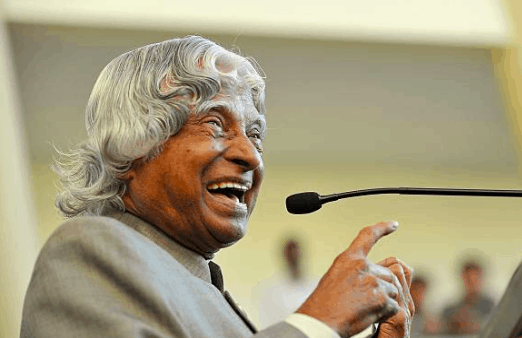
Year 2020 is bringing with it a feeling of déjà vu. In the 1990s, Dr APJ Abdul Kalam was writing a book on how India could become a developed country and how long it would take. We estimated a time frame of about 25 years. When I took him to L. V. Prasad Eye Institute for an ophthalmic examination, while testing his eyes, Dr. Taraprasad Das shared with Dr Kalam ‘20/20’ as the term used to describe perfect sight. “If you have 20/20 vision, you can see clearly at 20 feet what should normally be seen at that distance,” he said. And sitting there, Dr Kalam decided to name his book India 2020: A Vision for the New Millennium. The book became a bestseller and today, when 2020 has finally arrived, I am reminded of this great visionary.
What I learned under the tutelage of Dr Kalam is that waiting for conditions around you to change is a futile exercise, a real waste of life. The challenge is not to change the outer conditions, but the inner conditions; not the society, but the community; not even the community, but family; and in the family, your own self, your day to day experience. This is where everything begins. Dr Kalam was very fond of a saying of Chinese philosopher Confucius (551-479 BCE) and made it very popular through his speeches.
If there is righteousness in the heart, there will be beauty in the character.
If there is beauty in the character, there will be harmony in the home.
If there is harmony in the home, there will be order in the nations.
When there is order in the nations, there will be peace in the world.
If you are paying attention to the God essence, living, ticking inside you, you will be able to make sense of all that is happening around you. Nothing is random, unnecessary and irrelevant. Every single experience, especially the unpleasant ones are there to be experienced and done away with. Running away from them, avoiding them, and reacting to them are wrong choices. We must respond to whatever life brings before us, every moment. It starts with sunrise – everyone must be out of bed before the sun appears on the horizon and welcome the source of all life on our planet. Procrastination is the original sin; all the muck gets build up around that. As you humbly attend to what a day brings, you grow and evolve every day.
I see cognitive surplus as the biggest problem mankind is facing today. In the name of information, garbage has been littered everywhere, defiling even the purest and youngest minds. Through electronic media, people are being turned into desire machines – hungry ghosts, to use a Buddhist term. Unsatiated desires are making people angry. Angry people resort to violence – both inwardly as depression and self-inflicting addictions and outwardly as rage. Violence creates suffering – both for the doer and the victim. Modern society has accepted violence: films are glorifying gory fights and killings, sports involving violence like boxing and wrestling have become popular. Stored already in the unconscious mind, violence, then gets expressed at the most insignificant stimuli and trivial provocation.
So, what could be the 20/20 vision of your life? See yourself as a fragment of the Supreme Consciousness that runs this universe. Your thoughts are the way to operate upon this consciousness, to tap into the energy of the cosmos and bring it into your life. Everything is on the move, changing every moment, especially your inner being. With every breath, with every heartbeat, your life is extended. With every thought, you are creating your future and, in that manner, assuming responsibility and liability for your decisions.
Also, let me share with you the 20/20 vision of God. God is not out there, but inside us. We are all living in God. We are all guided every moment of our lives. Our problem is our insensitivity towards receiving the guidance. The distractions, a little too many off late, due to Internet-driven mobile phones among other things, shield us from this guidance. The purpose of life is to experience life, to respond to it openly as it presents itself, and put our best efforts into making it meaningful not only for ourselves, but also for the whole of mankind.
I consider the 47th Shloka of the 2nd chapter of the Bhagavad Gita as the ultimate code of life.
कर्मण्ये वाधिकारस्ते, माफलेषु कदाचन।
मा कर्मफल हेतुर्भू, माते सङ्गोऽस्त्व कर्मणि।।
There are four operative statements embedded here: (1) Attend to what life presents before you, perform; (2) Don’t worry about results, they depend on something beyond your comprehension most of the time; (3) Never consider yourself to be the cause of the results of your activities; and (4) Inaction is not an option.
Your health is first and foremost. Eat healthy food, get enough exercise, think good thoughts and keep your body and mind clean. Feel and express your emotions; never repress them – cry, laugh, jump, shout, sing, dance, whatever, do not hold back. Attend to your duties, towards your own self, your family members, colleagues, and all those people, even strangers, who cross your path in life. Never worry about results, gains and losses. What is yours can never be withheld by any power on earth; what is not yours, even if you do get it somehow, will be lost. Oneness is not a characteristic of life. Life is the characteristic of Oneness.
MORE FROM THE BLOG
A View through Technology Glasses
INDIA@100
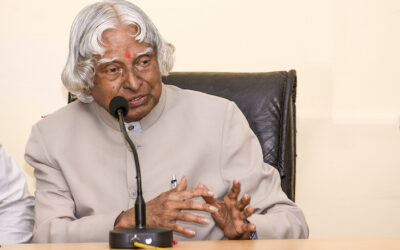
On October 15, 2022, the nation observed the 91st birth anniversary of Dr. APJ Abdul Kalam (1931-2015). I was invited by BharatTech Foundation, primarily a group of overseas engineers of Indian origin, but also with a good base within the country, to give the keynote address…

Let Go and Allow Life to Happen
Confusing the temporary with the permanent, happiness with pleasure, continuing to search for vague things rather than appreciating what has already been given, and trying to change conditions instead of changing oneself, almost always lead to suffering…