The utility of sleep is undeniable and of late, there have been excellent books emphasizing it. Matthew Walker, professor of neuroscience and psychology at the University of California, Berkeley, has published in his 2017 book…
Truths are not instant; they need to be filtered out of facts
Truths are not instant; they need to be filtered out of facts
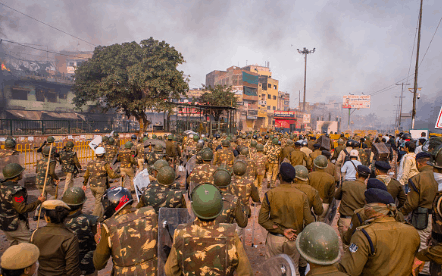
For a while, there is disquiet in the air. The passing of the apparently innocuous Citizenship Amendment Bill in both the houses of the Parliament, triggered highly organized protests and propaganda. A number of State Assemblies ruled by opposition parties passed resolutions to oppose the Act, feigning ignorance about the fact that it was neither their right, nor business to do so. The people who breathe by upholding the Constitution and secularism, vehemently fanned confusion and anarchy about a law duly passed by the Parliament and challenged it in the Supreme Court. The organized violence in Delhi, effectively timed with the arrival of the US President in the city, showed the scant regard many people have for their country. Whoever indulged in the violence, shamed not the ruling party, but the entire country!
Indian per capita GDP was a miserable USD 300 in 1991 and this fact threw up the bitter truth about the inefficiency and incompetence in the way India was being governed. Then, India saw rampant scams in almost everything, making a situation where no purchases could be made for our defence forces. The outrage of national sensibilities in 2014 brought about a much needed change. The new government took some bold steps in the form of demonetization, GST and in their deals with Pakistan-supported terrorism. Some relief came to the poor in the form of cooking gas and direct transfer of subsidies. Though unemployment remained a problem, the government returned to power with a larger majority in 2019. It was time to see India taking off, but the exact opposite of that has happened. The truth of why it has happened is not yet out, but the fact is that it has happened and there are no signs of it receding.
India will be called a prosperous country when its per capita GDP becomes USD 5,000 (in 2020, the per capita GDP of China is USD 9,000 and that of the United States is USD 22,000). There are only two ways for this to happen. First, we must efficiently harness our enormous natural resources, specially petroleum gas and oil, modernize our coal mines and start making the six nuclear reactors pending on paper for so long. As the second step, we must embrace technology in agriculture, create efficient supply chains, percolate modern scientific thought into society and live in social harmony. There is absolutely no public discourse on any of these problems. Watch the Parliament proceedings, news channels or read magazines, there is a cacophony of trivial arguments, banal criticism and the entire purpose of our politics is for the elected leaders to remain in power and the defeated leaders to return to power. All we hear is loan waivers, free rides, and more reservations. No one is talking about how to increase the income of the nation.
So, what is the truth that we can see from these facts?
India is a country that has never been able to take its own integrity for granted. There have been traitors and internal saboteurs colluding with the invaders and aggressors, working against their own masters and people. Modern India is no different. It is not only ringed by potential foes, but there are also enemies infested in our society and system. Let any government take any good action and there are protests. Leaders shamelessly chew their own statements and assertions made at earlier instances for the heck of opposition. The four modernizations: modern agriculture, modern industry, modern defence, and modern science and technology, must be decoupled from electoral politics.
Corruption continues. The non-performing assets of our banks keep staring at the people whose money the banks handle. As though this were not enough, the recent crisis of a well-known private sector bank has brought out the maleficence of the top leadership of the bank. While salaried employees first pay income tax and then GST every day on whatever they buy, privileged people, hardly pay proper tax and it has been accepted as normal. The GST system has holes and businesspeople know well how to use them. Political parties are made of the people. Bereft of the people’s support, the party can do nothing. Corruption hits these very people and if not checked, the party will eventually be voted out without any doubt. The calculus is simple: to save India, you must move against the corrupt, and if you do not move against them today, you might not have the chance to tomorrow.
India was invaded and ruled by a handful of foreigners with the collusion of inside forces, who embraced them out of hatred for their own rulers. This attitude persists. National security is fundamental. India must be capable of fending for itself in the rough and tumble of geopolitics. It must stay close enough to the United States without becoming too close. It must plug the USD 50 billion trade deficit with China without quarrel and in a businesslike manner. Also, it must stand firm against Pakistan without fighting it. Although the tone may differ if there is a change in leadership, the substance should not.
Finally, India’s demographics is its biggest truth. We cannot even attempt to re-engineer India’s pluralistic democracy. More than half of Indians live like second-rate citizens because they are poor. They belong to every religion. We have a very young population, and our youth needs good jobs. How will jobs be created without investment, business sentiment and harmony?
Our per capita GDP is at a respectable USD 2,000 level right now. Let us take pride in this and not be cynical. Let all our political parties focus on the creation of wealth, jobs and social harmony. Change is always feared by the masses. The intensity of change can be self-defeating. As our Prime Minister rightly said after the victory in the 2019 election, winning everyone’s trust is important. India has changed for the good. It should never regress into scams and vote-bank politics. But this is a work-in-progress – a little ugly, a little messy, and even chaotic at times.
India will surely become prosperous by actively working towards the goal of becoming a USD 5-trillion economy by 2024 and by keeping the four modernizations: modern agriculture, modern industry, modern defence, and modern science and technology running smoothly with adequate funding and without interruption. Also, we need to ensure that people pay taxes and economic offenders do not escape the law. Corruption is the biggest bane of our times. Each time ordinary people watch people with ill-gotten wealth living like celebrities, their faith in the system takes a blow, and this is the truth behind all the chaos.
MORE FROM THE BLOG

Dream yoga

How to Jailbreak the Life Operating System?
The sense of “I” is the greatest deception that mankind is condemned to. Talk to anyone and you hear the story of obsession with money, power, name, fame, attachments, achievements, love, and dependency. We live a life driven by our likes and dislikes. Every moment we are moving “towards what we like and love” and “away from what we dislike and fear…

Life is a Nine-dot Problem
I have immensely enjoyed reading Full Catastrophe Living by Dr. Jon Kabat-Zinn (b. 1944), a very readable and practical book on mindfulness, published in 1990. I have read the 25th anniversary issue, published in 2013. The more than 600-page book presents the details of an 8-week course known as Mindfulness-based Stress Reduction…