Time and again I found books reaching me when I needed them the most. Be it The Fountain Head by Ayn Rand in 1974, which lifted me from an average engineering student to a meritorious one, or Gestalt Therapy by Fritz Perls in 1985 that helped me get rid of my migraine, or Memories, Dreams, Reflections by Carl Jung in 1996 that provided me the model for writing Wings of Fire with Dr. APJ Abdul Kalam…
Time to Upgrade Our Independence
Time to Upgrade Our Independence

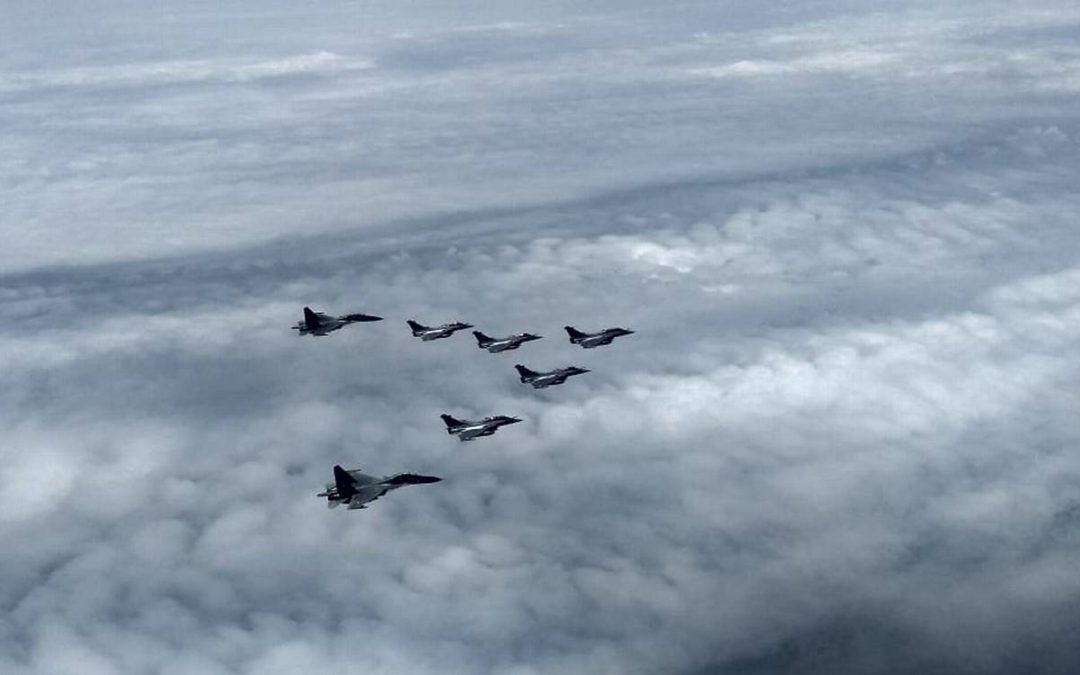
This blog is coinciding with the occasion of India’s 74th Independence Day observed under the shadow of the coronavirus pandemic. On high notes, the construction of the Ram Mandir finally began with a billion people watching the Bhoomi Poojan ceremony live; the New Education Policy 2020, with long-pending major reforms in education, has finally rolled out, and five freshly purchased Rafael fighter jets flew into the Indian skies escorted by two Sukhoi-30 jets that reminded me of Dr. APJ Abdul Kalam.
I was with him at HAL when on 4th January 2001, Wg. Cdr. Rajiv Kothiyal flew in the very first LCA, named KH 2001 to honour its designer Dr Kota Harinaryana. On June 8, 2006, I was at Lohegaon Air Force Station in Pune when President A.P.J. Abdul Kalam flew in a Sukhoi-30 fighter plane. He was donning anti-gravity suit. It was a majestic site to see a line of Sukhoi-planes on that occasion. Later on March 7, 2007, I attended Fleet Review by President Kalam coinciding with the Platinum Jubilee of the Indian Air Force and watched the awe-inspiring fly past by IAF aircraft when 17 Jaguars fighter planes flew in a formation of number 75 over our heads with a deafening sound. Of course, we took mortal body of Dr Kalam to Madurai in the gigantic The Lockheed four-engine turboprop military transport aircraft C-130 aircraft on July 29, 2015.
My latest book “India Wakes” found initial acceptance and appreciation. It was called “the most democratic book published in years.” It received praise with the words, “the book’s value lies in its timeliness and straight talk.” The book audaciously proclaimed, “India is increasingly well positioned to replace China as part of the global supply chain, and India is now and likely will continue to be a rapidly growing market.”
We called the first chapter of the book, “Botched Up Independence,” quoting an eye-witness, Mr. Narendra Luther, “It was independence for those who were not disturbed from their homes and hearths. It was partition for an estimated twenty million people who were uprooted from their moorings and became penniless refugees.” The book put before the modern generation the three burdens that India has carried since independence — a hostile and always scheming, troubled neighborhood, many decades of economic stagnation, and the delay in the weaponization of our military forces, as we were spreading the message of peace that no one was really taking.
Even today, our rich and powerful live in their own bubbles, as though not needing anyone in the world, or rather, living in the knowing that the world needs them to keep moving. Fed up with this hypocrisy, a large number of brilliant Indians went abroad, and it is not by chance that people of Indian origin are at the helms of giant companies like Microsoft, Google and IBM, whereas not even one Indian company can be called a global one. There are no buyers for many of our “Ratnas” as we call our public sector companies.
It is therefore important to understand the right meaning of the word “independence.” What Lokmanya Balgangadhar Tilak called “Swaraj” as a “birthright” in 1916, turned out to be “Swarthraj” by those in power. What Pandit Jawaharlal Nehru called India’s “Tryst with Destiny” was indeed murder and mayhem as Saadat Hasan Manto observing those times wrote, “Human beings had instituted rules against murder and mayhem in order to distinguish themselves from beasts of prey. None was observed in the murderous orgy that shook India to the core at the dawn of independence.”
According to the Principle of Dependent Arising, a key doctrine of Buddhist philosophy, any phenomenon arises in dependence upon other phenomena: “If this exists, that exists; if this ceases to exist, that also ceases to exist.” Later, Stephen Covey wrote in his famous book “The 7 Habits of Highly Effective People”, “You cannot continuously improve until you progressively perfect interdependent relationships.” The fact that stares upon us is that while independence without interdependence leaves us isolated, interdependence without independence leaves us vulnerable.
My generation has seen the breaking up of joint families into “independent” nuclear families of their children. Our children are living through the stress of raising their “independent- spirited” children, expressing their adoration only on Mother’s Day and Father’s Day. The “independent opinions” floating on the Internet are as toxic and hazardous as plastic bags in a city drainage system – choking it and stinking. The profanity and crassness seen on social media are precariously detrimental to civil society.
The most urgent need of the hour is to regain the spirit of interdependence for that is the basic truth of our lives. My friend, Dr. Mpoki Ulisubisya, the High Commissioner of the United Republic of Tanzania to Canada, calls it “Ubuntu,” an African term that means, “I am, because we are.” No human being can flourish without the support of the family. It is like “a circle within a circle” situation. Families flourish within close-knit communities. Communities depend on harmonious societies and countries become prosperous doing business as trading blocs.
We have seen many “what if’s” in our history to the great lament and regret of the future generations. What if the British had never come to India, or say, by 1810 or so, a loose confederacy of Sikh, Maratha and Deccan rulers had managed to kick out the British, the French and the Portuguese? Or, had Mir Jafar, the commander-in-chief of Siraj-ud-Daulah’s army, bribed by Robert Clive, not betrayed his nawab? Or what if Cyril John Radcliffe had applied mind and method over a period of time and not partitioned India in five weeks’ time? Or, what if Prime Minister Nehru had not turned upside down the “village republic” ideal of his mentor, Gandhiji, in favour of the centralized economy of Soviet Russia?
Another “what if” is staring at us today. The world has a predatory superpower on the prowl, and failure to act against the threat it poses will be a historic blunder. I read a story “Nanhi Laal Chunni” (Little Red Riding Hood) in my school. Re-enacting this fairy tale with China is too risky and scary. For the dream of a 5-trillion-dollar economy to turn true, we ought to bridge the 50-billion-dollar trade deficit with China. What if we do not? What if 20 million affordable houses are not built, and farmers’ incomes are not doubled by 2022? The independence of the country needs an upgrade by unwavering action to improve the living conditions of our people.
MORE FROM THE BLOG
Is Life a Fixed Match?
Nurturer of the Nature
Asafoetida, called Heeng in Hindi, is the dried gum secreted by tap root of several species of a carrot family plant called Ferula. These plants grow naturally in Karakum Desert spread over Eastern Iran, Turkmenistan, and mountains of Afghanistan…
Living for a Legacy
I consider meeting Dr. Sunkavalli Chinnababu as a gift that the new year 2023 brought me.
Not even 50 yet, Dr. Chinnababu is a rising star in cancer surgery and is considered among
the best in performing robotic-assisted surgeries in the country…