
Tea and the Art of Being
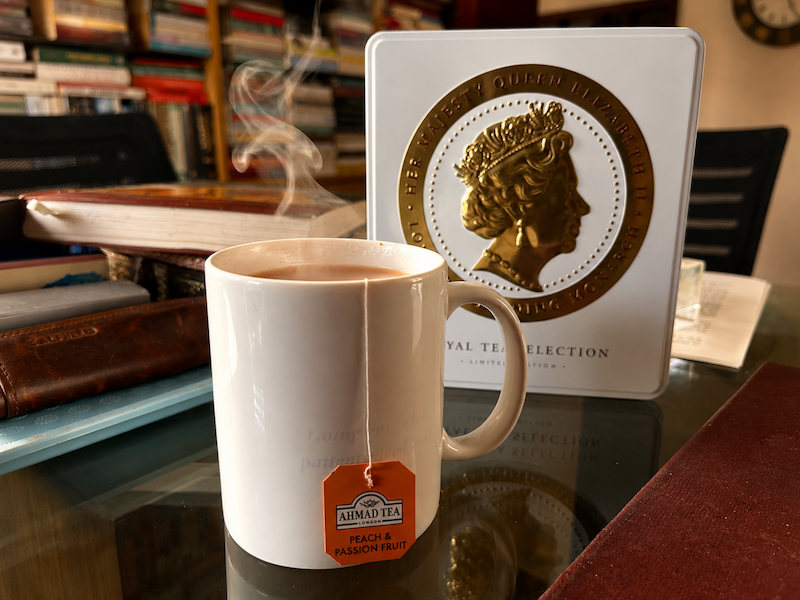
Recently, my son Amol brought me Ceylon tea from Sri Lanka, and my biomedical engineering pupil, Deepti Sai Prasad, presented me with an elegant Queen Elizabeth box of tea bags she brought from London. They could hardly have chosen a gift that would have delighted me more.
I love tea. Whenever I am asked, “Tea or coffee?”, my answer comes without a moment’s hesitation: “Tea.”
I grew up drinking tea. In my native Meerut, tea is not merely brewed; it is almost cooked. Strong black tea leaves—typically the robust Assam variety—are boiled vigorously with milk and generous quantities of sugar, with two teaspoons per cup being the norm. Ginger and cardamom are added as the mixture simmers, allowing their flavours to infuse the tea. The entire house becomes fragrant. Tea is not only consumed; it is announced.
Years later, after moving to Hyderabad, I encountered another marvel—Irani tea. It belongs to an altogether different tradition. A robust black tea blend, usually rich in Assam CTC leaves, is brewed into a concentrated decoction, while the milk is simmered separately for hours, developing a natural sweetness through gentle caramelisation. The two meet only at the moment of serving. The result is velvety, aromatic, and almost meditative—a cup that rewards patience as much as craftsmanship. A plate of Osmania biscuits, lightly dipped into the tea before each bite, completes the experience. It feels less like drinking tea than performing a small daily ritual of contentment.
That cup also awakened my curiosity. Every beverage carries not only a flavour but a civilisation. Behind its aroma lie journeys across continents, encounters between cultures, and centuries of commerce, conquest and adaptation. The more I reflected on tea, the more I realised that it is not merely a drink but one of history’s most remarkable travellers.
There is a great deal of history behind tea. Tea never grew naturally in England; the climate required for the evergreen shrub simply does not exist there. Tea is native to China, where it had been cultivated and cherished for centuries before Europe discovered its allure. Yet England became its most influential global promoter because it understood something larger than agriculture: a product can be culturally appropriated by those who control its trade, shape its image, and weave it into the fabric of everyday life.
The British East India Company played a decisive role in transforming tea from a Chinese luxury into a global commodity. It first imported tea on a vast scale and, when dependence on China became commercially inconvenient, encouraged the development of tea plantations in Assam, Darjeeling, the Nilgiris and Sri Lanka (formerly Ceylon). Yet Britain’s greatest achievement lay not in growing tea but in giving it a distinctive cultural identity. Through afternoon tea, fine porcelain, etiquette, conversation, and the rituals of domestic hospitality, tea came to symbolise refinement and social order. Carried by empire, commerce and literature, this distinctly British way of drinking tea spread across much of the world.
The English transformed tea from an agricultural product into a social institution. They refined not only its trade but also its preparation. Though the British did not invent tea drinking; they transformed it into a distinctive social ritual. Water is brought almost to the boil, loose leaves are allowed to infuse in a teapot, and warm milk is poured into the cup first—a practice said to have protected delicate porcelain from cracking—before adding the strained tea. The ritual possesses an elegance born of centuries of repetition.
Tea punctuates the English day. It begins with the first cup on waking and continues through breakfast, mid-morning, afternoon tea with sandwiches or scones, and the traditional late-afternoon gathering, usually at five o’clock. High tea, despite its aristocratic reputation, was originally the hearty evening meal of the working classes, served at a high dining table with substantial fare and tea. For many households, the day ends with yet another comforting cup.
The world of tea has its own aristocracy. Earl Grey, delicately scented with bergamot, is perhaps the most celebrated blend, while English Breakfast draws its strength from teas grown in Assam, Kenya and Sri Lanka. Darjeeling, cultivated on the mist-covered slopes of the Himalayas, is often called the ‘Champagne of teas’ for its floral aroma and muscatel notes. Ceylon teas are bright and brisk, Kenyan teas add colour and body, and Assam provides the rich malty depth that anchors many of the world’s favourite blends.
Exploring these varieties inevitably raises another question. If tea possesses such extraordinary diversity, why do so many people still reach instinctively for coffee? The two beverages occupy neighbouring places in our daily lives, yet they arrive at their flavours by remarkably different paths. Tea reveals the character of a leaf; coffee is transformed by fire. Hundreds of volatile aromatic compounds are formed as coffee beans are roasted at high temperatures, producing flavours ranging from chocolate and caramel to toasted nuts and smoke.
A fresh tea leaf contains several thousand naturally occurring chemical compounds. During withering, rolling, oxidation (often called fermentation in the tea trade), and drying, these compounds rearrange themselves into an astonishing spectrum of aromas and flavours. Scientists have identified well over 600 volatile compounds that contribute to tea’s aroma, while thousands of other compounds influence its colour, taste, mouthfeel and potential health benefits. Polyphenols, such as catechins and theaflavins, contribute to tea’s antioxidant activity, while amino acids—especially L-theanine—produce a gentle sweetness and promote an unusual state of relaxed alertness.
Both beverages contain caffeine, and the caffeine molecule is chemically identical whether it comes from tea or coffee. The difference lies not in the molecule but in its company. A typical cup of tea contains less caffeine than a cup of coffee and also provides L-theanine, an amino acid found almost exclusively in tea. Together with tea’s naturally occurring polyphenols, L-theanine appears to modulate the subjective effects of caffeine, promoting a state of calm alertness rather than intense stimulation. Many tea drinkers, therefore, experience a steadier, more sustained wakefulness, without the pronounced surge—and, for some, the subsequent slump—that often follows a strong cup of coffee. Tea does not so much propel the mind as gently prepare it: awake, attentive and yet unhurried. Perhaps that is why the act of drinking tea so easily becomes a small ceremony of reflection, opening a quiet space in which ordinary things begin to reveal their depth.
Reading Virginia Woolf taught me that the deepest truths often arrive disguised as the smallest moments. A room, a window, a flower in a vase, the quiet ceremony of making tea—such things do not interrupt life; they are life. I often think of her while waiting for tea leaves to unfurl in hot water. Their fragrance cannot be hurried; it asks only for stillness. Then, almost imperceptibly, the mind loosens its grip on the day’s clamour. Thoughts that had been jostling for attention drift apart like clouds after rain, and an inward silence begins to gather. My own ritual is equally simple. Every morning around seven, and again at four in the afternoon, I prepare a cup of strong black tea, briefly boiling the leaves in water while warming the milk separately before the two meet in the cup. I have long since abandoned sugar. If a guest happens to arrive—which is less frequent these days—I gladly brew another pot. For all its chemistry and ceremony, tea remains, above all, a companion: to thought when one is alone, and to conversation when one is not.
Perhaps that is why tea is more than a beverage; it is a way of inhabiting time. A cup demands neither urgency nor distraction. The warmth against the palms, the rising fragrance, the deepening colour, the first sip, and the lingering aftertaste gently draw the wandering mind back to the present moment. One cannot hurry good tea; it quietly teaches patience. For a few unhurried minutes, yesterday’s regrets and tomorrow’s anxieties surrender their hold. The mind returns to the only place where life is ever lived—the present. If there is any philosophy in my daily cup, it is simply this: happiness rarely arrives with fanfare. More often, it unfolds quietly, like the fragrance of freshly brewed tea.
MORE FROM THE BLOG
Tea, Coffee, or Me?
Though I have been a tea person all my life, coffee has always intrigued me. During my travels in the United States, it seemed to be everywhere: at breakfast tables, in offices, beside hotel reception desks and in paper cups carried through the streets. In Ethiopia, I...

The Agony and the Ecstasy of Life
Since I met Dr Chinnababu Sunkavalli, the robotic surgical oncologist, in 2022 through an introduction by the Tangirala brothers, Venkat and Ravi, he has become part of my life. His enthusiasm, his commitment to connecting with people, and his extraordinary zeal to...

The Resilient Doctor
Dr. Prithvi Raj Jampana is a distinguished radiation oncologist with extensive experience in radiotherapy and systemic treatments for a wide range of cancers. He trained in clinical oncology at Oxford University Hospitals and worked in the UK for over two decades...
Dear Arun bhai, very nice description of tea and all things associated with it, including its evolution.
Mentioning biscuits makes the article perfect, as if both Tea and biscuits are made for each other and really are. Regards.
Tea or Coffee? Tea any day and time. I feel sad for places where tea brewing has not received much attention. The aroma of brewing by itself is something to always look forward to.
Dear Sir, Greetings! A delightful and deeply reflective read, Sir. Your blog transforms a simple cup of tea into a journey through history, science, culture, and mindfulness. Ironically, I have never been fond of tea, while my wife is an ardent tea lover. She often jokes that I am “not a normal person” because, according to her, every normal person drinks tea! After reading your beautiful essay, I am beginning to understand why tea inspires such affection. More than a beverage, you have shown it to be a philosophy of slowing down, observing, and appreciating life’s quiet moments. Thank you for another enriching and thought-provoking piece. Warm Regards.
Dear Sir, an excellent blog on a subject which has a universal requirement. My father used to tell me the story that the Britishers used to pay 2 paise for drinking tea at railway stations to induce this habit. This was around the early 1930s. Now it has become a starting point for all the activities of the day. Most of us have become dependent on it. For most, the booting does not happen without tea.
But now tea is a part of the protocol and social culture. No doubt, tea is one solution for many problems, mental, physical, social and psychological problems. A fine cup of tea improves your mood and approach to solving the most difficult problems. Thank you so much for a blog post on a very routine drink that is the lifeline for many users.
Arunji, this one resonated with me in a very personal way. I am a passionate tea lover myself and truly enjoy both the process of making tea and the quiet moments of drinking it. Some of my fondest memories with close friends over the years have been built around countless cups of tea.
To be honest, I have never been able to distinguish between the many varieties of tea, their aroma, or their place of origin. To me, tea is simply tea—that is to be savoured at its best, and even more so when shared with good company. Your blog beautifully captures that spirit.
Kenyan tea is known for its bold flavour, brisk character and rich, bright colour. Grown in the country’s highlands, it has a refreshing strength and natural liveliness that make it enjoyable on its own as well as with milk. Its full-bodied taste gives every cup a distinctive and memorable quality.
It’s beautifully written, Sir. Reading it, I could almost smell the comforting fragrance of a freshly brewed cup of chai. There is something so deeply familiar in your words that I find it difficult to describe just how much I relate to them. In many ways, I feel I live those very emotions. What touched me most was your reflection that life is not found only in extraordinary achievements or grand moments. It quietly resides in the simplest experiences: a hot cup of chai, the first bite of an Osmania biscuit dipped into that velvety brew, the perfect balance of strong tea and caramelised milk. You brought those moments alive so vividly that I could almost taste them.
This passage, especially, has my heart: “For a few unhurried minutes, yesterday’s regrets and tomorrow’s anxieties surrender their hold. The mind returns to the only place where life is ever lived, the present. If there is any philosophy in my daily cup, it is simply this: happiness rarely arrives with fanfare. More often, it unfolds quietly, like the fragrance of freshly brewed tea.”
What a beautiful reminder that contentment is rarely hidden in distant milestones. More often, it is waiting for us in these quiet rituals that we are so quick to overlook. Thank you for writing this. It felt less like reading an article and more like sharing a cup of tea with an old friend- a professor in this case 🙂 🙂
This was a wonderfully immersive read…you’ve turned something so everyday into something expansive and reflective. I especially enjoyed how you connected personal memory, global movement, and quiet daily ritual without losing intimacy at any point. The references to the Elizabeth tea pack and the Sri Lankan tea felt like small details, yet they carried such a sense of journey and thoughtfulness.
I’ll admit I’m usually a coffee person, but your piece made me appreciate the slower, more contemplative space that tea seems to invite. A truly graceful piece of writing.
Thank you, sir. Your reflections on tea have deepened, multiplied and refined its presence in my life. What was once a simple cup has become a living tapestry of history, culture, chemistry, ritual, and philosophy—quietly teaching the rare art of slowing down and truly being present.
Well said Prof ‘happiness rarely arrives with fanfare’
Wah! Bhai Sahab Wah ! Chai, Chai aur sirf Chai. Wah! What a marvel Camellia sinensis is— since you arrived in Darjeeling, you became the darling of every lip’s sip, quietly transforming into the beloved ‘chai’ that serves as the ultimate daily companion for millions. You are not just a beverage; you are the faithful, daily rhythm of life in every single cup.
Your words beautifully capture the quiet wisdom hidden in everyday life. It’s a gentle reminder that some of life’s greatest gifts cannot be rushed. In those few peaceful moments, we discover the value of stillness, presence and gratitude. It not only speaks about tea but about the art of living with awareness, where happiness can be found not only in extraordinary events but in the quite beauty of everyday moments.
What a beautifully written piece. Reading this felt as grounding as a warm cup of chai. Your journey from the aromatic spices of Meerut to the slow-simmered Irani tea of Hyderabad captures how deeply a single cup connects us to history, memory and culture. I especially loved your distinction between the fiery push of coffee and the quiet, calm alertness that tea provides. In today’s fast-paced world, your reminder to pause at 7:00 AM and 4:00 PM to let the leaves unfurl and simply be present is invaluable. True contentment really does unfold quietly.
What a beautiful meditation on tea as ritual and presence, Arun Sir..!!! Your description of Irani tea—the decoction and slowly caramelised milk meeting only at serving—captures how patience becomes part of the flavour. The Woolf reflection lands perfectly: tea doesn’t interrupt life; it reveals it.
What an amazing person you are, Tiwari ji. Describing the importance of tea, its existing variability and value addition for branding and trading is most fascinating. Being a tea lover myself, I never knew how best to enjoy the different flavours and types. Thank you for enlightening me on this subject. The way you describe and make the subject most interesting is indeed praiseworthy.
Prof., enjoy your tea !!! Thanks for the lovely story behind tea. Rwanda has some of the world’s best teas. This is attributed to its high altitude and volcanic soil.
Arunji, Good Morning! Wonderfully expressed by you. Tea doesn’t just awaken the mind; it gently settles the soul. In a world that rushes everything, tea teaches us the grace of slowing down.
Prof. Arun Tiwari Sir, your words touched my heart. As someone who deeply loves tea, I could feel every emotion woven into this beautiful piece. You have reminded us that tea is not merely a drink—it is a pause, a companion, and often the silent witness to our thoughts, dreams and life’s most meaningful conversations. Thank you, Sir, for turning an everyday cup of tea into a profound lesson on the art of living. With every sip, your words will now be remembered. ☕
What a beautifully written reflection! I loved how you seamlessly wove together the history, culture, science and philosophy of tea.
For me, my early morning cup of tea is a sacred pause. A moment of peace, reflection and gratitude. It is perhaps the happiest and most relaxing part of my day, soothing my mind rather than rushing it. I especially loved your thought that good tea cannot be hurried; perhaps that is its greatest lesson. In a world that constantly urges us to move faster, tea quietly invites us to slow down, be present and rediscover the profound joy hidden in life’s simplest moments.
The Tea and the Art of Being could only be composed by a connoisseur who loves tea. A very interesting and informative piece discussing the regional and cultural diversity of preparing a pot of tea. In many eastern societies, like Japan, the tea ceremony is an integral part of their culture.