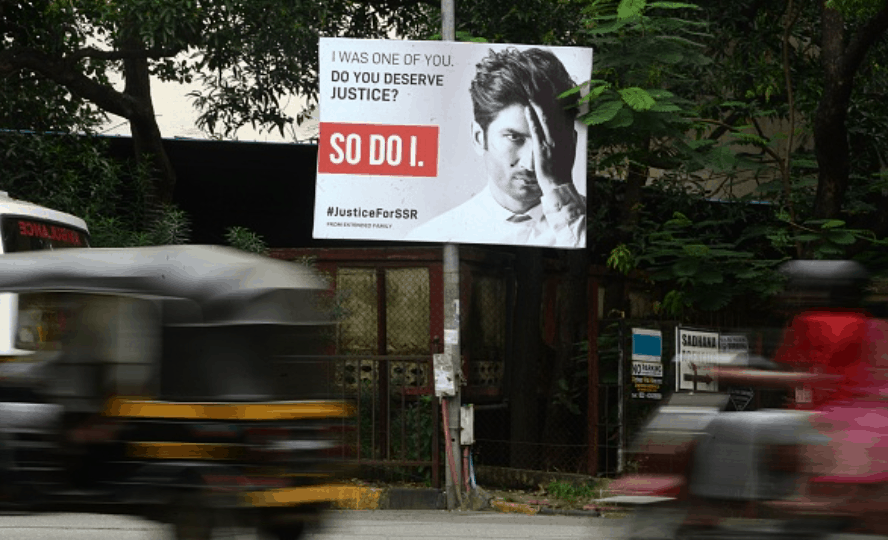
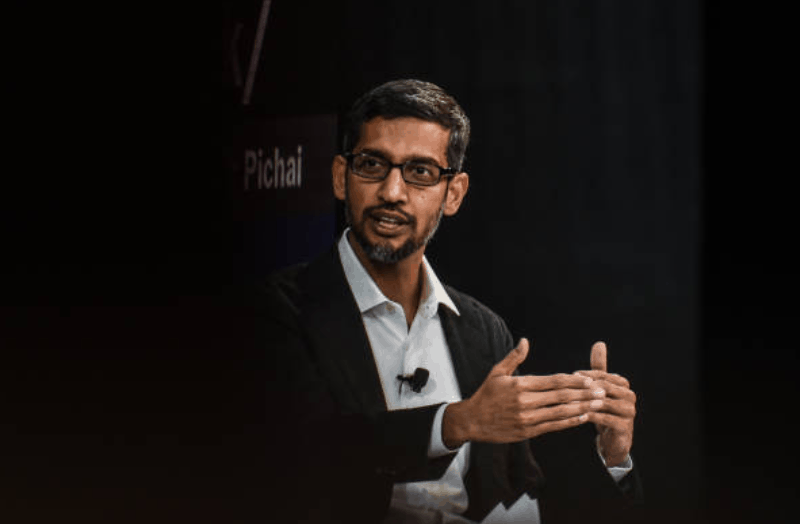
A The Indian diaspora has excelled in the modern world. Indian-origin engineers are heading three top technology companies of the world – Microsoft, Google, and IBM – and many more. There is hardly any company or university where Indians are not present…

What I have seen and foresee
What I have seen and foresee

One thing is clear – the coronavirus pandemic is not going anywhere soon, and worst still, scientific understanding, claims and predictions have all proven hollow, tentative, and even contradictory. How is the changed world going to affect our lives and the lives of those around us? These answers should have come from experts, scholars and leaders, but most of them seem to be imprudent and talking differently about the same thing. In the absence of any rational explanations, it seems best to sit back and take a pragmatic look at what is actually happening and what is going to happen down the road, beyond the next turn, as is proverbially said about gauging unpredictability.
Let me first state what is seen. Three changes are apparent.
First and foremost is the huge loss of jobs for a very large number of young people in sales – pharma, financial services, insurance, property dealers, share markets – the ubiquitous ‘agents’ in business. The second is the ‘new normal’ of ‘work from home’ as it is economical for employers to not maintain expensive offices. This has affected taxi services, eateries and a hundred other small businesses that thrive on people commuting twice every day. And the third is media overkill. During the lockdown, people were forced to watch TV only to realize that most of our politicians have really no idea what they are talking about.
Unfortunately, people in the esteemed scientific professions have turned out to be clueless. Seemingly holy global health institutions are puzzled, and their chiefs have made a mockery of science by speaking too frequently to the media and providing meaningless updates. What good are all the collective scientists if at a time of crisis, they cannot even conclusively confirm the transmission medium of a meagre virus! The rush for the vaccine for a virus not fully understood is another irony of our times. Worse still, it has already become a political tool.
The lesser said about medical industry, the better. Even after ICMR declaring plasma therapy unnecessary, politicians and hospital chains are out to promote it. Millions have been minted on this by the hospitals already, so why to take it out of the menu? The way hospitals feasted on the pandemic ‘opportunity’ has taken the last veneer of trust off the private medical profession. It is basically another business, like all other businesses. I am not undermining the service that public hospitals and select medical professionals have rendered in these troubling times, thus saving their countrymen at great risk to themselves and their loved ones, but milk and water have been so thoroughly mixed that no swan can separate them.
There are three prominent features of a pandemic-affected world.
(1) Automated, corporate funded supply chains connecting producers with consumers with the least number of intermediaries. Even geopolitics will get aligned to where the money is and who controls it. Unfortunately, corporations own more money than governments in the modern world.
(2) New education is making the old obsolete but, in the process, half the population is going to be denied basic education and a huge digital divide is looming on the horizon; and
(3) Politics based on primordial identities and family loyalties will die its own death with the mainstream of aspirational young people seeking and getting a better quality of life from the people they elect and defeat.
Of course, the drama of democracy would continue. TV and social media will also continue, politics and businesses will get adjusted to the new realities. I have seen narratives of high and mighty leaders change so many times. Each leader knows how to do talk in public and they will call whatever happens as their ‘achievement’ and rejoice in their positions. Markets and politics always support each other, whatever be the theme of the day and the slogan of the season. India especially, excels in adapting to change.
The wheel of time is always moving – what goes up, comes down. It really does not matter who opposes and who supports, when the tide of time rises, entities ride or are drowned under it depending upon whether they are on it or beneath it. Therefore, it is time to reflect and see where you, your family, especially children, people around you, connected to you, and dependent upon you are and then align yourself with the tide and not against it.
The beautiful Latin word, ‘Renaissance’, has no exact equivalent in English and even in Indian languages. It originated after the Black Plague devastated Europe, to describe a new cultural rebirth and the rise of the Modern World beginning in the 14th century and concluding in the 17th century. So, in that way, it makes perfect sense to use this word to define the present times – a new viral infection erupts in China, spreads with great speed in the highly connected world, forcing long periods of lockdowns as the only way to survive and in the process killed the globalized world marked by free movement of goods, people, and money across the globe.
It will take years, maybe decades before people are welcome in foreign lands again for work. Extraterritorial investments will now be seen with suspicion and as soft-imperialism. The Cold War world order will return, this time, with China replacing the USSR, opposing the U.S. and its allies. India will find itself once again in a ‘neither here nor there’ predicament. And Self-Reliance as the only way to survive, will be a tough test for a mediocre system built for profit by trade rather than production.
Habitually, brilliant and intelligent Indians seek ‘advisory’ and ‘administrative’ roles rather than ‘doing’ and ‘implementing’ things. This must now change. Going abroad and bureaucratic job will not be an option hereafter. I am writing this because it must be written and read. In the famous story of the ‘writing on the wall,’ a commoner, Daniel, had to read a warning that no one in the court of King Belshazzar was willing to notice.
Life is not about sitting in front of the TV, watching reality shows and playing games like ‘fantasy cricket.’ Real life bites if ignored. Plan for your career, your children’s education, your healthcare needs and start living within the budget, avoiding all credit purchases, no matter how lucrative or irresistible the deal. Know that all deals are eventually designed to take money out of you.
Learn something new, make one dollar on the internet, pursue excellence in your rusty hobby, mend your relationships with friends and family, spend thriftily, supplement your earning, and in your free time, if you still find it, choose your entertainment wisely, by listening to some old songs on a radio, perhaps.
MORE FROM THE BLOG

Children of the Earth and the Sky
Welcome to the world!
I have been a frequent traveler and for many years, especially from 2000 onwards, there was hardly any week without travel. My association with Dr. APJ Abdul Kalam was a powerful facilitator and during his Presidency (2002 – 2007), I had been to every…
The Writing on the Wall
I have been a frequent traveler and for many years, especially from 2000 onwards, there was hardly any week without travel. My association with Dr. APJ Abdul Kalam was a powerful facilitator and during his Presidency (2002 – 2007), I had been to every…