Life has its own way of cheering you up. As you grow older, age shows up on your energy levels, the futility of striving for good things stares at you, a feeling of resignation looms large, and then something surprising happens to cheer you up, as if a ‘gift’ has been delivered without any occasion…
A stitch in time saves nine
A stitch in time saves nine
Balancing is acclaimed as an art, a virtue and a great state in any changing phenomenon. When an aircraft flies, it keeps itself balanced through the complex machinery of control and guidance. So does a ship. And whoever has ridden a bicycle knows that the moment you stop pedaling, you fall down. Your health depends on the balance of enzymes in your body – a little more of something or a little less, and you have a problem. A good thali has all the six tastes – Sweet, Sour, Salty, Bitter, Pungent, and Astringent – finely balancing your food.
All problems take birth out of some imbalance. A storm is born when a center of low pressure develops with high pressure surrounding it. The stock market crashes when too many investors dump their holdings of stock. Fever comes in response to an infection and inflammation of the cells. The hypothalamus then resets the body to a higher temperature. Diarrhea occurs when the lining of the intestine is unable to absorb fluid, or it actively secretes fluid, mostly due to infection.
It is important to look for little disturbances, while they are occurring. These disturbances are indeed signals of catastrophes that are going to come up later. Minor inconveniences like frequent urination is a harbinger of Diabetes. Constipation is almost always a warning of lack of exercise. Lack of sleep is all about unresolved emotional issues. Morning headaches are the first signs of high blood pressure. The wise notice them as they occur, fix them with determination, and live in good health. Unwise people go for removing the symptoms by taking painkillers, laxatives, sleeping pills and landing themselves into chronic and almost untreatable diseases later.
What are the five symptoms we see around us in the present time? I am including one each from individual to immediate surroundings, and to community, national and global levels. They are manifesting as – depression at the individual level, estrangement in families, insensitivity at the community level, abandoned migrants at the national level and a massive trust deficit with China at the global level.
The intensity of these symptoms varies from place to place, but they are there almost everywhere. Let us not sweep them under the carpet, silence them by distractions, or live in the idiotic denial proclaiming that all is well, when actually there is something terribly wrong.
India has never taken mental health seriously. We, as people, have an astonishingly high capacity to tolerate stupidity, nonsense and socially inappropriate behaviour. This makes the more sensitive, sensible and civic individuals amongst us, defensive and depressed. Persistent sad, anxious, or ‘empty’ feelings are the tell-tale signs of depression. You wake up very early in the morning, face a loss of appetite, and suffer frequent aches, pains, headaches, or cramps that do not go away. Spend some quiet time alone, talk to yourself internally and identify the source of these symptoms. After that, what you can do to get rid of that source is important. This awareness in itself will take away your depression.
We take families for granted. Women have to do household chores even if they are working at a job. Children are given smartphones right in their cradles so that they do not bother their parents. People drink alcohol, enroll for memberships of prestigious clubs, holiday abroad, and send their children to ‘international schools’, but at home, still discriminate against people based on their castes. Your children know exactly what wrongs you are doing. They will take you to task when their time comes, mostly by ignoring and abandoning you.
Gated communities have been created to confine the rich and the affluent from the ‘dirt and filth outside’. Cameras, fences, walls and gates in combination with hired guards, have replaced the natural filters earlier offered by the people who worked for you and lived around you – your barber, your shopkeeper, the teacher of your child, and so on. There was a social cohesion within every community. But the hard closure of gated communities, has led to soft closure. You are the ‘client’ and ‘they’ are ‘service providers’. The rich and the affluent are now hated, despised and mistrusted by ordinary people. On a small provocation, or a traffic incidence, you can be mob thrashed and even lynched.
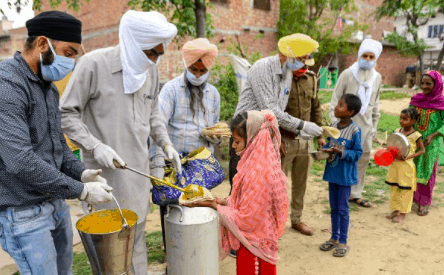
At the national level, the migration of people took the sheen away from an otherwise valiant effort of fighting a pandemic. Many local governments were seen wanting in intent. Many cities emerged as heartless. Gimmicks and drama ruled the roost. Like our Independence that uprooted an estimated twenty million people from their moorings and converted them into penniless refugees, failed to give us peace even after seven long decades, this massive migration of even more than twenty million people, will have far-reaching consequences.
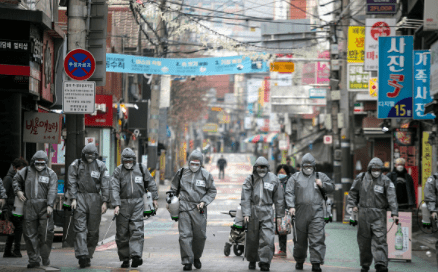
At the national level, we face the historic moment of how to position ourselves in the post-pandemic world. As the coronavirus plays out its deadly narrative, one can summarize it thus: China was the originator, the United States was feckless, and the Europeans were reckless. India was clueless but our earthy wisdom saved us. No one country apparently has a solution to this problem and working together is the only way forward. What if India and China sit together and settle their trust deficit? What if China gives our territory back, does not support enemies of India and One Belt One Road becomes Continental Belt and Road?
The danger of the United States and China turning adversaries can only be averted by a balancing role undertaken by India. The future of the world will not come from the blue; it is being made now, by the people of the world, the way the leaders are crafting the world order. The destiny of India is to make a possible triad with the United States and China for a stable world order in which humanity flourishes. Nothing more than this should we seek and nothing less than this should satisfy us.
MORE FROM THE BLOG
Sculptors of the soul
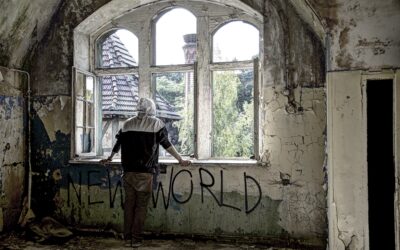
Is the World Order Changing? Of course, it is!
Impermanence is the mark of existence, declared Buddha. Nothing remains forever. People born in different times live in a world that is different from what their ancestors were living in. The signs of this change can be felt during one human lifetime itself. The world where I am living in my sixties is not what it was in my childhood…
Feeding 10 billion people by 2050
There is an interesting piece of history, not about kings and empires, but about land and life itself. Much before human life started on planet Earth, all the land on the globe was a single, giant landmass called Pangaea. In the age of dinosaurs, about 180 million years ago..