
The Resilient Doctor
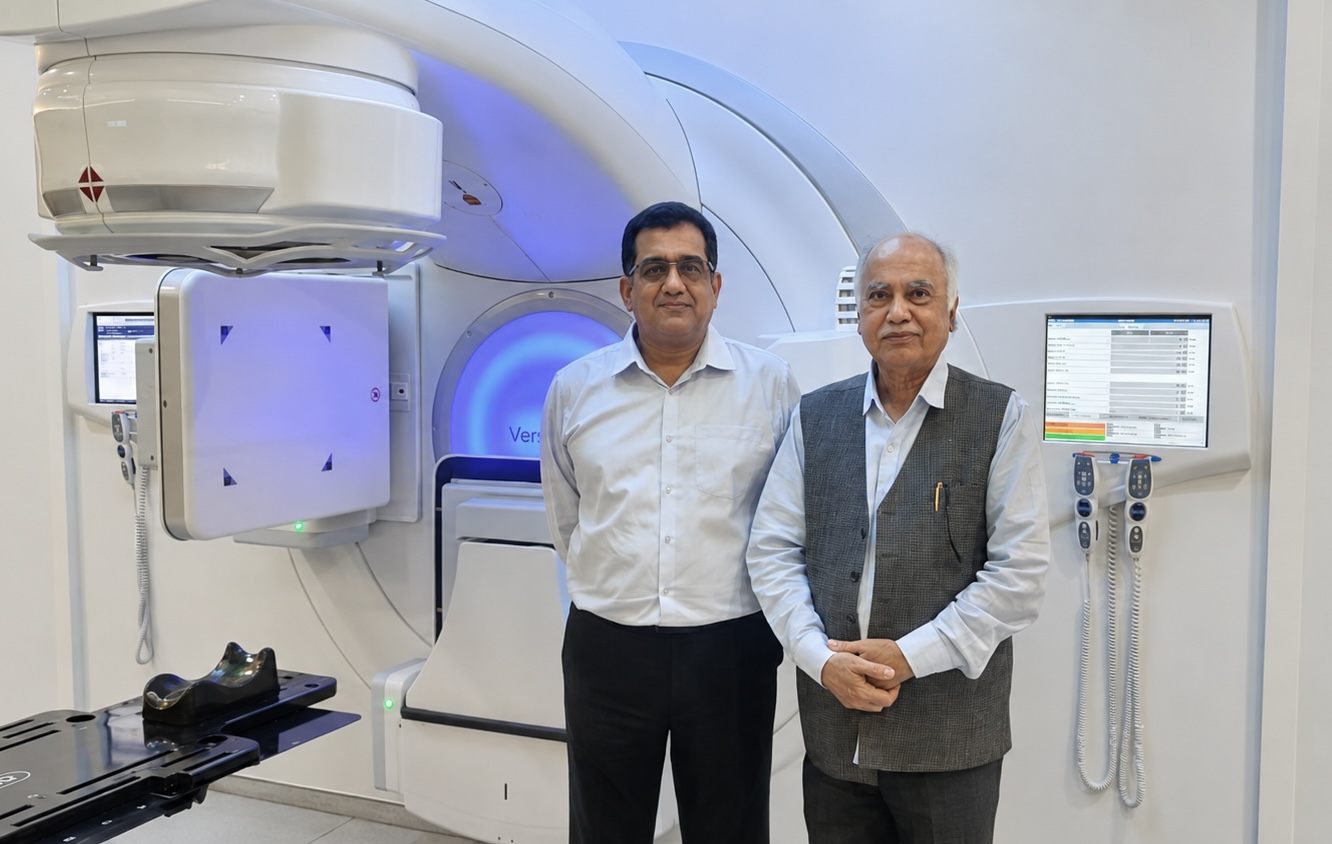
Dr. Prithvi Raj Jampana is a distinguished radiation oncologist with extensive experience in radiotherapy and systemic treatments for a wide range of cancers. He trained in clinical oncology at Oxford University Hospitals and worked in the UK for over two decades before returning to India. He is now Consultant and Head of Radiation Oncology at Sindhu Hospitals in Hyderabad, a cancer-focused, not-for-profit institution inaugurated by Prime Minister Narendra Modi in May 2026. The hospital combines state-of-the-art technology with multidisciplinary cancer care—a fitting environment for a physician whose professional life has bridged two very different healthcare cultures.
I first met Dr. Prithvi Raj in 2015 at CARE Hospitals, after his long professional innings in the United Kingdom and the National Health Service (NHS). During the following year, we jointly delivered a weekly lecture series on Healthcare Service Science. Conducting fifty-two lectures together proved to be an education for me. I came to appreciate not only his expertise in oncology but also his deep understanding of the human body, physiological processes and the relationship between scientific knowledge and clinical judgement.
Healthcare Service Science looks beyond individual treatments and asks how the entire system serves a patient. It examines the pathways through which people enter healthcare, how decisions are made, how resources are allocated and how the work of doctors, nurses, laboratories, pharmacies, administrators and families comes together. A treatment may be technically excellent, yet the patient’s overall experience may still be poor because of delay, fragmentation, financial anxiety or inadequate communication. Conversely, even a resource-constrained system can produce remarkable outcomes when its people coordinate intelligently and act with compassion.
When I met Dr. Prithvi Raj again recently, after a long interval, our conversation naturally returned to healthcare. I asked him how he viewed the differences between the Indian and British systems, having worked extensively in both.
He responded with his characteristic equanimity and perspicacity. No healthcare system is perfect, he said, and searching for one wastes time. Every system continually evolves in response to its economic conditions, political choices, demographic pressures, available technologies, and public expectations. What appears unsatisfactory to one stakeholder may be necessary to preserve the system’s functioning. A system must therefore be judged not against an imaginary ideal but against the realities within which it operates.
This is a deceptively simple observation. Healthcare debates often run to extremes. The British National Health Service is either celebrated as the finest expression of social solidarity or condemned for its delays and bureaucracy. Indian healthcare is either praised for speed, clinical skill and affordability or criticised for inequality, commercialisation and high personal expenditure. Both descriptions contain elements of truth, but neither captures the whole picture.
The NHS rests upon a powerful ethical principle: access to essential healthcare should depend on clinical need and eligibility rather than personal wealth. It offers universal coverage for NHS services, strong financial protection and, in England, a structured path beginning with the general practitioner. The general practitioner is the first point of contact, maintains continuity, and refers patients to specialists when needed. This arrangement can help reduce unnecessary specialist consultations and investigations while allowing scarce resources to be distributed according to clinical priority.
Its great strength is social assurance. Illness does not ordinarily confront a person using NHS services with the immediate fear ofastronomical hospital bills. Consequently, the United Kingdom records comparatively low levels of out-of-pocket spending relative to total health expenditure. In 2024, direct out-of-pocket payments accounted for 14.6 per cent of total UK healthcare spending, including dental care, medical goods, and long-term care.
But the NHS’s strengths also create its characteristic pressures. Because access is publicly funded and resources are finite, the system must regulate demand through referral pathways, clinical thresholds and waiting lists. A patient may wait for a specialist consultation, diagnostic procedure or non-emergency operation. Workforce shortages, an ageing population and the growing burden of chronic disease further strain the system. Standardisation protects patients and promotes fairness, but it can also create bureaucracy and sometimes limit an individual clinician’s or patient’s freedom to act quickly.
India presents almost the reverse picture. Its healthcare system is plural, decentralised and highly heterogeneous. Government hospitals, private institutions, charitable hospitals, small clinics and individual practitioners operate side by side. In major cities, a patient who can afford care may consult a specialist directly, obtain investigations promptly and receive surgery or advanced treatment within days. Indian hospitals have shown remarkable agility in adopting technologies, building high-volume clinical programmes and delivering sophisticated procedures, often at substantially lower costs than those in many Western countries.
Indian medicine also benefits from adaptability. Doctors routinely manage enormous patient loads and make decisions when complete information or ideal resources may not be available. This produces a kind of clinical resourcefulness that textbooks cannot easily teach. India has created internationally respected centres in cardiac care, oncology, transplantation, ophthalmology and other specialities, while its pharmaceutical and vaccine industries contribute far beyond its borders.
Yet speed for some coexists with delayed or inadequate care for many. India lacks a uniformly accessible and strong primary-care and family–medicine system that serves as a trusted first point of contact. Patients often go directly to specialists and hospitals, sometimes undergoing fragmented consultations and repeated tests and procedures without continuous guidance. Rural and underserved regions face shortages of trained personnel and facilities. Quality varies widely, and families still bear a substantial share of healthcare costs.
India’s out-of-pocket health expenditure fell from 64.2 per cent in 2013–14 to 43.4 per cent in 2022–23, but it remains far above the UK’s 13.8 per cent. The tax-funded NHS provides most care without payment at the point of use, protecting patients from catastrophic bills, though often at the cost of longer waits. India’s mixed and fragmented system may offer faster access, particularly in the private sector, but medicines, tests and treatment can still drive vulnerable families into debt.
The contrast, therefore, is not between a good system and a bad one. It is between different trade-offs. Britain provides universality, continuity and financial protection, but often at the price of waiting and restricted choice. India offers speed, flexibility and rapid access to specialists for those who can pay, but at the price of inequality, fragmentation and financial exposure. Each system can potentially draw lessons from the other. The NHS can learn from India’s operational agility and capacity for cost-conscious innovation. India can learn from the NHS’s commitment to primary care, continuity, standardised pathways and protection from catastrophic expenditure.
The best future may not lie in copying either system. India needs to build its own synthesis: strong primary care combined with the energy of its private and charitable sectors; universal financial protection without stifling innovation; digital continuity without compromising privacy; and advanced hospitals connected to community-level prevention, screening, rehabilitation and palliative care. Sindhu Hospitals’ emphasis on modern technology and comprehensive cancer treatment represents one such opportunity, provided technological excellence remains joined to accessibility and humane care.
As our meeting drew to a close, I asked Dr. Prithvi Raj what single quality had contributed most to his medical career and to life in general. He answered spontaneously: resilience.
I then asked where that resilience had been formed. His memory travelled back to The Hyderabad Public School, where he studied from Class I to Class XI, between 1978 and 1989. A native of Kakinada, he spent those formative years as a boarder. There, he developed a passion for basketball. He and his teammates played for nearly three hours every day, continuing until the warden compelled them to stop.
Sport is indeed a royal road to resilience. Resilience is not a motivational slogan or a heroic claim that difficulties do not hurt. It is the cultivated capacity to absorb pressure, recover from disappointment, adapt to changing conditions and return to purposeful action. On the basketball court, one misses a shot, loses possession, falls behind and grows exhausted—but the game continues. There is no time for prolonged self-pity. One must regain position, support the team and prepare for the next play.
Medicine requires precisely this quality. A doctor encounters uncertainty, suffering and outcomes that knowledge alone cannot always control. Oncology demands it especially. Treatment may be prolonged, technology may change, and even the most carefully designed plan may need revision. The resilient physician neither becomes indifferent nor collapses under every setback. He remains sensitive without becoming paralysed, realistic without becoming cynical, and hopeful without misleading the patient.
Resilience is also the quality that healthcare systems need most. No system reaches a final, perfect form. Disease patterns change, populations age, costs rise, and new technologies alter both possibilities and expectations. A good system is not one that never experiences strain. It learns, adapts, and protects its moral purpose as it changes.
Dr. Prithvi Raj’s journey—from the basketball court at The Hyderabad Public School to oncology in Oxford, and from the NHS in the UK to Sindhu Hospitals in Hyderabad—shows that resilience is built long before it is publicly tested. It is formed through discipline, teamwork, setbacks and repeated return to the task. Whether in an individual life or a national healthcare system, resilience means accepting that perfection is unattainable without ever abandoning the pursuit of improvement.
MORE FROM THE BLOG
Tea, Coffee, or Me?
Though I have been a tea person all my life, coffee has always intrigued me. During my travels in the United States, it seemed to be everywhere: at breakfast tables, in offices, beside hotel reception desks and in paper cups carried through the streets. In Ethiopia, I...

The Agony and the Ecstasy of Life
Since I met Dr Chinnababu Sunkavalli, the robotic surgical oncologist, in 2022 through an introduction by the Tangirala brothers, Venkat and Ravi, he has become part of my life. His enthusiasm, his commitment to connecting with people, and his extraordinary zeal to...

AI, Stories and the Mind
I have been reading an English translation of the Kathasaritsagara—The Ocean of the Streams of Stories—composed in Sanskrit by Somadeva, a Kashmiri writer of the eleventh century. Organised into eighteen books, it is less a conventional book than an immense...
Arunji, Namaskar! The comparison of healthcare systems in India and the UK goes beyond infrastructure and technology to highlight the deeper values of accessibility, compassion, and continuity of care. Your emphasis on learning from each other, rather than judging one system against the other, is both insightful and timely.
Dr Prithvi Raj’s journey powerfully reminds us that resilience is built through discipline, teamwork, and the ability to adapt to adversity. I particularly appreciate your point that resilience isn’t about avoiding setbacks, but about returning to purposeful action without losing hope or humanity. A valuable lesson not just for doctors, but for all of us.
A doctor’s greatest contribution is not always curing a disease but helping a patient face illness with dignity, confidence, and hope. Medical knowledge and advanced technology are indispensable, yet patients remember how they were treated as human beings. A reassuring conversation, an honest explanation, or a moment of attentive listening can make an enormous difference during uncertainty. Dr. Prithvi Raj’s journey reminds us that resilience in medicine is not emotional hardness but the ability to remain compassionate despite repeated encounters with suffering. Doctors must accept that not every disease can be cured and not every outcome can be controlled. The true measure of a good doctor is not merely the lives saved, but also the humanity preserved when healing becomes difficult.
Prof, thank you for this wonderful reading that captures the road to success in this life and at all times: resilience, which you’ve summed up perfectly: resilience is built long before it is publicly tested. It is formed through discipline, teamwork, setbacks and repeated return to the task. Whether in an individual life or a national healthcare system, resilience means accepting that perfection is unattainable without ever abandoning the pursuit of improvement. This is what we all need.
Resilience is often misunderstood as the ability to remain strong under every circumstance. In reality, human strength emerges from recognising our limitations and learning to live constructively with them. Everyone encounters periods of disappointment, uncertainty, illness, or loss. What distinguishes a resilient person is not immunity to suffering but the capacity to recover perspective and preserve a sense of purpose. The life of a doctor offers a particularly meaningful example because professional responsibility must coexist with personal vulnerability. Yet the lesson applies equally to teachers, parents, entrepreneurs, and ordinary citizens. We cannot control every event that shapes our lives, but we can cultivate patience, adaptability, and the willingness to learn from adversity. Resilience is not about becoming invulnerable; it is about remaining human while discovering the strength to carry on.
The experience of Dr. Prithvi Raj Sir reminds us that character develops through challenges, teamwork, discipline, and meaningful relationships rather than academic accomplishment alone. Families and educational institutions must create environments where mistakes become opportunities for learning rather than permanent judgments of ability. In a rapidly changing world, professional knowledge may become outdated, but courage, empathy, adaptability, and integrity will remain indispensable. The finest education does not merely prepare young people to succeed in life; it prepares them to live meaningfully when success proves elusive.
The account of Dr. Prithvi Raj’s school days and his passion for basketball carries a lesson that extends far beyond medicine. Life rarely unfolds according to our plans. Disappointment interrupts success, uncertainty undermines confidence, and unexpected setbacks disrupt achievement. Sport teaches young people to accept defeat without surrendering effort, cooperate without losing individuality, and recover their balance after failure. These qualities later become invaluable in professional and personal life. Resilience is not an inborn privilege reserved for exceptional individuals; it develops through discipline, relationships, responsibility, and repeated encounters with difficulty. Importantly, resilience does not mean enduring every hardship silently. It also means knowing when to seek help, change direction, and start again. The strongest people aren’t those who never fall, but those who keep the willingness to rise, learn, and continue with purpose.
Sir, Very well emphasised on the accessibility and affordability in both Public and Private healthcare, The comparison between British and Indian healthcare systems reveals that medical excellence alone cannot guarantee good healthcare. A nation may possess outstanding specialists, sophisticated hospitals, and affordable technologies, yet millions may struggle to obtain timely and continuous treatment. Healthcare depends on a larger social arrangement involving families, communities, public institutions, insurance mechanisms, and medical professionals. Neither government funding nor private enterprise provides a complete answer independently. The important question is whether ordinary citizens can receive appropriate care without sacrificing their financial security or dignity. Prevention, primary care, public awareness, and coordinated services deserve as much attention as advanced treatments. A society’s healthcare achievement should be judged not by the sophistication of its finest hospitals, but by the security and care available to its most vulnerable citizens.
Arunji, Namaskar! The comparison of healthcare systems in India and the UK goes beyond infrastructure and technology to highlight the deeper values of accessibility, compassion, and continuity of care. Your emphasis on learning from each other, rather than judging one system against the other, is both insightful and timely.
Dr Prithvi Raj’s journey powerfully reminds us that resilience is built through discipline, teamwork, and the ability to adapt to adversity. I particularly appreciate your point that resilience isn’t about avoiding setbacks, but about returning to purposeful action without losing hope or humanity. A valuable lesson not just for doctors, but for all of us.
Dear Sir, Greetings! A deeply insightful article, Sir. I particularly appreciated the balanced comparison between the Indian healthcare system and the NHS. Rather than searching for a “perfect” healthcare model, your article reminds us that every system represents choices and trade-offs shaped by its own social and economic realities.
In my view, India’s opportunity is not to replicate a Western healthcare model, but to build on its own strengths—clinical expertise, agility, affordability and innovation—while strengthening primary care, continuity of care, preventive health and financial protection for families. Technology, digital health and AI can play an important role, but ultimately they must support a healthcare system that remains accessible, coordinated and humane.
The connection with **resilience** makes the article even more meaningful. Whether it is a doctor facing uncertainty, a patient confronting illness, or an entire healthcare system responding to changing needs, resilience is not about avoiding difficulty—it is about learning, adapting and continuing with purpose.
I especially liked the concluding thought that **perfection may be unattainable, but the pursuit of improvement must never be abandoned.** That is a powerful lesson not only for medicine and healthcare, but for life itself. Thank you, Sir, for another thoughtful and enriching reflection. Warm Regards,
The Resilient Doctor invites us to consider what sustains a physician when expertise encounters the uncertainty of human life. Dr. Prithvi Raj’s journey suggests that resilience grows through ordinary disciplines: teamwork, accepting setbacks and returning to the task with renewed attention. His basketball years offer an apt image of medicine, where individual skill acquires meaning through coordinated effort.
The article also prompts a necessary question: how much resilience should we expect from a doctor before examining the conditions in which that doctor works? Personal fortitude deserves respect, but institutions have a responsibility to support it. Reliable teamwork, time to communicate, and opportunities to learn from difficult outcomes should help sustain the capacity to care.
The journey through different medical streams is indeed interesting.
What I have found missing elsewhere and present in this personality is the empathy – so crucial to patients
Best wishes to Dr Prithvi Raj…and thanks to you for bringing out this attribute.
Very nice article Sir. Dr Prithvi Raj’s comparison of British and Indian healthcare reflects profound maturity. We can acknowledge each system’s strengths while asking whose needs remain unmet. For a patient, quality includes timely treatment, understandable advice, continuity and financial security.
Perhaps the deepest meaning of medical resilience is the ability to remain open to another person’s suffering after witnessing so much of it. A resilient doctor renews the capacity to care; a resilient healthcare system makes that renewal possible.