Last month, I spent time reading His Dark Materials, by the English author, Philip Pullman. It is a three-book novel comprised of Northern Lights, The Subtle Knife, and The Amber Spyglass. Written as a children’s book, in Harry Potter style, at a superficial level…
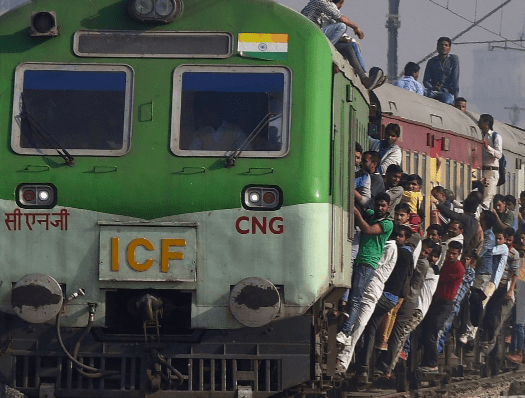
India 2024: Two roads are diverging, which one do we take?
India 2024: Two roads are diverging, which one do we take?
Thomas Friedman and Michael Mandelbaum in their 2011 book ‘That Used to be Us’ described five pillars of prosperity that together made the American economy grow. These five pillars are public education, infrastructure, immigration, government support for basic research, and the implementation of necessary regulation on private economic activity. When we look at this in the Indian context, some interesting facts appear.
Public education in India has been systematically destroyed and handed over to business. There are more coaching centers than schools. When I was in school in the 1960s, my town and all others for that matter, used to have the Government Intermediate College (called GIC), as the best school. Good marks in the Board Exam would get you professional seats. Not anymore.
Infrastructure is pathetic. Before 2014, getting electricity 24 hours in most places was unimaginable. A lot has happened since then. Roads are coming up faster, but every city gets choked within an hour of rain and flood is a perennial problem in the vast Gangetic plane. Even Kerala in the south is devastated by recurring floods. It takes not months but years for bridges to complete and there are no silos and supply chains to handle agriculture produce.
We received lakhs of illegal immigrants in Eastern India with full collusion of politicians and local industries. Our best minds migrated to the US after receiving almost free education from the IITs. In the 1970s, something of the order of 80 percent IIT graduates went to America and the vast majority of them became permanent residents and citizens. Another point to ponder about is that if the Indian CEOs of famous American companies had not gone to the US from India, what would they be doing here today?
The Indian government supported science, by going out of the way but except for progress in Space and Atomic Energy, hardly anything emerged out of the immense investment. There is a disconnect between the government-owned scientific laboratories and the industry they are supposed to serve. Their work not bought and used by industries, the scientists changed their metric of success to the number of research papers to their credit and in attending conferences and seminars.
Private sector after 1991, feasted over the Indian economy. We have this double tragedy of an inefficient public sector and an extractive private sector whose aim is to make profits. The Indian pharmaceutical industry is critically depending on China for basic materials and God forbid, if China stops supplying intermediate molecules, India will have serious scarcity of life-saving drugs.
So why the surprise when in 2019, India has 106 billionaires which puts the country fourth in the world, after the United States, China and Germany? In GDP terms, India is a $3 trillion economy compared to the $21 trillion US economy and $14 trillion Chinese economy. Much smaller nations like Germany and Japan make more than us and France and UK, almost the same as us. It is obvious that a few people own much of India’s wealth.
The condition of Indian farmers is curiously pathetic. From seeds to fair price for their produce, they are systematically shortchanged. English writer Samuel Johnson (1709–1784) famously said, “Agriculture not only gives riches to a nation, but the only riches she can call her own.” The riches of India were earlier held by kings, then looted by the British and now are appropriated by the owners of the private industry.
Prime Minister Narendra Modi set up an audacious target of making India a $5 trillion economy by 2024. Going by his track record, I have no doubt that it will happen. The point is who would own this – another 100 billionaires added in the list or an efficient public sector and the people emerging out of poverty into the middle class?
India is at a historic turning point. One track goes to the revival of public owned enterprise – roads, railways, factories, power, telecom, seeds, fertilizers, and petroleum; the other goes to their natural death and the private sector taking over the economy of more than 1 billion customers. No middle path is going to take us to $5 trillion. Moreover, there will be no return from any of the two courses taken.
William Shakespeare wrote, “Uneasy lies the head that wears a crown.” Our leaders elected by a massive mandate in 2019 have great responsibilities to take country on the right track. In Kath Upanishad, there are two most important words in the verse 1.2.2 – Shreyas and Preyas – the preferable and the pleasurable approach for man. The intelligent man selects the electable in preference to the delectable
MORE FROM THE BLOG

Get in touch with your Daemon

A Technological tour de force
I live in the Silicon Valley part of Hyderabad and keep getting nuggets of what is going on in the computer field, through neighbours in the condominium where I stay..

Living in the Age of Small-world Networks
I have shared earlier in my blog, my fascination with Calculus that I studied as part of my engineering education and later applied while working in missiles. Mathematics is the language of science and the medium of expression for abstract ideas…