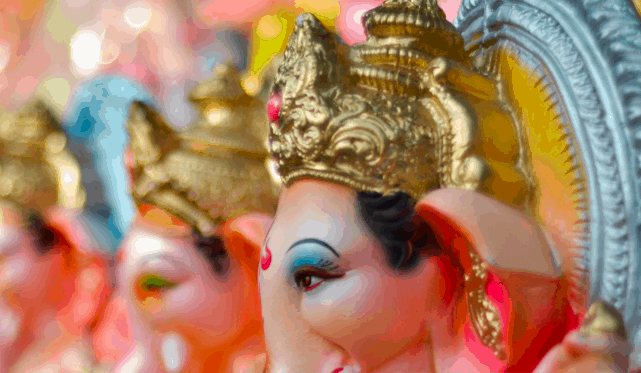
The underlying reason behind an increasing number of people getting angry, cynical, and restless is their disconnect with their religion – something they can’t even acknowledge…

Open a Book, Open a Mind…
Open a Book, Open a Mind…
“The only important thing in a book is the meaning that it has for you.”
― William Somerset Maugham
Education and books play important roles in one’s life. They broaden one’s vision by giving one the wealth of experience and insights without having to undergo particular incidents. Books have been my constant companions as I moved on with life and their authors helped me see and understand better the enigma of human existence. I have never travelled without a book and my personal library is my most cherished asset.
My first serious book reading was The Memories of a Cat written by M.N. Roy (1887-1954). I struggled to comprehend the book but read it fully nevertheless. Then came two novels of Ayn Rand (1905-1982) – Fountain Head, followed by Atlas Shrugged. Both the novels made me sceptical of establishment, particularly politicians and big corporates, for the rest of my life. Three books of William Somerset Maugham (1874-1965) – The Moon and Sixpence, Of Human Bondage, and The Razor’s Edge inspired me to be a writer. In 1985, as if by God’s hand, Gestalt Therapy Verbatim by Fritz Perls (1893-1970) reached me, helped me immensely to sort out my migraine headaches and led me to other self-help books written by Wayne Dyer (1940-2015), Robert Schuller (1926-2015) and Norman Vincent Peale (1898-1993). All these books helped me enormously to assist Dr APJ Abdul Kalam (1931-2015) write Wings of Fire in 1999. To be a good writer, you ought to be a good reader first.
Then I read Alchemist of Paulo Coelho (b. 1947) in 2001 followed by all his books as and when they arrived. In 2004, I got The Glass Palace of Amitav Ghosh (b. 1956) and later read his other books – Sea of Poppies and The Hungry Tide. Three books of V.S. Naipaul (1932-2018) on India – An Area of Darkness, India: A Wounded Civilization, and India: A Million Mutinies Now gave me perspectives of being an Indian. My thinking is deeply influenced by Carl Jung (1875-1961). His idea of Unconscious, Shadow, and Archetypes is very real and I could feel it inside me. His Memories, Dreams, Reflections, I must have read four times and every time, I gained fresh insights. I feel everyone must read How We Live and How We Die, two books of Sherwin Nuland (1930-2014) to appreciate the gift of life and the inevitability of death.
My world view is broadly formed by Alvin Toffler (1928-2016) and Thomas Friedman (b. 1953). I have all their books, namely Future Shock; The Third Wave; Powershift; and Revolutionary Wealth of Toffler; and The Lexus and the Olive Tree: Understanding Globalization; Longitudes and Attitudes; The World is Flat: A Brief History of the Twenty-first Century; Hot, Flat and Crowded; That Used to be Us and Thank You For Being Late: An Optimist’s Guide to Thriving in the Age of Accelerations of Friedman. Amongst current authors, I admire Yuval Noah Harari (b. 1976) and his brilliantly written three books Sapiens: A Brief History of Humankind, Homo Deus: A Brief History of Tomorrow and 21 lessons for 21st Century. Thanks to a wonderful biography of Steve Jobs (1955-2011) written by Walter Isaacson (b. 1952), Jobs is my ideal of a creative engineer. When I use Apple products – my iPhone, my MacBook, and my iPad – I can feel the genius of Steve Jobs in them.
I am rereading these days, the books of M. Scott Peck (1936-2005) – The Road Less Travelled, People of the Lie: The Hope for Healing Human Evil and Further Along the Road Less Travelled: The Unending Journey Toward Spiritual Growth. He skilfully established the concepts of discipline and spiritual development and the forces of evil and grace in a scientific way. I am deeply intrigued by the idea of a Personal God, presented in timeless scriptures of knowledge like the Bhagavad Gita, the Ramcharitmanas and the tradition of Bhakti Saints, epitomised by Sant Tukaram (1608-1650). It is very helpful to see real and true guidance, support and solace coming from one’s inner being rather than from any of the external sources. A person devoted to a Personal God is indeed anti-fragile, not prone to errors, and is peaceful within himself, by himself. Such a person is in possession of what this world can neither give, nor take away. Wise people write books to help future generations learn from the earlier experiences of mankind. Evolution is a spiral, not a circle and books make that happen.
[DISPLAY_ULTIMATE_SOCIAL_ICONS]
MORE FROM THE BLOG

The Earthy Crown of Felicity

Good Deeds, Bad Deeds
Every childhood is synonymous with instructions raining from parents and other people around. A child is continuously told to do this and not to do that. This continues throughout their childhood where they are influenced by the various people around…

Seeing the Unseen
I spent the last few months reading the copious History of Western Philosophy by the British philosopher, Bertrand Russell (1872-1970), published in 1945. He was awarded the Nobel Prize for Literature in 1950…