Who runs the world?

Who runs the world?

Who runs the world?

Embed from Getty Images

If this world is a machine, then who is the ghost in the machine? Who runs this world is an old question with answers that keep changing with time. Human beings used to be hunter gatherers in the early ages. Some of these people shifted to rearing animals rather than killing and eating them. A mix of these wandering people, upon settling into territories over time started calling themselves as nations, some strong and others weak. Wars were the next natural development. The principal cause of war, which was greed, was camouflaged by religion, ideology and imaginary conflicts. To stop some of this chaos, great empires were born – the Roman Empire, the Prussian Empire, the Ottoman Empire, and many others. 

The First World War, which started as a war to end all wars, led to the demise of empires and the creation of Soviet Russia. The hurt pride of the Germans led to the Second World War and the end of the European era. A bipolar world dominated by the Americans and the Russians emerged. In 1990, with the implosion of Soviet Russia, America unleashed globalization to bring almost the entire planet into its control. This turned China into a global factory, and India into an intellectual slave provider, to achieve profit for the US corporations. It badly backfired and today, President Trump is trying in vain to reverse globalization. 

So, who runs the world now? Global corporations? Military power? It was believed that control over resources creates a symbiotic relation and balance that runs the world. But the newly brewed trade war between China and the United States; the exit of Britain from the European Union; the American Military Power shining in its impotency to establish rule over Afghanistan and Iraq, occupied decades back; and Iran, Turkey and Hungary staring back in defiance at their erstwhile mentoring nations, have all thrown up new doubts. Every time victory over terrorism is declared, bombs blasts at the most unexpected locations rattle this illusion. There is unease and uncertainty in the air.  So now, who is controlling the modern world?

Let us go to Neti Neti, ‘not this, not this’, line of thought of ancient Indian thinkers. Money does not control the world. All major international currencies are tied up in a tangle and no one is really leading. All ideologies and isms, are dead and in a great paradox, Communist China is today’s most capitalist country and the United States is promoting most vigorously, the rights of its workers and the interests of its locals over that of its immigrants. Religion is dead as a force, not only politically, but also in its role as a moral and social reformer. British journalist Catherine Nixey, working for The Times, in her book In The Darkening Age, narrates how nations following the Christian religion, despite preaching peace, had been violent, ruthless and intolerant. Lack of human development is glaring in most of the orthodox Muslim nations. 

It is important to look at the Vedic concept of Kali Yuga – the Age of the Dark for two reasons. One, it explains to a large extent the increased entropy, disorder and uncertainty of the contemporary world. Internet-driven electronic mass and social media have established a kingdom of lies and deceit over the human mind and an explosion of a mindless, unfocused generation growing up in every country of the world is imminent, in varying intensity and time lag. There was a Hollywood movie ‘World War Z’, sometime back, wherein zombies created by a biological infection almost took over the world but for the heroics of the protagonist. In real life, however, there is no protagonist and the end would unfortunately be different from the one shown in the movie.  

The world, the way it is or is going to be, will eventually end but humanity will survive; good human beings will remain alive. Therefore, the point is not to brood over what is wrong with the world, and to face the reality that there is hardly anything right with the world. The point is not to be passive and see the decay and degeneration of human values, but to connect with the Infinite of which this earth is a minute part and the human part, further a small part of the planet itself.  The Indian mind has always seen the Earth as Mother, humanity as one, and the world as a family – Vasudhaiva Kutumbakam. 

A Chinese proverb says that a journey of a thousand miles begins with one step. Let us take that first step by connecting to the Infinite Intelligence centre inside our own body – our soul, or with whatever other word we may like to call it. A multi-layered system governs everything, whether it is our life inside, our life around and the world at large. The first step to know who runs the world is to know who runs you!

[DISPLAY_ULTIMATE_SOCIAL_ICONS]

MORE FROM THE BLOG

The Culture of Excellence

The Culture of Excellence

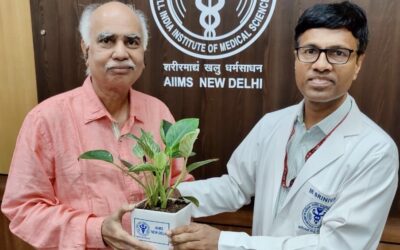
I spent a week at the All India Institute of Medical Sciences (AIIMS), New Delhi. My cardiac situation needed an evaluation and thanks to my long-standing friendship with Dr M. Srinivas, Director, AIIMS, it was done. I am back in Hyderabad and sharing some nice memories of the Institute and the people who work there…

Living in Devotion

Living in Devotion

I had a respectful familiarity with the Sri Ramakrishna Mission. Besides reading the excellent books that they have been publishing, I had the fortune of visiting the Dakshineshwar Kali Mandir in Kolkata twice where Sri Ramakrishna met Narendra…

Divine Comedy, Human Tragedy

Divine Comedy, Human Tragedy

Last month, I reread Dante’s 14th-century Italian poem, “The Divine Comedy” (Commedia). These are three works that were eventually blended into one to tell a fantasy of what occurs after someone dies.

The Inheritance of Independence

The Inheritance of Independence

The Inheritance of Independence

I have fond memories of celebrating Independence Day in school. We would apply white polish on our canvas shoes in preparation and rehearse with gusto, the chorus of patriotic songs. I have heard in rapt attention, many Prime Ministers’ addresses to the nation – Pandit Jawaharlal Nehru (1889-1964), Lal Bahadur Shastri (1904-1966), Smt. Indira Gandhi (1917-1984) on radio and watched them every year after TV arrived in the late 1960s. Without any ideological prism, I enjoyed every Independence Day and heard the Prime Minister of the day speaking from the rampart of the iconic Red Fort, including the solo ones of Prime Minister Charan Singh (1902-1987), Vishwanath Pratap Singh (1931 -2008), H. D. Deve Gowda (b. 1933) and Inder Kumar Gujral (1919-2012).

The Nation is above political parties and leaders, whom I understand as products of their times and not as producers of their times. I saw Prime Minister Lal Bahadur Shastri when he came to Meerut to unveil the statue of Gandhiji at Town Hall in 1964, from a distance. Through my association with Dr APJ Abdul Kalam (1931-2015), I could see from close quarters, Prime Minister Rajiv Gandhi (1944-1991), Prime Minister Manmohan Singh (b. 1932) and Prime Minister Narendra Modi (b. 1950). I was awed every time in the presence of the respective Prime Ministers of India. 

The nation-building of India is still a work in progress even 72 years after its independence. We are still talking about homes with toilets, electricity, cooking gas and safe drinking water supply for every family. Of course, growth has taken place – the economy has grown, development indices like infant mortality, maternal mortality, and longevity are better than ever, but there is also decay – crimes and corruption are unabated, socio-economic inequality is dividing people, farmers are distressed and big businesses are eating away small enterprises like pythons in full collusion with the state. Our state-owned banks, postal services, government-run schools and hospitals are in their last existential phase.

What kind of a nation is India going to become? I wrote a book, India 3.0: The Rise of a Billion People, which was published earlier this year. Although it did not become a bestseller like any other good book, it was read by thoughtful people and was well appreciated. The job of a writer is to read the signs of time and share them with others through his work. The five books that I co-authored with Dr APJ Abdul Kalam spanning 1999 to 2015 did precisely that. We took the pulse of the people and recorded it for posterity. I wrote a 600-page tome on Dr Kalam to preserve his work after he departed and dared to write India 3.0 solo, just to preserve his dream of India for the future generations. 

Today, I want to transcend what Dr Kalam saw India become as a nation and try to see what it is actually becoming right in front of my eyes, to share the signs of my times with younger people. India is coming out of its self-imposed isolation and joining the global political order aligning with regional forces, namely China, Russia, Iran and Turkey. Whatever this development results into will be important for India. India is accepting the globalized economic order; our economy will work in the ecosystem created by Microsoft, Google, Facebook and their like. Our leaders will take their notes and brief from the Artificial Intelligence (AI) deduced trade strategies and war games articulated by global corporations. 

People who are educated, healthy and open-minded will flourish, whereas people who are blindfolded to whichever ideology they chose to be blinded with, will perish. India’s destiny is to be a market of more than a billion people and a provider of intelligent, skilled and hardworking people to the global economy. Globalization of the Indian economy took place in the last twenty years, is happening now, and will only happen in the next twenty years with greater speed, depth and breath. Steve Jobs (1955-2011) famously said, “You can’t connect the dots looking forward; you can only connect them looking backwards. So you have to trust that the dots will somehow connect in your future.” Each one of us has to lead our lives, our families and our communities by making our best efforts, and India will become a better country, let there be no doubt about it.

[DISPLAY_ULTIMATE_SOCIAL_ICONS]

MORE FROM THE BLOG
Divine Comedy, Human Tragedy

Divine Comedy, Human Tragedy

Last month, I reread Dante’s 14th-century Italian poem, “The Divine Comedy” (Commedia). These are three works that were eventually blended into one to tell a fantasy of what occurs after someone dies.

His Own Boss and Employee

His Own Boss and Employee

We frequently overlook patterns of change since they are typically spread over a hundred years or more, and the average human life span is approximately 70 years…

Recognizing Reality

Recognizing Reality

As the first Noble Truth, Buddha declared that life is suffering. According to the legend, Prince Gautama Siddhartha was restricted to his palace by his father, who worried that he might become an ascetic due to a prophecy made at the time of his birth…

Open a Book, Open a Mind…

Open a Book, Open a Mind…

Open a Book, Open a Mind…

“The only important thing in a book is the meaning that it has for you.”
― 
William Somerset Maugham

Education and books play important roles in one’s life. They broaden one’s vision by giving one the wealth of experience and insights without having to undergo particular incidents. Books have been my constant companions as I moved on with life and their authors helped me see and understand better the enigma of human existence. I have never travelled without a book and my personal library is my most cherished asset. 

My first serious book reading was The Memories of a Cat written by M.N. Roy (1887-1954). I struggled to comprehend the book but read it fully nevertheless. Then came two novels of Ayn Rand (1905-1982) – Fountain Head, followed by Atlas Shrugged. Both the novels made me sceptical of establishment, particularly politicians and big corporates, for the rest of my life. Three books of William Somerset Maugham (1874-1965) – The Moon and Sixpence, Of Human Bondage, and The Razor’s Edge inspired me to be a writer. In 1985, as if by God’s hand, Gestalt Therapy Verbatim by Fritz Perls (1893-1970) reached me, helped me immensely to sort out my migraine headaches and led me to other self-help books written by Wayne Dyer (1940-2015), Robert Schuller (1926-2015) and Norman Vincent Peale (1898-1993). All these books helped me enormously to assist Dr APJ Abdul Kalam (1931-2015) write Wings of Fire in 1999. To be a good writer, you ought to be a good reader first. 

Then I read Alchemist of Paulo Coelho (b. 1947) in 2001 followed by all his books as and when they arrived. In 2004, I got The Glass Palace of Amitav Ghosh (b. 1956) and later read his other books – Sea of Poppies and The Hungry Tide. Three books of V.S. Naipaul (1932-2018) on India – An Area of Darkness, India: A Wounded Civilization, and India: A Million Mutinies Now gave me perspectives of being an Indian. My thinking is deeply influenced by Carl Jung (1875-1961). His idea of Unconscious, Shadow, and Archetypes is very real and I could feel it inside me. His Memories, Dreams, Reflections, I must have read four times and every time, I gained fresh insights. I feel everyone must read How We Live and How We Die, two books of Sherwin Nuland (1930-2014) to appreciate the gift of life and the inevitability of death. 

My world view is broadly formed by Alvin Toffler (1928-2016) and Thomas Friedman (b. 1953). I have all their books, namely Future Shock; The Third Wave; Powershift; and Revolutionary Wealth of Toffler; and The Lexus and the Olive Tree: Understanding Globalization; Longitudes and Attitudes; The World is Flat: A Brief History of the Twenty-first Century; Hot, Flat and Crowded; That Used to be Us and Thank You For Being Late: An Optimist’s Guide to Thriving in the Age of Accelerations of Friedman. Amongst current authors, I admire Yuval Noah Harari (b. 1976) and his brilliantly written three books Sapiens: A Brief History of Humankind, Homo Deus: A Brief History of Tomorrow and 21 lessons for 21st Century. Thanks to a wonderful biography of Steve Jobs (1955-2011) written by Walter Isaacson (b. 1952), Jobs is my ideal of a creative engineer. When I use Apple products – my iPhone, my MacBook, and my iPad – I can feel the genius of Steve Jobs in them. 

I am rereading these days, the books of M. Scott Peck (1936-2005) – The Road Less Travelled, People of the Lie: The Hope for Healing Human Evil and Further Along the Road Less Travelled: The Unending Journey Toward Spiritual Growth. He skilfully established the concepts of discipline and spiritual development and the forces of evil and grace in a scientific way. I am deeply intrigued by the idea of a Personal God, presented in timeless scriptures of knowledge like the Bhagavad Gita, the Ramcharitmanas and the tradition of Bhakti Saints, epitomised by Sant Tukaram (1608-1650). It is very helpful to see real and true guidance, support and solace coming from one’s inner being rather than from any of the external sources. A person devoted to a Personal God is indeed anti-fragile, not prone to errors, and is peaceful within himself, by himself. Such a person is in possession of what this world can neither give, nor take away. Wise people write books to help future generations learn from the earlier experiences of mankind. Evolution is a spiral, not a circle and books make that happen.

[DISPLAY_ULTIMATE_SOCIAL_ICONS]

MORE FROM THE BLOG

Living in Devotion

Living in Devotion

I had a respectful familiarity with the Sri Ramakrishna Mission. Besides reading the excellent books that they have been publishing, I had the fortune of visiting the Dakshineshwar Kali Mandir in Kolkata twice where Sri Ramakrishna met Narendra…
Divine Comedy, Human Tragedy

Divine Comedy, Human Tragedy

Last month, I reread Dante’s 14th-century Italian poem, “The Divine Comedy” (Commedia). These are three works that were eventually blended into one to tell a fantasy of what occurs after someone dies.
His Own Boss and Employee

His Own Boss and Employee

We frequently overlook patterns of change since they are typically spread over a hundred years or more, and the average human life span is approximately 70 years…

Times have changed, so has God

Times have changed, so has God

Times have changed, so has God

Embed from Getty Images

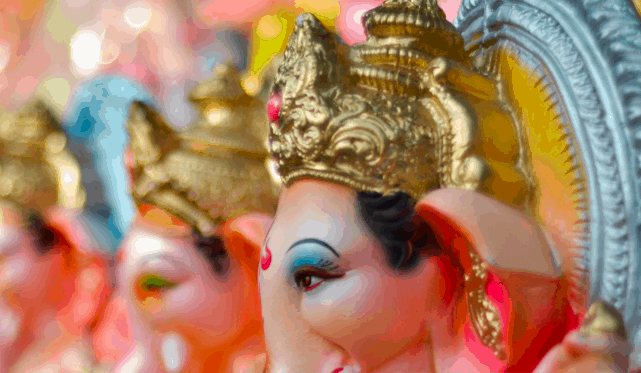
India has a rich tradition of worshipping a Personal God. In the Vedic tradition, God was seen in the Natural Forces – Sun, Wind, Water, and so on. Then came the Upanishads and the idea of God as an impersonal force – unseen, omnipresent, almighty, incomprehensible by man, ground of existence, absolute essence, etc., emerged.  The famous term ‘Neti, Neti’ – ‘Not this, not this…’ came into vogue in looking for God. Finally, starting with Shankaracharya, the idea of worshipping a personalized God, gained root. Even the Buddhists converted Buddha into a personal God. Jesus Christ too, became a personal God.   

In the Bible and the Quran, God is described as a personal creator, who talks with and instructs his prophets. Personal relationships with God may be described in the same way as human relationships, such as, a Father in Christianity, a Lover in Sufism, and a Mother in Hinduism. The Bhakti tradition of India created a Master-servant relationship between Man and God. Saint Francis of Assisi even saw Man as an instrument of God. Organized religion, later on branched out as commercial religion and the market for Personal God related merchandise boomed – talismans, idols, pictures, and so on.

What does a young person do with God in the modern world? Organized religion has greatly lost its appeal to the urbane, rationale and scientific person. The idea of an Abstract God remains vague and therefore, is not very useful in practical terms. So, how about understanding God as intelligence inside and outside of the human body? Everything is orderly inside the human body – the blood pressure, the heartbeats, the temperature, the digestive system, respiration… Everything is working most intelligently and for good. Outside also, an exact amount of oxygen in the atmosphere, days and nights, seasons… all is good and fully functional in the most ordered way.

Personal worship then becomes an alignment with this intelligence and not going against it. This means following the signals of your body, keeping it clean, free of toxins and nourishing it with nutrients, exercise and rest, staying connected to Nature, feeling the fresh air, staring at the stars, basking in mild sunshine, and floating in a water body, if possible. And most importantly, listening to your inner consciousness – the drives, intuitions, hunches – and taking note of the dreams that bring important messages every night from the depths of your inner world and in sync with the unknown, trying to make itself known to you for your own good.

In every major religion, Free Will is seen as a gift of God to Man, and it is this that distinguishes him as superior to every other living creature. In the Bhagavad Gita, Shri Krishna, after preaching to Arjuna about the three paths to reach him – the knowledge way, the action way, and the devotion way, gave him the choice to pick any one of them or leave all three – yatheccha si tatha kuru (Bhagavad Gita 18.63). In the Holy Bible, the predicament of human life is free will. “I don’t do the good I want to do; instead, I do the evil that I do not want to do (Romans 7.19). Dr APJ Abdul Kalam (1931-2015) used to tell me, “Free will is given to Man so that he willingly surrender it to God’s will.” Joseph Campbell (1904–1987) puts it so beautifully, “The goal of life is to match your heartbeat to the beat of the Universe.”

So, instead of signing off the concept of God as old-fashioned, fossil, dogma or making it a hollow ritual confined to ceremonies, understand it as an inseparable part of your being, real, palpable, operating upon you from inside and the outside, every instant, as Supreme Intelligence. An agitated mind is indeed noise, and emotions like greed, anger and lust, are like viruses hijacking your CPU that is connected to the evolutionary operating system Cloud – God.

MORE FROM THE BLOG

Paradox of Life

Paradox of Life

I met Dr Dilip Pawar by chance. But what a good chance it turned out to be. He is an oncologist turned clinical pharmacologist and a leading figure in the discovery of cancer drugs. A sagacious person of calm temperament, Dr Pawar worked with cancer patients throughout his career, especially the poor…

Minimum Working Hypothesis About Life

Minimum Working Hypothesis About Life

It is normal to consider the meaning of life after leading a fulfilling life. I lived an active life that included travel, met many saints, outstanding people, and celebrities, and had my due share of disappointments and accomplishments…

Intentional Asceticism

Intentional Asceticism

My long-standing friend and publisher of several books Piyush Kumar sent me a copy of Lifespan, a book by David Sinclair, regarding the science behind aging, during my stay at AIIMS, New Delhi. Dr. Sinclair (b. 1969) is an is an Australian-American…

Comments

Your Health, Our Commerce

Your Health, Our Commerce

Your Health, Our Commerce

Embed from Getty Images

The power of modern medicine in extending life is incredible! But the other side of the story of the quality of the extra years in life is dubious, if not dreadful. The 1950, the global average life expectancy was 48 years. It increased to 71.5 in 2014. Global average life expectancy increased by 5.5 years between 2000 and 2016. If about three months continue to be added with each passing year, by the middle of this century, life expectancy at birth will be 80 years by 2050. By the end of the century, it will be 100 years. 

No matter how rosy this picture looks, there are two issues involved. The first is, what will people do with such a long lifespan? The world as it exists, is designed for productivity till 60 years, and in some intellectual occupations like science, academics, and the judiciary, it is 65 years. So one stops earning by that time and starts living off one’s savings, if there are any, or becomes a societal burden. If society itself is incapable of taking care of itself, old age is synonymous with pain, misery, solitude and agony.

I accidently changed my career from that of a missile scientist to biomedical engineering in 1995 when my mentor, Dr APJ Abdul Kalam inspired me to develop civilian spinoffs of defence technology. He was concerned about the high cost of imported medical devices, not being affordable to most Indian patients. I succeeded in making a coronary stent and riding that success, landed myself an opportunity to work with doctors since then. I do not want to sound cynical but the ringside view of the healthcare sector that I accidently got to have, was unpleasant if not revolting. 

I saw rampant corruption in the pricing of drugs and consumables. There are commissions at every stage in the supply chain without any value addition. Prescriptions are not honest and off late, even diagnostics  is linked to the terms and conditions of your insurance policy and your capacity to pay for your treatment. Like banks stripped themselves of the trust of the people who deposited their savings to earn interest, inefficiency mars hospitals in the government sector while the corporate ones are defaced by crass commercialization of medicine. 

As if by design, sugar and low grade fats are being pumped into our diets. Exotic chemicals are used in food processing to increase the shelf life of products and food adulteration has become an accepted norm of modern living, rather than some abhorred sin. The combined effect of all these have brought in a rampant increase in the prevalence of chronic diseases – diabetes and other hormonal disorders, hypertension, obesity, irritable bowl syndrome and autoimmune problems messing up with the respiration in a serious manner. 

It is common to see school-going children carry anti-asthmatic nasal sprays in their school bags, young men and women having cancers and heart disease, and by the time one is fifty, one is on a daily prescription for diabetes, hypertension and/or non-steroidal anti-inflammatory drugs (NSAIDs). Each of these drugs has its own side effects and a few years of consumption push you into some or the other systemic impairment and all this costs money which eventually goes into the coffers of global giants who make these medicines, own beverages and fast food businesses, hospitals and insurance companies. 

I found a lot of sense in the books written by Croatian-Austrian philosopher Ivan Illich (1926–2002). For Dr Illich, the world is suffering from too much medical interference, and a medical edifice has been built which is one of the threats to the real life of human beings – a threat which so far has been disguised as care. So, eat and drink industrialized food, breathe toxins and automobile exhaust loaded air, drink only bottled water as the normal one is indeed injurious to health and loaded with infectious microbes, get diagnosed for at least one chronic disease and become an entry in the Excel Sheet of a global conglomerate that spreads its investment portfolios in food, pharmaceuticals, hospitals, and of course, the media. And do not look down upon them. They are indeed great philanthropists and regularly donate for human causes. They are not robber barons of the earlier centuries. They are indeed very friendly and painless, even as they stick to you like leeches! 

MORE FROM THE BLOG

Paradox of Life

Paradox of Life

I met Dr Dilip Pawar by chance. But what a good chance it turned out to be. He is an oncologist turned clinical pharmacologist and a leading figure in the discovery of cancer drugs. A sagacious person of calm temperament, Dr Pawar worked with cancer patients throughout his career, especially the poor…

Minimum Working Hypothesis About Life

Minimum Working Hypothesis About Life

It is normal to consider the meaning of life after leading a fulfilling life. I lived an active life that included travel, met many saints, outstanding people, and celebrities, and had my due share of disappointments and accomplishments…

Intentional Asceticism

Intentional Asceticism

My long-standing friend and publisher of several books Piyush Kumar sent me a copy of Lifespan, a book by David Sinclair, regarding the science behind aging, during my stay at AIIMS, New Delhi. Dr. Sinclair (b. 1969) is an is an Australian-American…

Comments

Why India should help Africa become United States of Africa

Why India should help Africa become United States of Africa

Why India should help Africa become United States of Africa

Africa is a continent across the Indian Ocean with great assets, huge opportunities as well as insurmountable challenges. Sixty percent of the land is arable, but uncultivated. There are no systems of intercontinental railways and roadways.  Although there are great rivers, there is no hydro-electricity generation and no waterways. The immense oil reserves are ravaged by violent conflicts. There is no electricity grid, not many hospitals, very few universities and colleges, but millions of immensely talented people waiting to receive higher education and skills. India is a natural partner in all of this and it is indeed its destiny to help Africa rise and take its rightful place in the modern world.

My tryst with Africa naturally started with President A.P.J. Abdul Kalam (1931-2015). In 2004, I was assigned a pivotal role to bring 24 Tanzanian children with congenital heart defects to India for surgery. They were flown free of charge by Air India with their mothers and accompanying doctors and nurses, and operated upon free by Care Hospital. I assisted President Kalam in conceptualizing the Pan-Africa eNetwork and got its fist link operational between Black Lion Hospital, Addis Ababa and Care Hospital, Hyderabad. Later, I met Mahesh Patel (b. 1955), an Indian-African and the Chairman of Export Trading Corporation (ETG), one of the largest and fastest growing integrated agricultural conglomerates present across the African continent, and he made me an integral part of his missions.

Over a span of many years, I went to South Africa, Mozambique, Malawi, Zambia, Tanzania, Kenya, Uganda, Rwanda and Ethiopia and the island African nations of Mauritius and Seychelles and am blessed with great friends everywhere. I have read all major books written on Africa, most notably by Basil Davidson (1914-2010), John Reader (b. 1937), Martin Meredith (b. 1942), and Richard Dowden (b. 1949) and felt at heart the term ‘black consciousness’ first used by William Edward Burghardt (W.E.B.) Du Bois (1868-1963). He famously wrote, “After the Egyptian and Indian, the Greek and Roman, the Teuton and Mongolian, the Negro is a sort of seventh son,…”

I see African people as ‘different but equal’. They are our natural neighbours and our most trusted allies in the post-western world. India and Africa will rise together in the emerging parallel order – New Development Bank and the Asian Infrastructure Investment Bank (to complement the World Bank), Universal Credit Rating Group (to complement Moody’s and S&P), RuPay (to complement Mastercard and Visa), CIPS (to complement SWIFT), and the BRICS (to complement the G7). Many other Indian success stories can be repeated in Africa. HAL and Tatas can be Africa’s aviation partners; ONGC and Reliance, oil partners; ISRO, their space partner; BEL, their electronics partner; BHEL, the hydro-electricity partner; NPCIL, the Nuclear Electricity partner; and NABARD, NSC and IFFCO, their agriculture partners.

The dream of the United States of Africa belongs to Jamaican-born African-American Marcus Garvey Jr. (1887–1940). Almost single-handedly, he created a ‘Back to Africa’ movement in the United States of his times, touring the country and urging African-Americans to be proud of their race and return to Africa.  In his poem ‘Hail! United States of Africa’ published in 1924, Marcus Garvey wrote:

Hail! United States of Africa-free!
Hail! Motherland most bright, divinely fair!
State in perfect sisterhood united,
Born of truth; mighty thou shalt ever be…
From Liberia’s peaceful western coast
To the foaming Cape at the southern end,
There’s but one law and sentiment sublime, One flag, and its emblem of which, we boast…

Africa in the 21st century ought to mean a Pan-African economy, at par with the European Union – the United States of Africa would operate under one Schengen-like visa, one African currency and free intra-trade system across the continent. Through my hundreds of interactions with African people over a decade and travels in the continent, I have realized that Africa has much more to give to the world and to the people than it has taken or would ever take from others. India can indeed beat the drum and lead the parade, when Africa marches on to become USA-2.

[DISPLAY_ULTIMATE_SOCIAL_ICONS]

MORE FROM THE BLOG

Minimum Working Hypothesis About Life

Minimum Working Hypothesis About Life

It is normal to consider the meaning of life after leading a fulfilling life. I lived an active life that included travel, met many saints, outstanding people, and celebrities, and had my due share of disappointments and accomplishments…

Intentional Asceticism

Intentional Asceticism

My long-standing friend and publisher of several books Piyush Kumar sent me a copy of Lifespan, a book by David Sinclair, regarding the science behind aging, during my stay at AIIMS, New Delhi. Dr. Sinclair (b. 1969) is an is an Australian-American…

The Culture of Excellence

The Culture of Excellence

I spent a week at the All India Institute of Medical Sciences (AIIMS), New Delhi. My cardiac situation needed an evaluation and thanks to my long-standing friendship with Dr M. Srinivas, Director, AIIMS, it was done. I am back in Hyderabad and sharing some nice memories of the Institute and the people who work there…