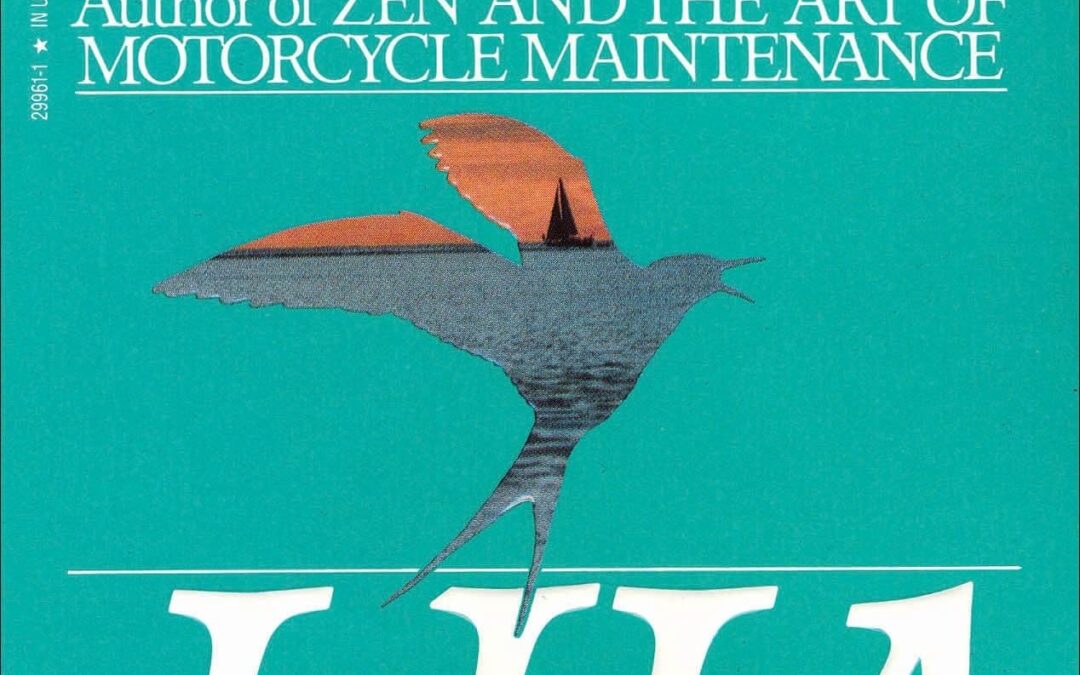
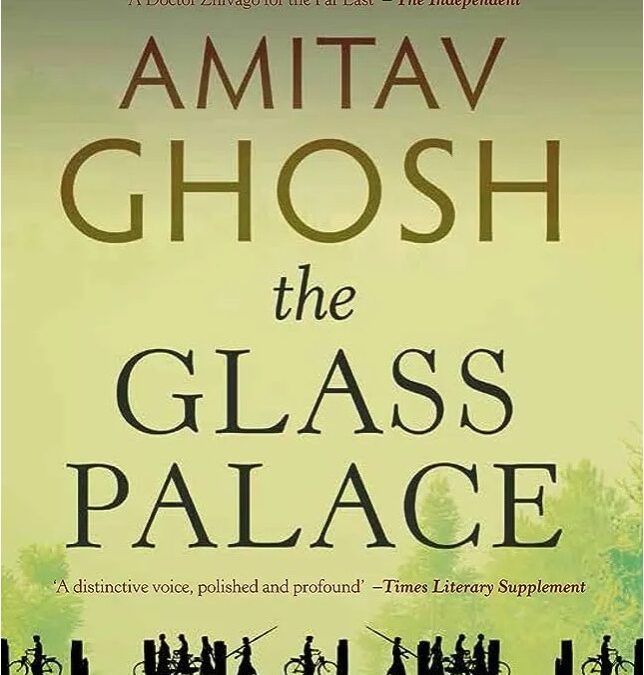
I enjoy reading quite a lot—sometimes as much as ten hours a day, though on average about eight. Reading has become my primary pastime—not as a leisure activity, but as a discipline. I read good books, chosen carefully, ordered online and added to a personal library...

Blogging, AI, and Virginia Woolf
Blogging, AI, and Virginia Woolf
On May 1, 2019, I began a journey that I could not have anticipated would change the way I see myself as a writer. It was not born of ambition or grand design but of inspiration. Gopi Reddy and his wife, Tanya, nudged me toward blogging as a form of expression. Tanya went a step further and built a website for me—a modest but enduring home where words could settle, breathe, and wait for readers.
I promised myself consistency. Every fortnight, without fail, I would publish a narrative of about a thousand words. Five years later, this rhythm has carried me here—to the writing of my 150th article. What began as a pastime has quietly evolved into a discipline, and what was once a hobby has now grown into a substantial body of work that surprises even me. Then AI entered the story.
Recently, my publisher friend, Ashutosh Ramgir, offered me a gift that felt almost uncanny. He fed my entire collection of blogs into an AI engine, asking it to read, understand, and distil the essence of my writing. The outcome came in three waves, each more intriguing than the last.
The first was purely technical but astonishing in its speed. In a matter of seconds, the AI had extracted passages from across my blogs, organised them into themes, and produced a book—Spectrum—structured into eight chapters. What would normally take weeks or months of careful curation was accomplished in the blink of an eye, and yet the result was not a mechanical jumble. It was coherent, almost artful, a seamless narrative built from my scattered reflections.
The second discovery was more personal. Based on the themes, influences, and references in my writing, AI concluded that I was, at heart, a rational spiritualist. Not a mystic lost in blind faith, nor a sceptic dismissing the unseen, but someone who seeks spiritual truth through reason, evidence, and lived experience.
The third revelation was most striking: AI placed my writing in the literary lineage of Virginia Woolf. Until that moment, I had read Woolf only in fragments, admired her reputation, and taken note of her influence on modern literature. But to hear that my writing resonated with her style—that was something different. It prompted me to look more closely at what makes her voice so enduring.
Virginia Woolf (1882–1941) pioneered what is now known as the stream of consciousness technique: a narrative that mimics the continuous, sometimes disjointed motion of the mind itself. Past and present intermingle. Memories flash into the present moment. Sensations blur with reflections. The plot becomes secondary to perception. For Woolf, the drama of fiction was not what happened in the external world but what unfolded within—the fragile, fleeting, luminous texture of thought.
What Woolf achieved was a new way of seeing. She showed that the significance of a moment does not lie in its scale—whether it is a war or a tea party—but in its effect on consciousness.
When I looked back at my own blogs, I began to see similar impulses. I had often written not of grand events but of the texture of thought. For instance:
“Sometimes, now, I find myself slipping into bed absurdly early, before the city has quite stilled. And then, as if in compensation, the mornings open their hand to me sooner than I expect, and I step out onto the balcony that faces East.”
The moment is simple, almost trivial: a person rising early, waiting for the sun. Yet in its unfolding lies a meditation on existence itself.
Another passage lingers on the ordinariness of dawn:
“The sky pales, blushes, reddens; I am lifted, buoyed, as though some invisible cord has cut me free from the heaviness of fears, the small insistent burdens of the world.”
Woolf, too, elevated such moments—finding in them the very “stuff of fiction.” Elsewhere, my reflections carried similar resonance:
“Run not for yourself alone but for the farmers whose hands still till the soil, for the ecosystems that shelter unseen futures, and for the billions who depend on agriculture not just for food but for dignity, security, and life itself.”
These are not descriptions of events; they are immersions into consciousness, both individual and collective.
So far, I have published thirty-five books, with five more in progress and due for release in 2025. People sometimes ask me how I manage such output, but the truth is humbler and stranger: I do not feel as though I write these books. They seem to write themselves.
“Ideas circle in the air like invisible seeds, waiting for a mind in which to germinate. When one finds me, it takes hold, grows roots, and eventually insists on being written.”
The metaphor of possession—of being written by thought rather than writing it—echoes the way Woolf saw consciousness itself: as fluid, transient, and greater than the individual.
There is a paradox worth pausing over here. On the one hand, AI is often seen as mechanical, inhuman, and incapable of true understanding. On the other hand, in this experience, it acted almost as a critic, a companion, even a mirror. It read with a patience no human could muster, absorbed every nuance, and then returned a portrait of me I had never drawn for myself. Sometimes, this surfaced in fragments that felt almost Woolfian:
“Stories poured out, fragile and immense at once: gods battling across the skies, men rising and falling in triumph or disgrace, dreams of wings, of voices that leapt from body to body, untethered.”
Or in long reflections on science, which nonetheless flow like a current of consciousness:
“In the field of computer vision… There is no space where PJN, as he is lovingly called, and his students, all of whom grew up as accomplished scientists and engineers holding great positions in academia and industry, are not present.
Even when I write of agriculture, it emerges not as mere policy but as lived philosophy:
“Agriculture is not merely the art of growing food—it is the art of growing civilisation. To dishonour it is to imperil humanity; to nurture it is to secure the future.”
And always, at the centre, the moral heartbeat:
“Protecting smallholders and marginalised communities is the most powerful foundation for strengthening a nation, for they are the roots that sustain sustainable growth, resilience, and shared prosperity for all.”
To be told that I write in Woolf’s style was more than a compliment; it was an invitation. An invitation to read her more deeply, to learn consciously what I had perhaps been doing unconsciously, and to honour the lineage of writers who have made literature a vessel for the human mind.
As I stand at the milestone of my 150th blog, I find myself grateful for this odd collaboration between past and present, between the ghost of Virginia Woolf and the circuitry of artificial intelligence. Together, they have shown me who I am as a writer—not an isolated creator but part of a continuum, where ideas drift, take hold, and speak through us.
And so, I will continue to write. Every fortnight, another thousand words will find their place. Whether read by people or machines, whether seen as rational spiritualism or Woolf-like introspection, the act itself matters. As I once wrote, in a line that feels like a prophecy.
“Every knife comes with a handle, and only fools get injured by holding the blade and not the butt. The AI will locate the young person who learns to use it wisely and send him work, and with that wealth, also will come as a shadow that follows the body.”
Writing, in the end, is not about ownership but about surrender—about letting the ghosts of thought speak through us.
MORE FROM THE BLOG
Learning the Art of Writing by Reading
From Disease to Wellness: Time for a Paradigm Shift
Modern medicine is magnificent at one thing: it rushes heroically to the battlefield after the war has already been lost. When the coronary artery is blocked, a stent is inserted. When the pancreas fails, insulin is administered. When cancer erupts, it deploys...
A Hero’s Journey of Taking Cognition Beyond Mortal Neurons
In an age mesmerised by rankings, metrics, and loud declarations of success, the most consequential journeys often unfold quietly. They are not propelled by brilliance alone, but by curiosity, humility, and an unyielding fidelity to truth. The exploration of...