Who I am? Why was I born? Why are people born in different conditions – some in poor families, some in rich, some in developed countries, some in conflict-prone areas and amidst astute poverty and depravity?…
This world is a stage, not a multiplex
This world is a stage, not a multiplex
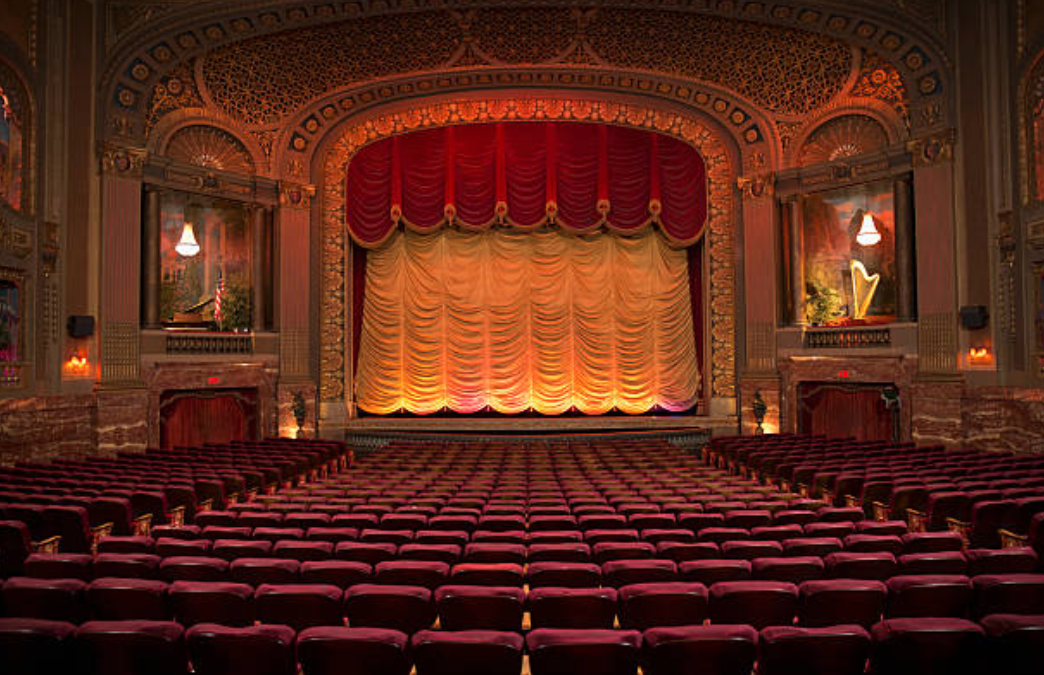
Commenting on the blog article – Hack Your Time, Do More of What Matters – a long-standing friend and a spiritually evolved and worldly successful person, RN Bagdalkarji, suggested to me to “write one more blog wherein you can bring out how effective people make use of their time.” This led me to wonder how confusing this issue actually is. While I was pondering over this, an image of a person from a small town, who has been watching films in an old theater since his childhood, now going to a multiplex with eight screens showing different films with no one really restricting entry if one wants to see a little bit of every film, came to my mind.
What if this person decides to maximize his expenditure by enjoying the best of eight different films – a song here, a dance there; a fight here, a love-making scene there; a courtroom argument here, a devotional song there? Of course, it is funny and silly. But this is exactly what most of us are doing with our one life – we are not living through the drama of our own world as our seers advised. We are indulging in the various dramas going on around us, including those where there is no role, or even a dialogue for us in the script. Surprised? See people betting during an IPL cricket match; getting emotionally involved with the characters and events in soap operas; investigating suicide-murder mysteries and passing judgements on the happenings of the world.
We exist in two states – the waking and the sleeping – divided into 16 hours and 8 hours respectively. Wise people divide the 16 hours of waking into two equal parts of 8 hours of work – their livelihood, and 8 hours of leisure – family commitments and pastime. The eight hours of sleep are also divided into two parts – the sleep with dreams, and deep sleep. In dream sleep, our mind “watches” a grand emotional drama where we are naked in a public place, have lost our way in a maze of lanes, are being chased by a beast, bitten by a snake, or flying over things and people, and so on.
In his 2017 book “Why We Sleep,” Matthew Walker, a neuroscientist at the University of California, Berkeley, explains that we naturally sleep for 5 cycles of 90 minutes each, totaling seven-and-a-half hours. Most of the earlier 90-minute cycles are deep sleep and later, towards morning, most of it is dream sleep. So, if you are sacrificing the initial cycle by staying up late partying, or watching TV, or whatever, you are losing deep sleep, meant to repair your body. If you are sacrificing the later cycle, getting up early to catch a flight, you are losing the dream sleep meant to repair your mind. Of course, some people do recommend getting up early morning to take advantage of the calmness and the solitude. However, if one follows the saying, “Early to bed and early to rise…” one can do so and yet fulfill one’s need for proper sleep.
Bill Gates recommended Matthew Walker’s book for everyone saying, “I realize that my all-nighters, combined with almost never getting eight hours of sleep, took a big toll.” So, all of us, who are nowhere near Bill Gates in our accomplishments live ignorant about the importance of sleep, causing our health – both physical and mental – irreparable damage. The damage caused by inadequate sleep is compounded by sleeping with the mobile phone under the pillow, the LED light in the bedroom, watching TV in bed till your eyes close, and drinking tea/coffee after 8 p.m. Alcohol is a big disruptor of sleep cycles, leading to permanent damage of the brain over time.
So, having made a mess of your sleep, the Rta of repairing your body and mind, now come to the waking hours. Commuting long distances to work is a curse for a large number of people, especially those living in metropolitan cities. Doing a job you don’t like is another torture, the stress of which does not end after finishing the day’s work; it lingers beyond that and comes home with you. Similarly, arguments and fights at home reach the workplace.
Now enters the TV with a “manufactured reality” presented by every channel in its own taste and style. And finally, the Internet, the free-for-all gutter of profanities, sacrileges and misinformation that initially started with the omnipresent stream of knowledge with good intent and has now turned into an “Indra Jaal” – hacking human minds like insects trapped in a spider net. The AI engine knows what you are doing, where are you going, what mails you are typing, which calls are you taking and making and then turns you into “an ideal consumer.” And then we are taught to manage our time, when in reality, we have lost control of our lives – like a drowning man holding a stopwatch to see if his sinking is perfect!
Shakespeare wrote so sagaciously, “All the world’s a stage, and all the men and women merely players; they have their exits and their entrances; and one man in his time plays many parts, his acts being seven ages.” So, first and foremost, live your age. Allow your children to live like children, take risks when you are young, travel, live your dreams, and as age sets in, settle down, withdraw from the world gradually and then bow off the stage with grace.
Know yourself as a soul – an eternal witness – now in this body, watching this particular film in the small-town single screen theater. Connect to your childhood. Remember your grandparents, and your primary school teachers. Life is like a yarn over a spindle, everything is right here, with you every moment. In your struggle to become somebody, you have lost somewhere your real self. But the good news is that it can be recalled and felt. And it will also bring you a lot of healing.
Close your eyes and remember sitting in a theater, enjoying a movie. None of us is born to sit through different screens in the multiplex. Still better, don’t miss out on the drama of your own life, while watching the film that is this world. Find out your lines in your drama, say them with conviction and get out of the limelight as soon as your part is over. You will find yourself living with a deep sense of satisfaction, peace and fullness during the time that you spend on earth.
Say “Thank you” and “I am sorry” more often, even if you are not. This is the easiest way to participate in the world. Don’t manage time, manage yourself. You are actually the eternal consciousness, which is true, pure and blissful – Sat, Chit, Ananda. It is the ever-changing mortal body and drama around it that is not this – that is false, deceptive, and painful – allow it to roll over, like a scene in the film. Cry, laugh, jump or sink in your seat, but don’t try to run into the screen and break your head against the wall behind it.
MORE FROM THE BLOG
The Secret of Life

The Promise of a Blue Economy
Every age brings its own flavour. As a university student, I have seen computers arriving and much later, the smartphone revolution. Talk of AI and Robotics marks the present times, but what is most promising and potentially transformative is the access to millions of small islands in the oceans that cover over three-quarters of the earth’s surface…

Do we see a spiritual redux in the new millennium?
All the great scientists have been deeply spiritual, and I consider Albert Einstein to be the last of that lot. He imagined time and space sitting in his 1 BHK flat in Bern, Switzerland. After him, science became a big enterprise and was also declared secular…