February 07, 2006

February 07, 2006

February 07, 2006
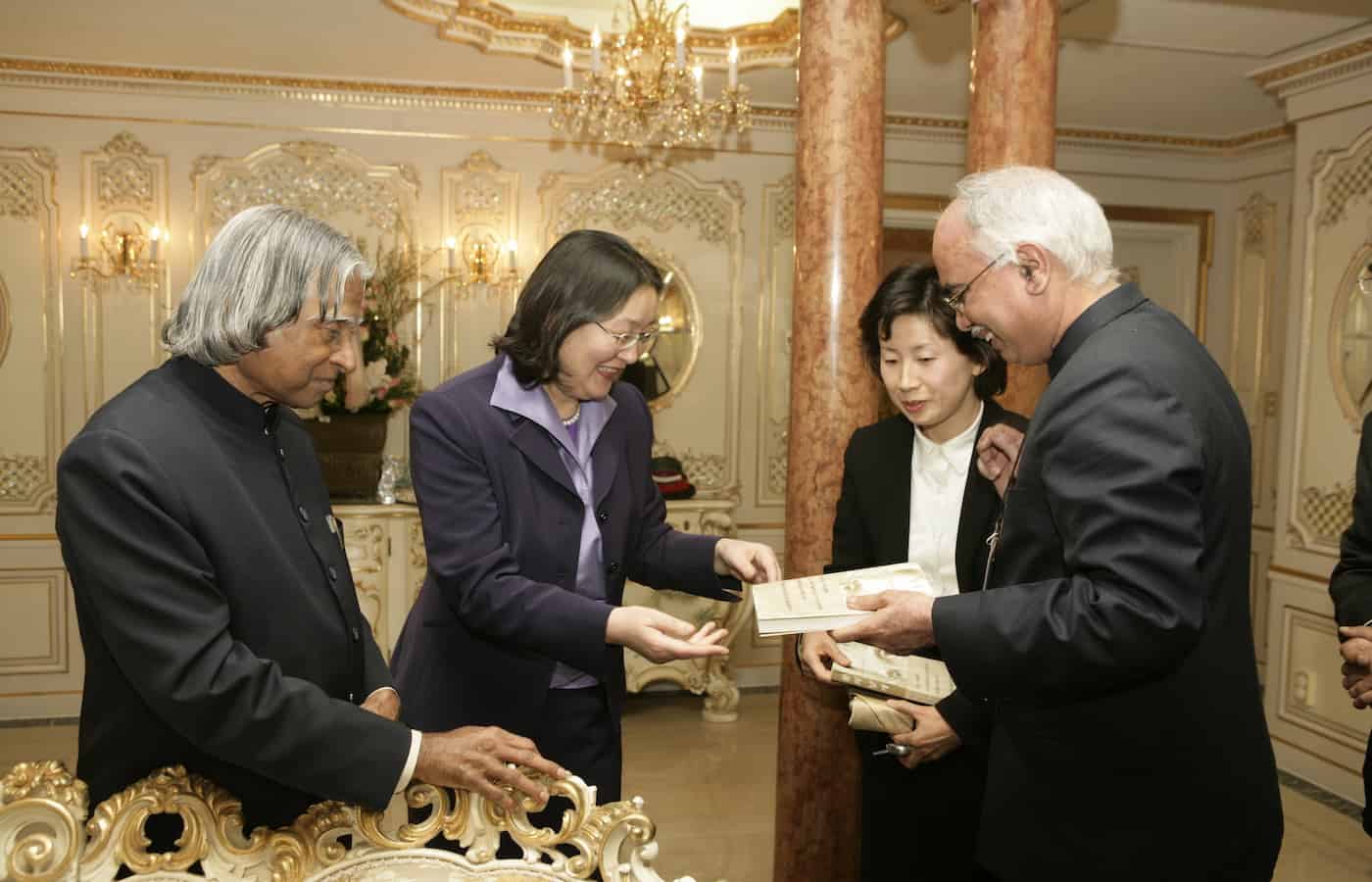
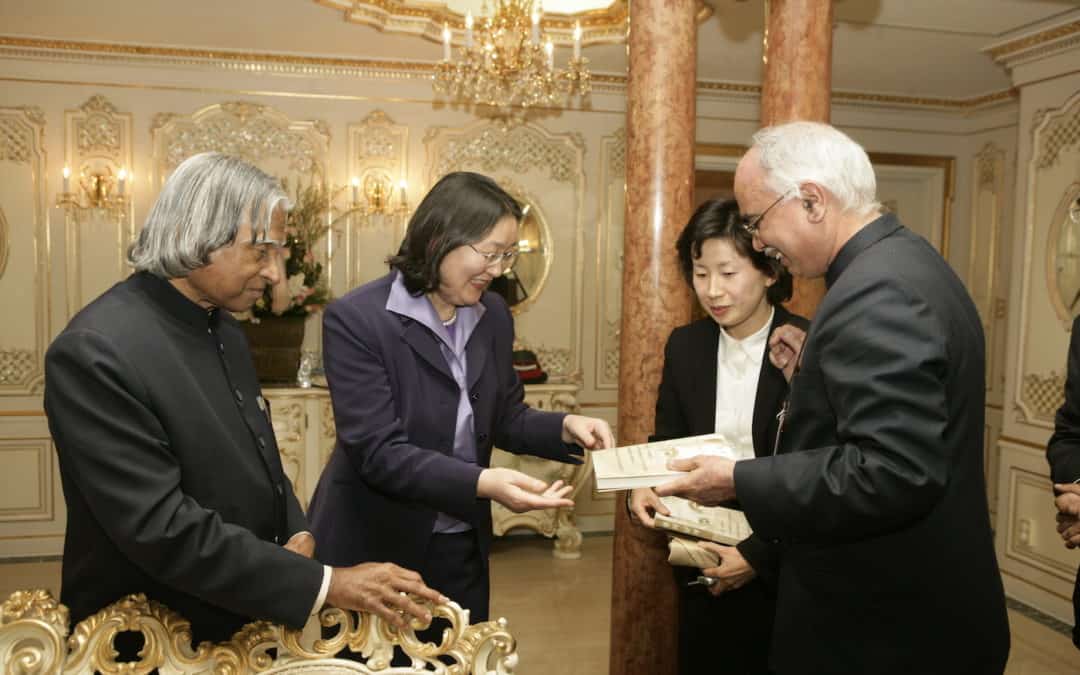
Dr. Jung-Ok Lee, a 51-year-old professor of Sociology at the Catholic University at Daegu, met Dr. Kalam and proposed to translate the book, ‘Guiding Souls’, barely a year after she had translated ‘Wings of Fire’. When Dr. Kalam asked Lee the possible reason for the popularity of ‘Wings of Fire’ in Korea, she replied, “Your book has provided a new perspective of patience and generosity to Korean youth growing in a highly competitive society. Your love for your parents and teachers, particularly to your mother, has welled many Korean eyes.”

“I see in Kalam the image of our King Sejong who energetically promoted learning throughout his 32-year reign in the 15th century,” Lee said. “Kalam’s celebration of his family, teachers and hard work in ‘Wings of Fire’ is identical to King Sejong’s statement: “All that I am, or will be, I have learned from my family, my friends, my teachers, and training with my sword.”

“Koreans have historically derived inspiration from Western Pure Land as India is known here. Right from Gautam Buddha and Princess of Ayodhya, who married Korean King Suro in the first century, to Rabindranath Tagore and now Dr. Kalam, India is seen as a beacon of light. Dr. Kalam’s impressive scientific achievements remained rooted in his righteous simplicity and that is what made him a role model over so many other successful heroes of contemporary history,” Lee said.
February 04, 2006

February 04, 2006

February 04, 2006

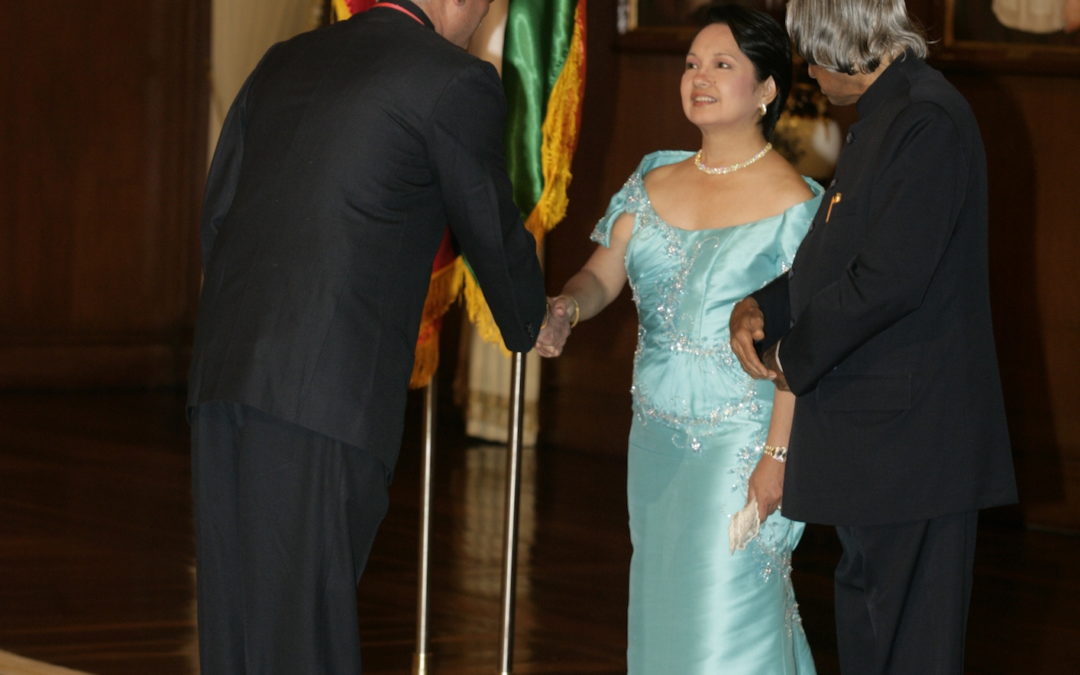
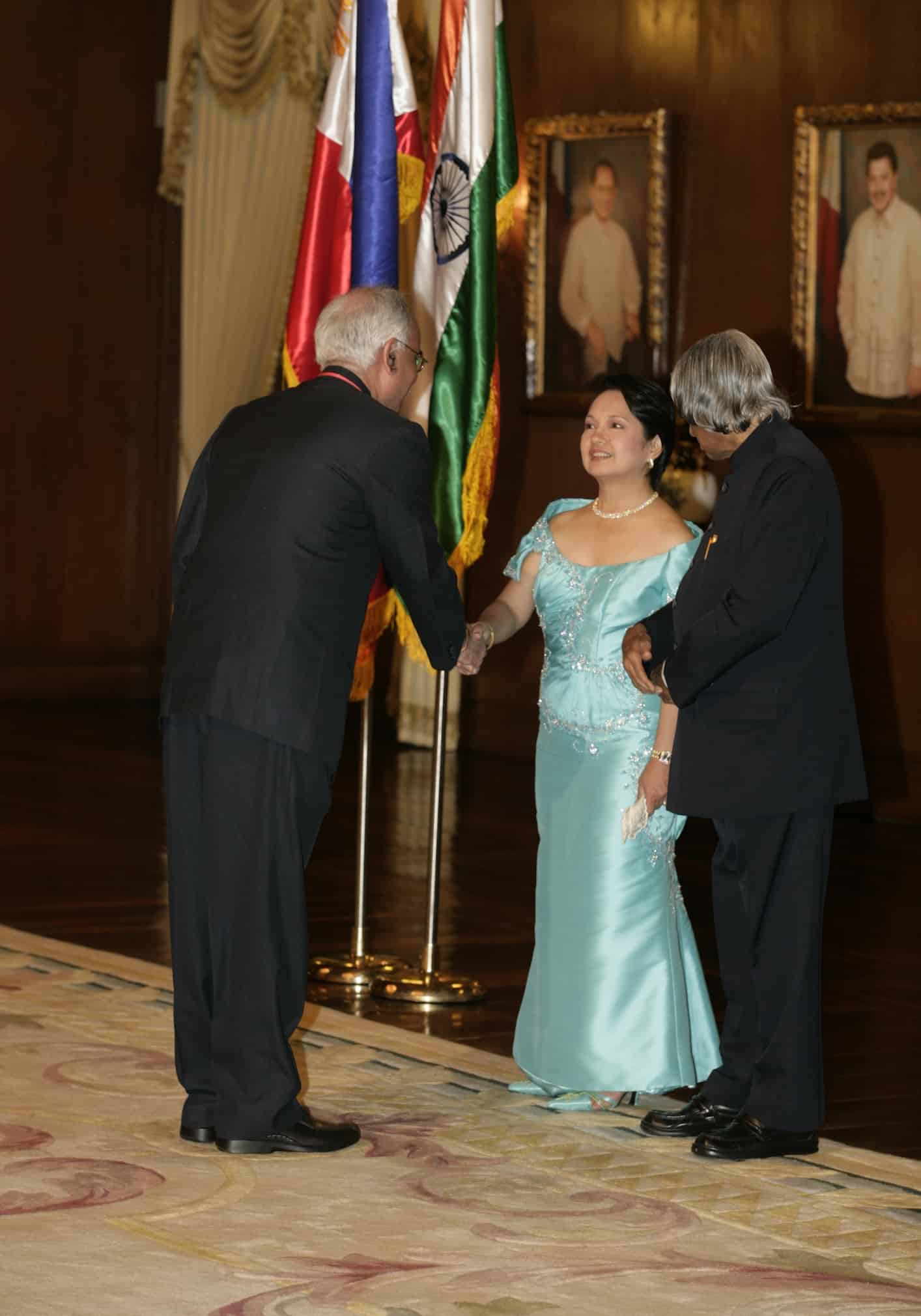
The president of the Philippines hosted a banquet in honour of President Kalam, in the Rizal Hall of the Malacañan Palace. The word ‘Malacanang’ in Tagalog, a Filipino language, means, ‘there is a noble man there’. The majestic white stone mansion on the bank of the Pasig River reflects in it’s calmly flowing water, just as it has mirrored the changing fortunes and rulers of the country. Malacañan Palace has been occupied by eighteen Spanish Governor-Generals, fourteen American military and civil governors and later, each of the presidents of the Philippines.

From Siachen to ceremonies of state, Dr. Kalam was comfortable in almost any given situation, but I can never forget his blushing face and shyness in President Arroyo’s presence. For all of his life, Dr. Kalam had been used to demurely attired Indian ladies. He had only ever encountered women from other lands in sober, formal settings. President Arroyo, though, was simply dazzling in an aquamarine, off-shoulder brocade gown with a diamond necklace adorning her décolletage. Her glamorous demeanor was quite a cultural shock for Dr. Kalam. His usual calm aplomb deserted him, and he bashfully stood next to President Arroyo at the banquet, meeting guests.

February 01, 2006

February 01, 2006

February 01, 2006

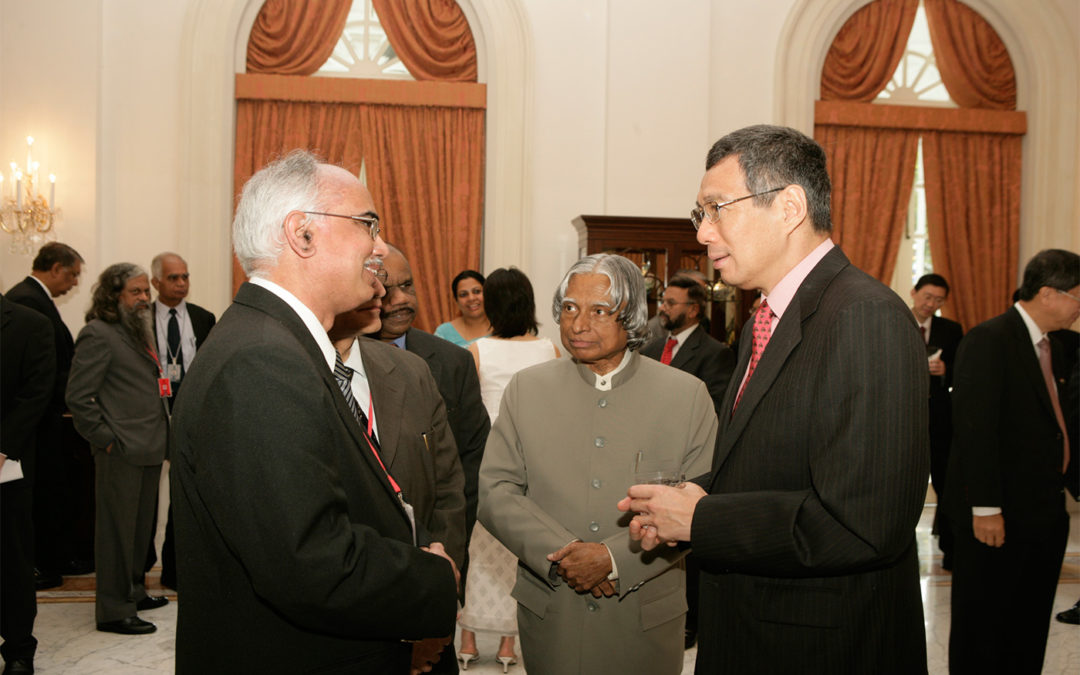
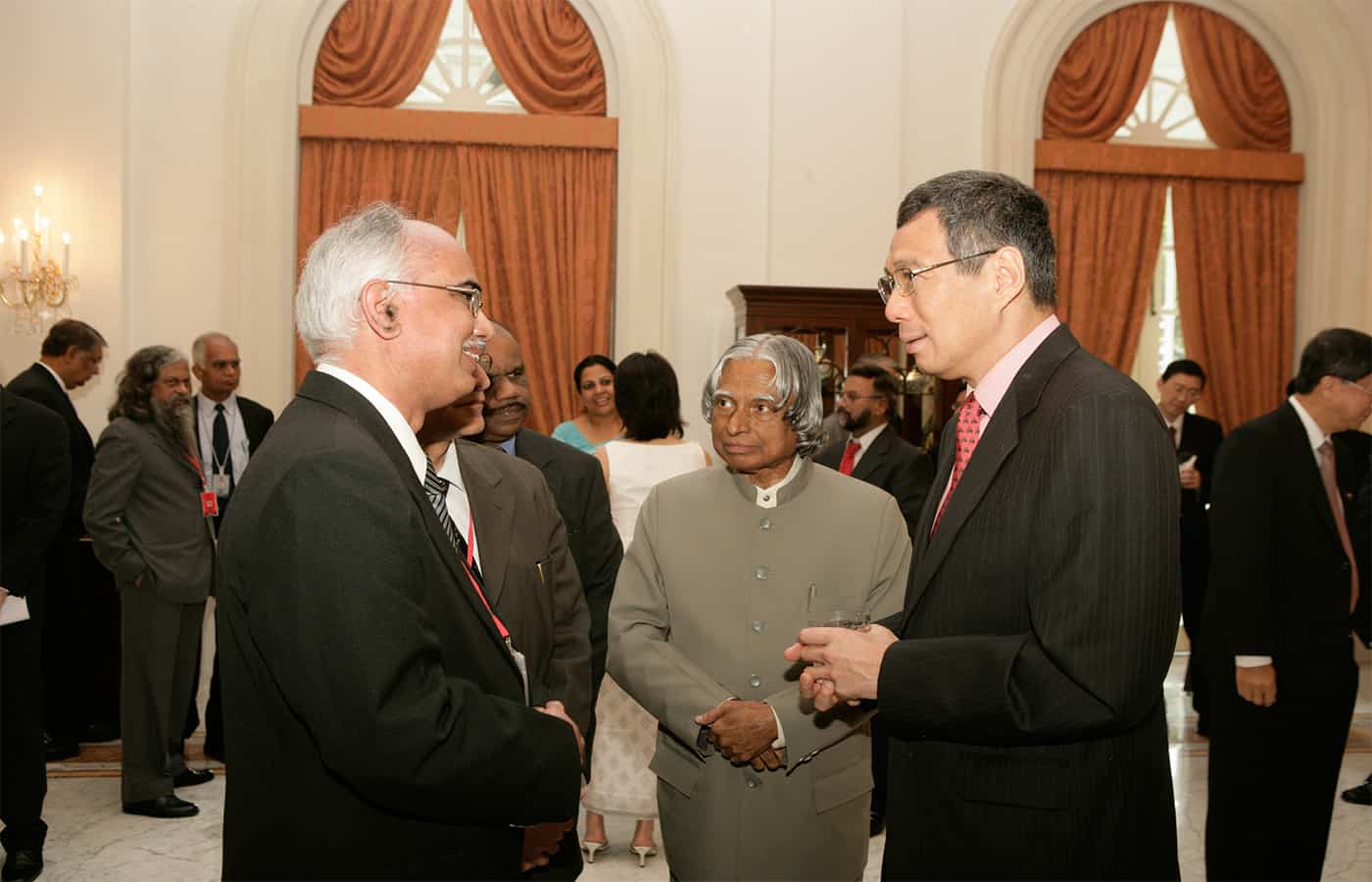
I met Prime Minister Lee Hsien Loong (b. 1952; I share my birthday with him), the third and current Prime Minister of Singapore since 2004, in Singapore. Lee is the eldest son of Singapore’s founding father and the first Prime Minister, Lee Kuan Yew, who ruled the nation for three decades.

Singapore is a nation carved from the ideals and motivation of the first generation of migrants, who chose to make this island their home. The top leadership ensured that the nation belongs to all Singaporeans, regardless of ethnicity. From the outset, equal rights for every citizen has been the foundation of the national ideology.

The government of the new nation preferred English as the language for administration. In another bold step, meritocracy was made as the guiding principle for working in the government and people with connections were kept away from the new institutions.  When I asked the reason behind the peace and prosperity of a small nation with so many ethnic diversity – Chinese, Indians, Malaysians, Hindus, Muslims, Christians, I was told that law enforcement and dispensing of justice is so impeccable and just that no one holds a grievance when punished for a fault.

I was also very impressed with the public housing system. Four of five Singaporean families live in a public house.  It not only creates a charming uniformity but also provides world-class amenities to every family. Dr. Kalam called Singapore ‘small paradise’ on earth where tradition and modernity co-exist. For me, it was a perfect blend of capitalism and socialism like chikori-mixed coffee. You feel like walking in New York minus the intimidation!

December 04, 2005

December 04, 2005

December 04, 2005

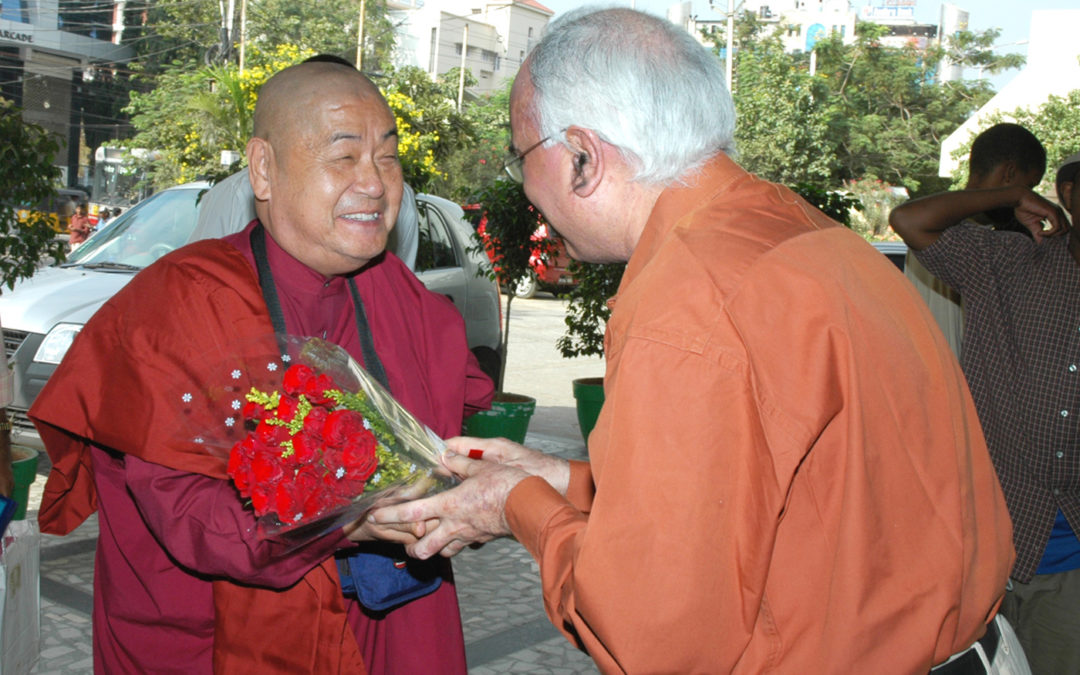
Bhadant Nagarjun Arya Surai Sasai (b. 1935), a Japanese-born Indian Buddhist monk who came to India in 1966 and made it his home, released my book, ‘Peerless Benefactor of Humanity: The Life and Thoughts of Gautam Buddha’ at Ananda Buddha Vihara, Mahendra Hills, Hyderabad.

On November 19, 2006, on the occasion of the inauguration of the Care Hospital at Nagpur, I visited Sasai Maharaj at the Indora Buddha Vihar. He made me sit opposite to him, exactly at the center of a huge dome, and chanted sutras in his booming voice, while rattling the kapali ka damaru. For about five minutes, I felt like I was in a different realm.

“I have dusted off the bad smears of your earlier incarnations and invoked your hiriottappa,” said Sasai Maharaj, walking me out of the stupa. When I asked for an explanation, Sasai Maharaj laughed and said, “Human life is like an iron rod smeared with excrement at one end and heated to a red-hot glow at the other end. It hurts the ignorant one day, debases him another day. Hiri is your disgust at grabbing the rod in the place where it is smeared with excrement, ottappa is your fear of grabbing it in the place where it is red-hot.” Well, I did not exactly become a pious person after this, but my conscience started poking me more frequently and rather forcefully, suggesting that hiriottappa were very much active!

April 18, 2005

April 18, 2005

April 18, 2005

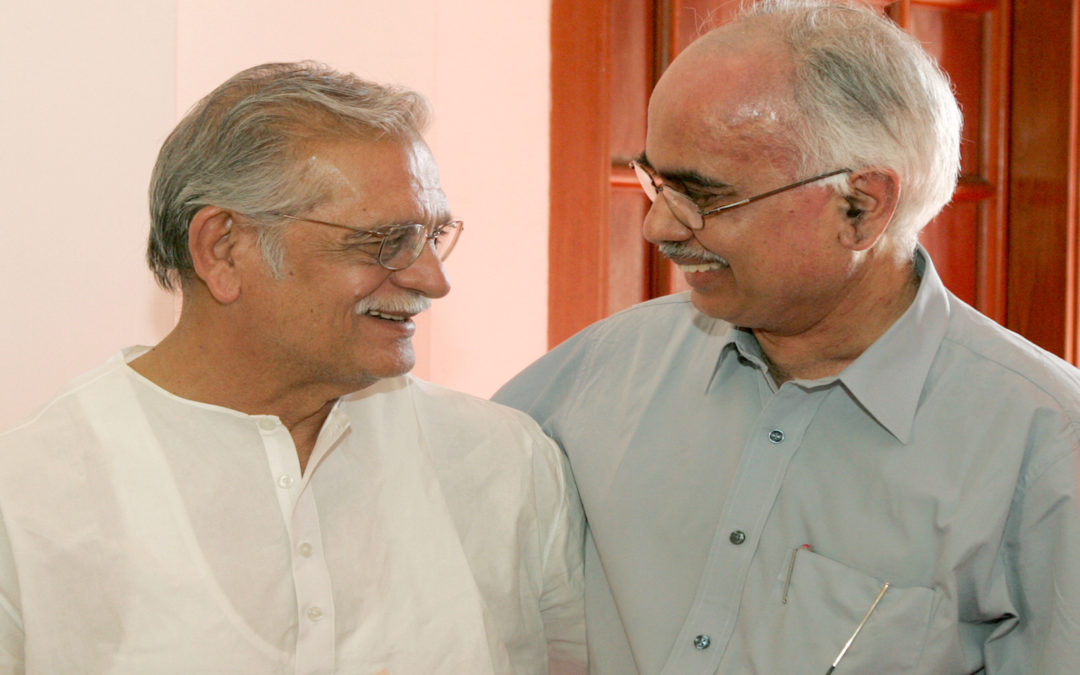
Sampooran Singh Kalra, popularly known as Gulzar (b. 1934) met President Kalam to present the audio version of our book, ‘Wings of Fire’, that he had translated and narrated in Hindustani, with the title, ‘Parwaz’. When asked the meaning of ‘Parwaz’ by Dr. Kalam, Gulzar sahib explained that having wings is not enough to become a bird. The existential truth of the bird is to fly. This struggle, this endeavor, this aspiration to fly higher and higher is ‘Parwaz’. Hearing this, President Kalam, setting aside protocol, got up and held Gulzar sahib’s hand.

After coming out of the Presidential Study, where the meeting took place, Gulzar sahib lovingly hugged me and said, “Kya khoob likh diya bhai apne.” I told him, “Sir, we are all channels, as you so aptly wrote – noor ki boondh aise diyon se baha karti hai.” Whenever I read the lyrics of Gulzar sahib’s song, ‘Parwaz’, ‘Meri zindagi parwaz hai, wo hawa meri main urujahan’, divine energy passes through me like some invisible and yet, powerful magnetic field. I am a firm believer in Gulzar sahib’s line, ‘Jinke ke sar ho ishq ki chhaon, paon ke neeche jannat hogi’. Meeting him has been like meeting an angel in flesh and blood, a cherished memory that will remain ever close to my heart.