March 7, 2007

March 7, 2007

March 7, 2007

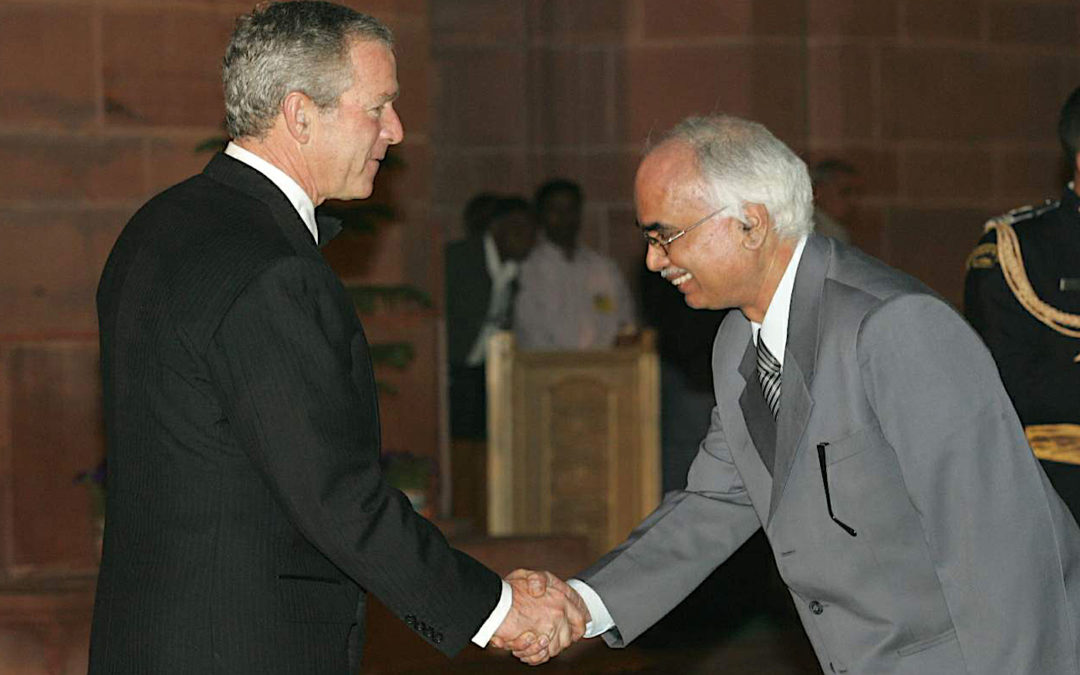
President George Bush came to India and Dr. Soma Raju and I were invited by President Kalam to the ceremonial reception, held at Rashtrapati Bhavan. The horse-mounted Presidential bodyguards, in their royal regalia, were surreal. President Bush was the epitome of innocent charm and enthusiasm about life, bubbling with enthusiasm, beaming in confidence and radiating warmth.

In the evening, Rashtrapati Bhavan was lit up with decorative lights, something that occurred on Republic Day and Independence Day. The banquet was hosted in an open lawn, with round tables allotted as per the stature of the guests. Dr. G. Madhavan Nair, General R. Swaminathan and Dr. Soma Raju were placed at a table in the direct vicinity of the ‘central table’ that had the Prime Minister Manmohan Singh, his wife, and Smt. Sonia Gandhi, besides the two Presidents and the American First Lady.

Dr. Kalam introduced me to President Bush as an engineer working with the doctors to help develop affordable medical consumables. President Bush said, “Very interesting,” and made me feel like the most important man on earth, with his warm handshake. The cool evening, with the mild fragrance of blossoming flowers and the live band, was hypnotic. Everyone was bathed in bonhomie

November 21, 2006

November 21, 2006

November 21, 2006

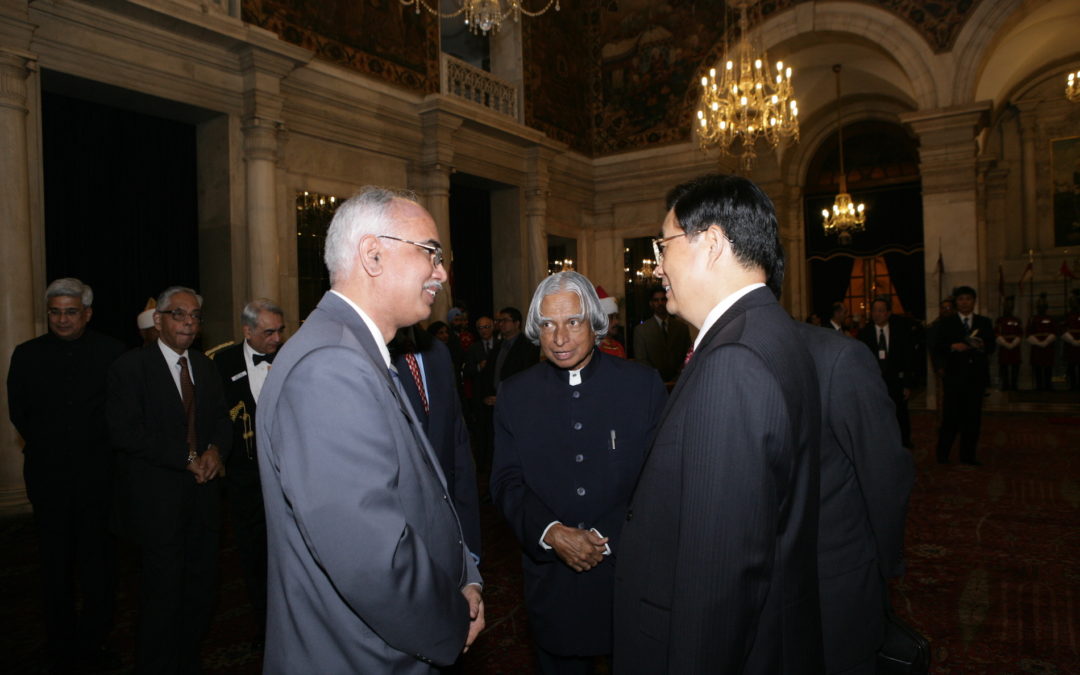
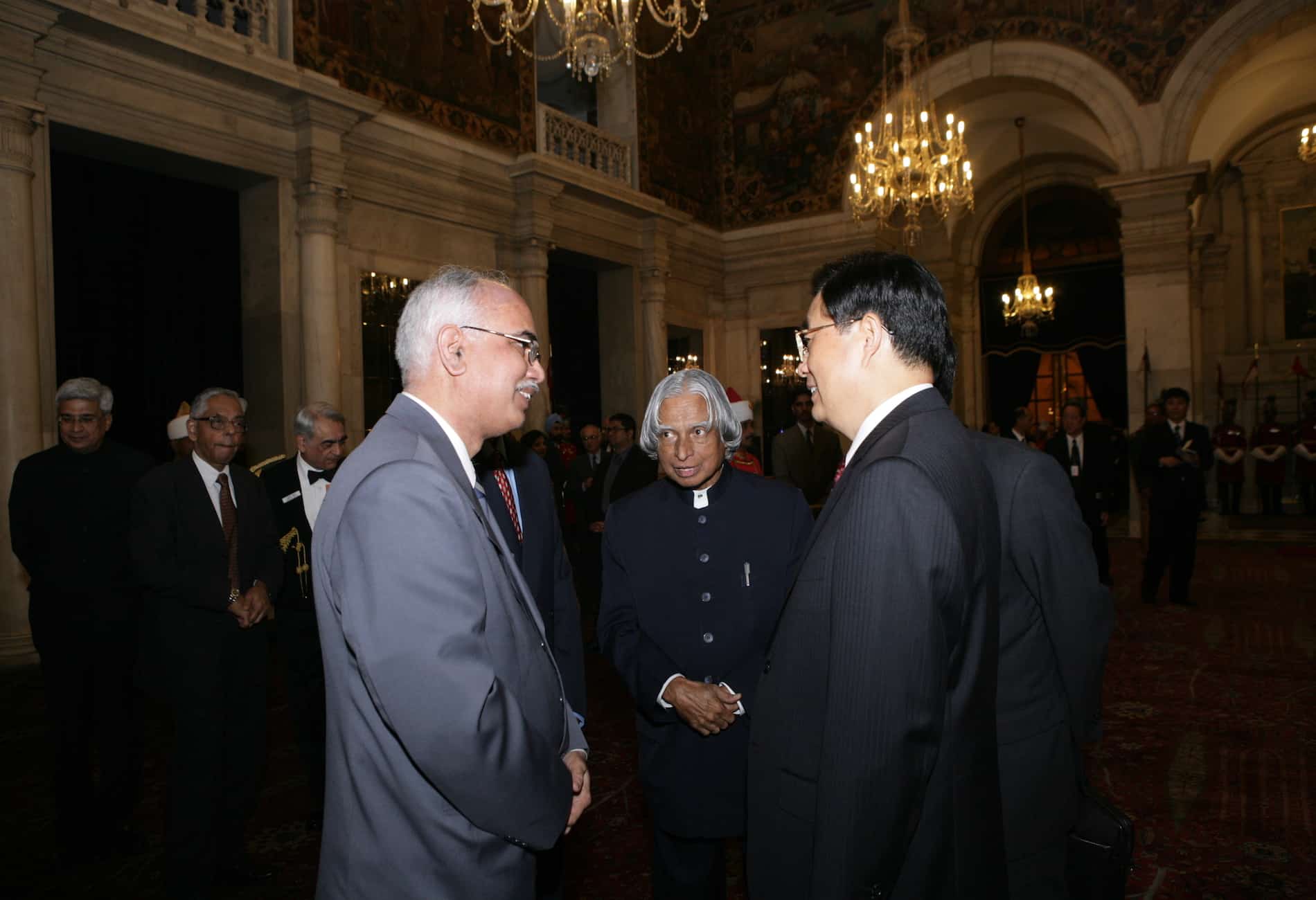
Chinese President Hu Jintao (b. 1942) visited India and President Kalam invited me to meet him. His calm and poise was very compelling. He looked at me like a sage and heard with interest the interpreter conveying my praise for his path-breaking initiatives to improve socio-economic equality through the scientific outlook on development. His vision of a ‘Harmonious Socialist Society’ that was prosperous and free of social conflict, is indeed the vision of India and, for that matter, of the entire developing world.

President Kalam, in his usual late night sittings after such ceremonial visits, told me, “Our political leaders must learn the art of collective leadership so effectively practiced by President Hu. I like this guy. China is indeed blessed with great leaders.” Six years later, in 2012, after completing his ten years’ term, when Hu Jintao voluntarily retired from all positions and disappeared from the public scene, Dr. Kalam again recalled him and said that perhaps, in ancient times, the Chinese philosopher and writer, Lao Tzu, would have been like Hu Jintao

October 20, 2006

October 20, 2006

October 20, 2006

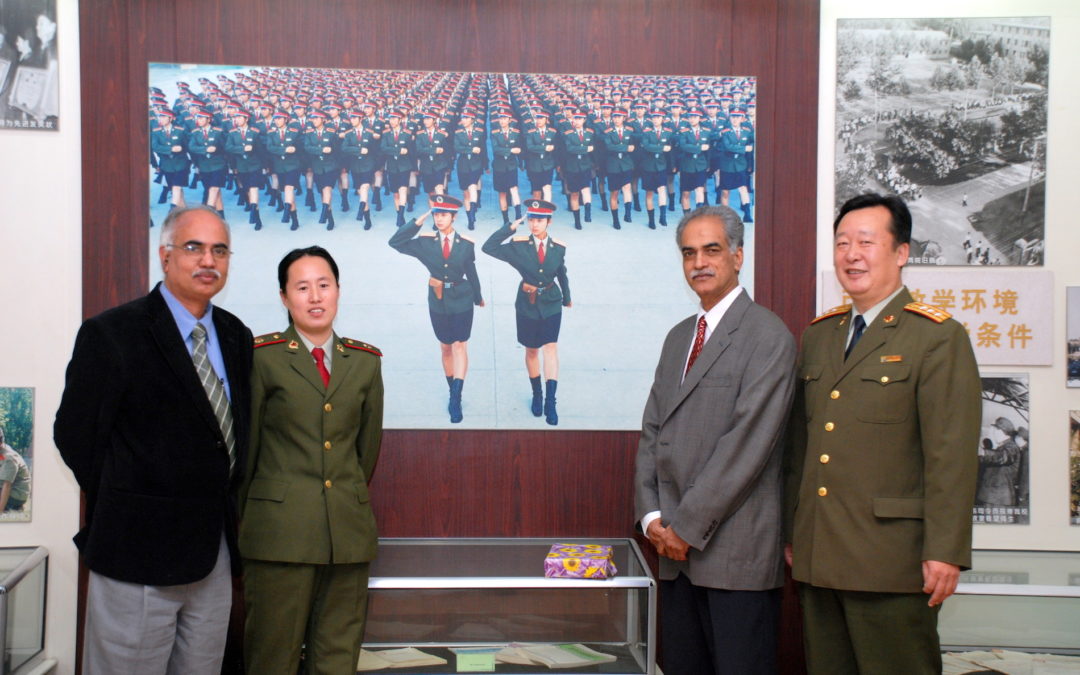
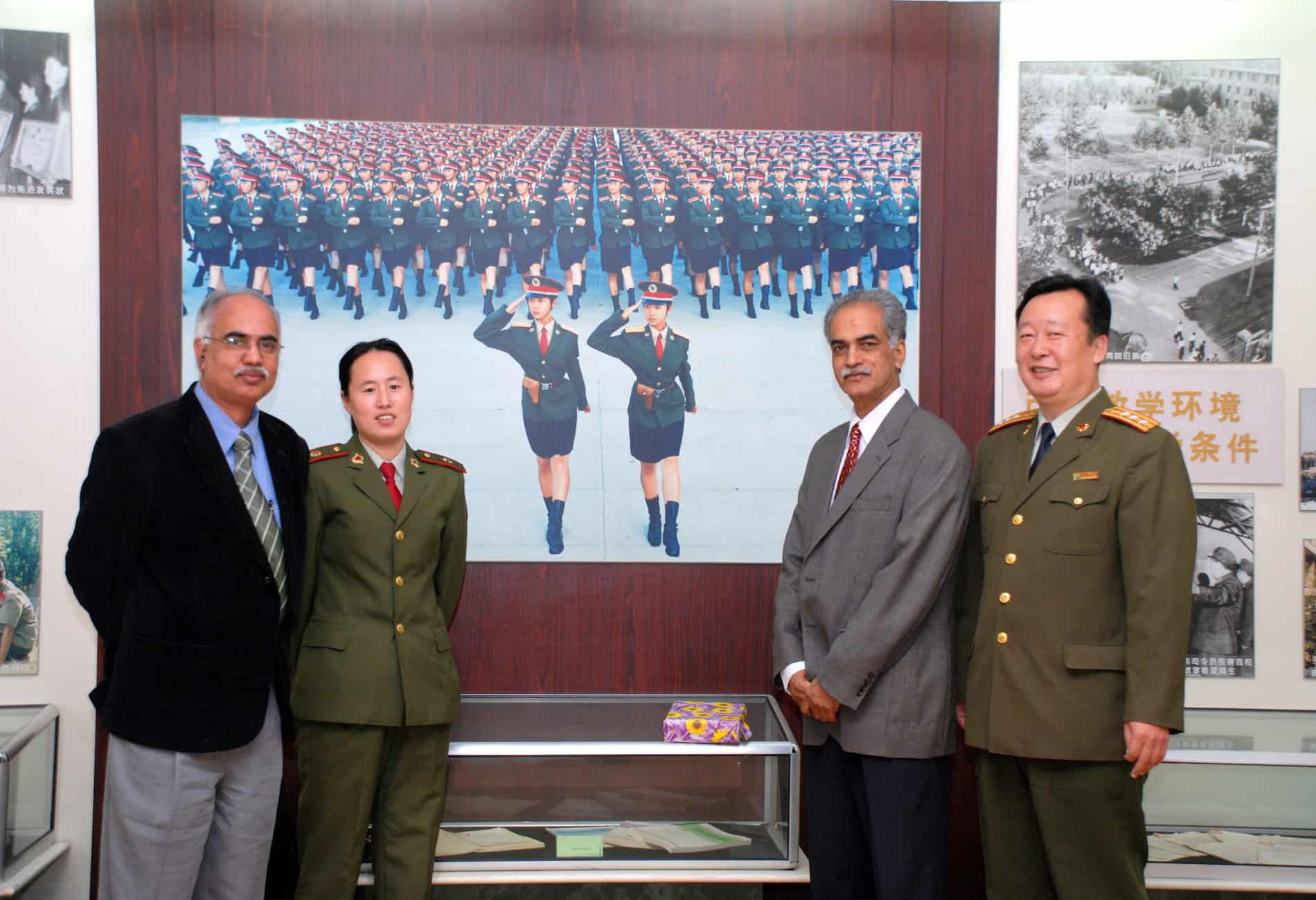
Dr. B. Soma Raju and I visited the Bethune Military Medical and Nursing College, Shijiazhuang, China. We were invited to mark the release of ‘Guiding Souls: Dialogues on the Purpose Of Life’, penned by Dr. Kalam and I, and translated into Chinese by Ji Ping in Beijing. After the inauguration by Liu Hongcai, the Vice Minister of International Department of the ruling Communist Party of China, in the presence of CPI (M) politburo member, Sitaram Yechury, we travelled to Shijiazhuang.

There is a sprawling memorial of Dr. Dwarkanath Kotnis created in the Shijiazhuang city. I knew Dr. Kotnis from V. Shantaram’s popular film Dr. Kotnis ki Amar Kahani, I saw in my childhood. He went to China with four other doctors in 1938 to provide medical assistance during the second war between China and Japan. While others returned to India, Dr. Kotnis married a nurse colleague Guo Qinglan and made Shijiazhuang their home. The couple named their son Yinhua joining the Chinese word Yin for India Hua for China. However, as fate had it, epilepsy afflicted Dr. Kotnis and he died even before seeing the first birthday of his son. My hosts arranged a wreath for me. Standing there amidst high Maple trees with large round trunks, I wondered how great souls are universally loved and respected. The gratitude of Chinese for someone who served their people in their bad times was indeed heartwarming.

 This was my second visit to Shijiazhuang. I had been there earlier in December 2003, with my wife and son Amol. There are certain places, which draw you for some reason beyond human comprehension.

February 07, 2006

February 07, 2006

February 07, 2006

Dr. Jung-Ok Lee, a 51-year-old professor of Sociology at the Catholic University at Daegu, met Dr. Kalam and proposed to translate the book, ‘Guiding Souls’, barely a year after she had translated ‘Wings of Fire’. When Dr. Kalam asked Lee the possible reason for the popularity of ‘Wings of Fire’ in Korea, she replied, “Your book has provided a new perspective of patience and generosity to Korean youth growing in a highly competitive society. Your love for your parents and teachers, particularly to your mother, has welled many Korean eyes.”

“I see in Kalam the image of our King Sejong who energetically promoted learning throughout his 32-year reign in the 15th century,” Lee said. “Kalam’s celebration of his family, teachers and hard work in ‘Wings of Fire’ is identical to King Sejong’s statement: “All that I am, or will be, I have learned from my family, my friends, my teachers, and training with my sword.”

“Koreans have historically derived inspiration from Western Pure Land as India is known here. Right from Gautam Buddha and Princess of Ayodhya, who married Korean King Suro in the first century, to Rabindranath Tagore and now Dr. Kalam, India is seen as a beacon of light. Dr. Kalam’s impressive scientific achievements remained rooted in his righteous simplicity and that is what made him a role model over so many other successful heroes of contemporary history,” Lee said.

February 04, 2006

February 04, 2006

February 04, 2006

The president of the Philippines hosted a banquet in honour of President Kalam, in the Rizal Hall of the Malacañan Palace. The word ‘Malacanang’ in Tagalog, a Filipino language, means, ‘there is a noble man there’. The majestic white stone mansion on the bank of the Pasig River reflects in it’s calmly flowing water, just as it has mirrored the changing fortunes and rulers of the country. Malacañan Palace has been occupied by eighteen Spanish Governor-Generals, fourteen American military and civil governors and later, each of the presidents of the Philippines.

From Siachen to ceremonies of state, Dr. Kalam was comfortable in almost any given situation, but I can never forget his blushing face and shyness in President Arroyo’s presence. For all of his life, Dr. Kalam had been used to demurely attired Indian ladies. He had only ever encountered women from other lands in sober, formal settings. President Arroyo, though, was simply dazzling in an aquamarine, off-shoulder brocade gown with a diamond necklace adorning her décolletage. Her glamorous demeanor was quite a cultural shock for Dr. Kalam. His usual calm aplomb deserted him, and he bashfully stood next to President Arroyo at the banquet, meeting guests.