Times have changed, so has God

Times have changed, so has God

Times have changed, so has God

Embed from Getty Images

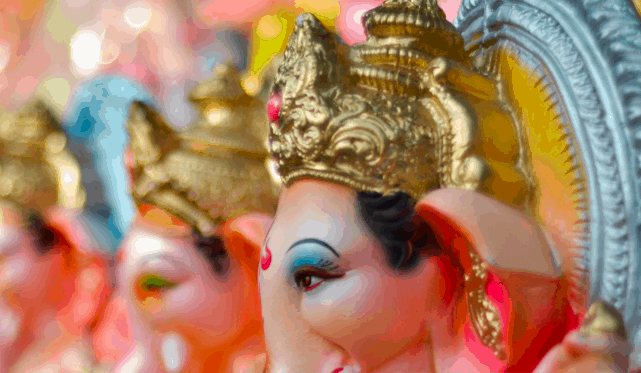
India has a rich tradition of worshipping a Personal God. In the Vedic tradition, God was seen in the Natural Forces – Sun, Wind, Water, and so on. Then came the Upanishads and the idea of God as an impersonal force – unseen, omnipresent, almighty, incomprehensible by man, ground of existence, absolute essence, etc., emerged.  The famous term ‘Neti, Neti’ – ‘Not this, not this…’ came into vogue in looking for God. Finally, starting with Shankaracharya, the idea of worshipping a personalized God, gained root. Even the Buddhists converted Buddha into a personal God. Jesus Christ too, became a personal God.   

In the Bible and the Quran, God is described as a personal creator, who talks with and instructs his prophets. Personal relationships with God may be described in the same way as human relationships, such as, a Father in Christianity, a Lover in Sufism, and a Mother in Hinduism. The Bhakti tradition of India created a Master-servant relationship between Man and God. Saint Francis of Assisi even saw Man as an instrument of God. Organized religion, later on branched out as commercial religion and the market for Personal God related merchandise boomed – talismans, idols, pictures, and so on.

What does a young person do with God in the modern world? Organized religion has greatly lost its appeal to the urbane, rationale and scientific person. The idea of an Abstract God remains vague and therefore, is not very useful in practical terms. So, how about understanding God as intelligence inside and outside of the human body? Everything is orderly inside the human body – the blood pressure, the heartbeats, the temperature, the digestive system, respiration… Everything is working most intelligently and for good. Outside also, an exact amount of oxygen in the atmosphere, days and nights, seasons… all is good and fully functional in the most ordered way.

Personal worship then becomes an alignment with this intelligence and not going against it. This means following the signals of your body, keeping it clean, free of toxins and nourishing it with nutrients, exercise and rest, staying connected to Nature, feeling the fresh air, staring at the stars, basking in mild sunshine, and floating in a water body, if possible. And most importantly, listening to your inner consciousness – the drives, intuitions, hunches – and taking note of the dreams that bring important messages every night from the depths of your inner world and in sync with the unknown, trying to make itself known to you for your own good.

In every major religion, Free Will is seen as a gift of God to Man, and it is this that distinguishes him as superior to every other living creature. In the Bhagavad Gita, Shri Krishna, after preaching to Arjuna about the three paths to reach him – the knowledge way, the action way, and the devotion way, gave him the choice to pick any one of them or leave all three – yatheccha si tatha kuru (Bhagavad Gita 18.63). In the Holy Bible, the predicament of human life is free will. “I don’t do the good I want to do; instead, I do the evil that I do not want to do (Romans 7.19). Dr APJ Abdul Kalam (1931-2015) used to tell me, “Free will is given to Man so that he willingly surrender it to God’s will.” Joseph Campbell (1904–1987) puts it so beautifully, “The goal of life is to match your heartbeat to the beat of the Universe.”

So, instead of signing off the concept of God as old-fashioned, fossil, dogma or making it a hollow ritual confined to ceremonies, understand it as an inseparable part of your being, real, palpable, operating upon you from inside and the outside, every instant, as Supreme Intelligence. An agitated mind is indeed noise, and emotions like greed, anger and lust, are like viruses hijacking your CPU that is connected to the evolutionary operating system Cloud – God.

MORE FROM THE BLOG

You have an embedded Operating System

You have an embedded Operating System

Everyone knows the internal drives – emotions, feelings, and, of course, thoughts – that keep buzzing inside one’s head and indeed drive the responses and reactions to the events in one’s life. Everyone also knows the dreams that every night brings a weird world…
Vanity Fair

Vanity Fair

I started reading English books with mass-market fiction. One such book was The Carpetbaggers written by American novelist Harold Robbins (1916-1997). I was thrilled by the big life of the characters in the novel. “From New York to LA they brawled, lusted, and carved out an empire, blazoned in banner headlines and their enemies’ blood…

Is the New Year Real and Objective?

Is the New Year Real and Objective?

This is the first blog of the New Year 2022. What is new about the New Year? Nothing, except for the fact that we start counting from the first day of the month of January. The Chinese count their year from the new moon that appears between 21 January and 20 February…

Comments

Your Health, Our Commerce

Your Health, Our Commerce

Your Health, Our Commerce

Embed from Getty Images

The power of modern medicine in extending life is incredible! But the other side of the story of the quality of the extra years in life is dubious, if not dreadful. The 1950, the global average life expectancy was 48 years. It increased to 71.5 in 2014. Global average life expectancy increased by 5.5 years between 2000 and 2016. If about three months continue to be added with each passing year, by the middle of this century, life expectancy at birth will be 80 years by 2050. By the end of the century, it will be 100 years. 

No matter how rosy this picture looks, there are two issues involved. The first is, what will people do with such a long lifespan? The world as it exists, is designed for productivity till 60 years, and in some intellectual occupations like science, academics, and the judiciary, it is 65 years. So one stops earning by that time and starts living off one’s savings, if there are any, or becomes a societal burden. If society itself is incapable of taking care of itself, old age is synonymous with pain, misery, solitude and agony.

I accidently changed my career from that of a missile scientist to biomedical engineering in 1995 when my mentor, Dr APJ Abdul Kalam inspired me to develop civilian spinoffs of defence technology. He was concerned about the high cost of imported medical devices, not being affordable to most Indian patients. I succeeded in making a coronary stent and riding that success, landed myself an opportunity to work with doctors since then. I do not want to sound cynical but the ringside view of the healthcare sector that I accidently got to have, was unpleasant if not revolting. 

I saw rampant corruption in the pricing of drugs and consumables. There are commissions at every stage in the supply chain without any value addition. Prescriptions are not honest and off late, even diagnostics  is linked to the terms and conditions of your insurance policy and your capacity to pay for your treatment. Like banks stripped themselves of the trust of the people who deposited their savings to earn interest, inefficiency mars hospitals in the government sector while the corporate ones are defaced by crass commercialization of medicine. 

As if by design, sugar and low grade fats are being pumped into our diets. Exotic chemicals are used in food processing to increase the shelf life of products and food adulteration has become an accepted norm of modern living, rather than some abhorred sin. The combined effect of all these have brought in a rampant increase in the prevalence of chronic diseases – diabetes and other hormonal disorders, hypertension, obesity, irritable bowl syndrome and autoimmune problems messing up with the respiration in a serious manner. 

It is common to see school-going children carry anti-asthmatic nasal sprays in their school bags, young men and women having cancers and heart disease, and by the time one is fifty, one is on a daily prescription for diabetes, hypertension and/or non-steroidal anti-inflammatory drugs (NSAIDs). Each of these drugs has its own side effects and a few years of consumption push you into some or the other systemic impairment and all this costs money which eventually goes into the coffers of global giants who make these medicines, own beverages and fast food businesses, hospitals and insurance companies. 

I found a lot of sense in the books written by Croatian-Austrian philosopher Ivan Illich (1926–2002). For Dr Illich, the world is suffering from too much medical interference, and a medical edifice has been built which is one of the threats to the real life of human beings – a threat which so far has been disguised as care. So, eat and drink industrialized food, breathe toxins and automobile exhaust loaded air, drink only bottled water as the normal one is indeed injurious to health and loaded with infectious microbes, get diagnosed for at least one chronic disease and become an entry in the Excel Sheet of a global conglomerate that spreads its investment portfolios in food, pharmaceuticals, hospitals, and of course, the media. And do not look down upon them. They are indeed great philanthropists and regularly donate for human causes. They are not robber barons of the earlier centuries. They are indeed very friendly and painless, even as they stick to you like leeches! 

MORE FROM THE BLOG

You have an embedded Operating System

You have an embedded Operating System

Everyone knows the internal drives – emotions, feelings, and, of course, thoughts – that keep buzzing inside one’s head and indeed drive the responses and reactions to the events in one’s life. Everyone also knows the dreams that every night brings a weird world…

Vanity Fair

Vanity Fair

I started reading English books with mass-market fiction. One such book was The Carpetbaggers written by American novelist Harold Robbins (1916-1997). I was thrilled by the big life of the characters in the novel. “From New York to LA they brawled, lusted, and carved out an empire, blazoned in banner headlines and their enemies’ blood…

Is the New Year Real and Objective?

Is the New Year Real and Objective?

This is the first blog of the New Year 2022. What is new about the New Year? Nothing, except for the fact that we start counting from the first day of the month of January. The Chinese count their year from the new moon that appears between 21 January and 20 February…

Comments

Why India should help Africa become United States of Africa

Why India should help Africa become United States of Africa

Why India should help Africa become United States of Africa

Africa is a continent across the Indian Ocean with great assets, huge opportunities as well as insurmountable challenges. Sixty percent of the land is arable, but uncultivated. There are no systems of intercontinental railways and roadways.  Although there are great rivers, there is no hydro-electricity generation and no waterways. The immense oil reserves are ravaged by violent conflicts. There is no electricity grid, not many hospitals, very few universities and colleges, but millions of immensely talented people waiting to receive higher education and skills. India is a natural partner in all of this and it is indeed its destiny to help Africa rise and take its rightful place in the modern world.

My tryst with Africa naturally started with President A.P.J. Abdul Kalam (1931-2015). In 2004, I was assigned a pivotal role to bring 24 Tanzanian children with congenital heart defects to India for surgery. They were flown free of charge by Air India with their mothers and accompanying doctors and nurses, and operated upon free by Care Hospital. I assisted President Kalam in conceptualizing the Pan-Africa eNetwork and got its fist link operational between Black Lion Hospital, Addis Ababa and Care Hospital, Hyderabad. Later, I met Mahesh Patel (b. 1955), an Indian-African and the Chairman of Export Trading Corporation (ETG), one of the largest and fastest growing integrated agricultural conglomerates present across the African continent, and he made me an integral part of his missions.

Over a span of many years, I went to South Africa, Mozambique, Malawi, Zambia, Tanzania, Kenya, Uganda, Rwanda and Ethiopia and the island African nations of Mauritius and Seychelles and am blessed with great friends everywhere. I have read all major books written on Africa, most notably by Basil Davidson (1914-2010), John Reader (b. 1937), Martin Meredith (b. 1942), and Richard Dowden (b. 1949) and felt at heart the term ‘black consciousness’ first used by William Edward Burghardt (W.E.B.) Du Bois (1868-1963). He famously wrote, “After the Egyptian and Indian, the Greek and Roman, the Teuton and Mongolian, the Negro is a sort of seventh son,…”

I see African people as ‘different but equal’. They are our natural neighbours and our most trusted allies in the post-western world. India and Africa will rise together in the emerging parallel order – New Development Bank and the Asian Infrastructure Investment Bank (to complement the World Bank), Universal Credit Rating Group (to complement Moody’s and S&P), RuPay (to complement Mastercard and Visa), CIPS (to complement SWIFT), and the BRICS (to complement the G7). Many other Indian success stories can be repeated in Africa. HAL and Tatas can be Africa’s aviation partners; ONGC and Reliance, oil partners; ISRO, their space partner; BEL, their electronics partner; BHEL, the hydro-electricity partner; NPCIL, the Nuclear Electricity partner; and NABARD, NSC and IFFCO, their agriculture partners.

The dream of the United States of Africa belongs to Jamaican-born African-American Marcus Garvey Jr. (1887–1940). Almost single-handedly, he created a ‘Back to Africa’ movement in the United States of his times, touring the country and urging African-Americans to be proud of their race and return to Africa.  In his poem ‘Hail! United States of Africa’ published in 1924, Marcus Garvey wrote:

Hail! United States of Africa-free!
Hail! Motherland most bright, divinely fair!
State in perfect sisterhood united,
Born of truth; mighty thou shalt ever be…
From Liberia’s peaceful western coast
To the foaming Cape at the southern end,
There’s but one law and sentiment sublime, One flag, and its emblem of which, we boast…

Africa in the 21st century ought to mean a Pan-African economy, at par with the European Union – the United States of Africa would operate under one Schengen-like visa, one African currency and free intra-trade system across the continent. Through my hundreds of interactions with African people over a decade and travels in the continent, I have realized that Africa has much more to give to the world and to the people than it has taken or would ever take from others. India can indeed beat the drum and lead the parade, when Africa marches on to become USA-2.

[DISPLAY_ULTIMATE_SOCIAL_ICONS]

MORE FROM THE BLOG

Vanity Fair

Vanity Fair

I started reading English books with mass-market fiction. One such book was The Carpetbaggers written by American novelist Harold Robbins (1916-1997). I was thrilled by the big life of the characters in the novel. “From New York to LA they brawled, lusted, and carved out an empire, blazoned in banner headlines and their enemies’ blood…

Is the New Year Real and Objective?

Is the New Year Real and Objective?

This is the first blog of the New Year 2022. What is new about the New Year? Nothing, except for the fact that we start counting from the first day of the month of January. The Chinese count their year from the new moon that appears between 21 January and 20 February…

Lower Self, Higher Self

Lower Self, Higher Self

Life is an enigma. The randomness of events and the unpredictability of human nature make things complicated at times. Not only are people so very different from one another, even individuals change with time and their behavior with different people is tinged with many different shades…

Party was good; where is the return gift?

Party was good; where is the return gift?

Party was good; where is the return gift?

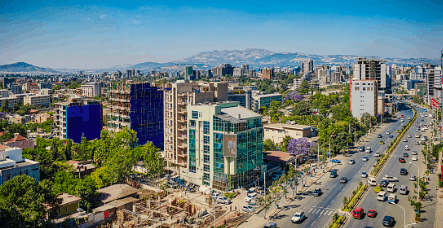
It was in November 2018 that Anurag Srivastava, the engineer-turned-diplomat Ambassador of India to Ethiopia, took me to Dr. Getahun Mekuria, the engineer-turned-Minister of Innovation and Technology, Ethiopia. Riding in a Land Rover from the Indian Embassy to the Ministry with the Indian flag on the bonnet fluttering in the cold breeze of Addis Ababa, situated at an elevation of around 8000 feet, was surreal and most gratifying.

Dr. Mekuria briefed us as to why Ethiopia had renamed their Ministry of Science and Technology as Ministry of Innovation and Technology. Ethiopia, the biggest country in Africa with a population of more than 100 million, needed innovative and indigenous solutions to solve the problems of its people, thus avoiding imports, for which they had no money. He shared with us the idea of celebrating the Innovation Festival every year and inviting a country to showcase their technology, starting with China. Naturally, we suggested starting with India, and Dr. Mekuria most graciously agreed.

In February 2019, Dr. Getahun came to Hyderabad and signed the papers for the launch of the India-Ethiopia Innovation, Science and Technology Commercialization Programme, in the presence of Dr. Harsh Vardhan, our physician-turned-Union Minister of Science & Technology, Earth Sciences and Environment, Forests & Climate Change, from the platform of the sixth DST-FICCI Global R&D Summit. I was seated in the audience, applauding with the others at the gala event.

It is a great feeling to see India being wooed by Africa for science and technology. I had completed my higher education at the G.B. Pant University of Agriculture and Technology, an institution modelled on the land-grant model of the University of Illinois. Equipment and books tagged with USAID were everywhere. Most of the faculty had been to US Universities. When a food crisis hit the country in the mid 1970s, American agronomist Norman Borlaug (1914—2009) became a household name in India for his high-yield wheat variety.

All bright students from IITs and other scientific institutions would, by default, go to the USA for higher studies and eventually settle there. Name any senior scientist at any Indian institution of today and he would have been to an American or European University for education or research. Then came computers and the ICT revolution and Indians were everywhere. Vinod Khosla (b. 1955) co-founded Sun Microsytems. Arun Sarin (b. 1954) became the CEO of Vodafone, Rajeev Suri (b. 1967) became the CEO of Nokia. As of now, Satya Nadella (b. 1967) is the CEO of Microsoft, Sundar Pichai (b. 1972) is the CEO of Google and Ajaypal ‘Ajay’ Singh Banga (b. 1960) is the President and CEO of Mastercard.

India took up innovation in a serious manner. APJ Abdul Kalam (1931–2015) and Raghunath Mashelkar (b. 1943) nurtured hundreds of affordable world-class products in India. A.V. Rama Rao (b. 1935) pioneered the development of affordable pharmaceuticals. T. Ramasamy (b. 1948) revolutionized leather-processing technology. A. Mohan Rao (b. 1945) produced automobile grade biogas from sugar mill waste. At no other place in the world would these developments have taken place, as they concerned the needs of the poor and not the markets. We have the MedTech Innovation Centre at IIIT, Hyderabad, where Ramesh Loganathan and Radha Rangarajan are developing medical products based on cutting-edge technology. Rajeev Varshney at ICRISAT is one of the world’s top-notch seed genetic scientists.

So I rejoice at the launch of the India-Ethiopia Innovation, Science and Technology Commercialization Programme at Addis Ababa on May 24, 2019, by Ambassador Srivastava, a zealous champion of India in Africa. Thanks to a very large number of Indians who made a great mark in science and technology at the global level, India has done well in creating a robust system of innovation through our councils of medical research, industrial research and agricultural research. We had a grand party indeed, thanks to a generation of scientists who were protégés of people sitting in global labs who shook their trees to yield fruits, whenever needed. It is time to give a return gift as a token of recognition and appreciation of the same.

[DISPLAY_ULTIMATE_SOCIAL_ICONS]

MORE FROM THE BLOG

Is the New Year Real and Objective?

Is the New Year Real and Objective?

This is the first blog of the New Year 2022. What is new about the New Year? Nothing, except for the fact that we start counting from the first day of the month of January. The Chinese count their year from the new moon that appears between 21 January and 20 February…
Lower Self, Higher Self

Lower Self, Higher Self

Life is an enigma. The randomness of events and the unpredictability of human nature make things complicated at times. Not only are people so very different from one another, even individuals change with time and their behavior with different people is tinged with many different shades…

Hinterland

Hinterland

When I accompanied Dr APJ Abdul Kalam to Patna in Bihar State in 1999, he was the Principal Scientific Advisor to the Government of India. The Technology Information Forecasting and Assessment Council (TIFAC), which Dr Kalam chaired, had initiated an agriculture project in Paliganj…

Beware of the puppeteer in your pocket

Beware of the puppeteer in your pocket

Beware of the puppeteer in your pocket

Few years ago, Indians were offered ‘free’ connectivity to the Internet. Suddenly, everyone had the opportunity to be ‘online’ – children were not interested in playing outdoors anymore and started playing video games instead, drivers waiting in the parking lots for their bosses to return in the evening, started watching movies, sitting in the comfort of the car, people living in apartments sharing a lift forgot the basic etiquette of saying good morning and started using that little time to browse the messages they were unable to do in the presence of their spouses, desperately waiting for the freedom. Porn reached everyone from hormone-gushed adolescents to the sexually frustrated middle-aged… all for free!

We chose to forget the basic principle that nothing is free in this world from the time when Adam and Eve plucked the apple and received the admonition of God that nothing would hereafter be free to the creature of clay and in 1942 an American political journalist Paul Allen declared: there is no free lunch. We went into a denial mode, ignoring that our minds were being hacked through free connectivity. People are now openly lured to consume – buy this, buy that, come here, go there, buy this new experience, etc. Coffee turned into Starbucks with free Wi-Fi, shopping malls turned into the new meeting places… once you come, you would buy something for sure! If nothing, at least pay the parking fee and buy a bottle of water at double the price.

Once on a Sunday afternoon in a mall in Hyderabad, I was astonished to see hundreds of young people assemble in a flash and start dancing to loudly played music in the atrium of the mall. They disappeared as if into thin air after about 15 minutes. My son told me it was a ‘Flash mob’ created by a social media group, mostly formed by the students of a prestigious computer science institute in Hyderabad  in that case. Sometime back, I had attended ‘Jeevan Vidya’ workshops organized there to introduce computer science students to a value-based lifestyle. This, however, seemed to be an entirely different outcome!

In the last few months, mobile phones have been rampantly used as the new and most preferred tool of electioneering. You get up in the morning to see your phone flooded with video clips venerating or lampooning leaders. Now the cost of ‘free’ service has started showing up. It was a medium to engineer your souls to consumerism; to create segmentation in society so that it can be targeted to sell products and services—to feed businesses like Swiggy, Zomato—and discourage cooking at homes; Uber, to fire your undisciplined and always–asking-for-small-loans driver; Urban Clap, to make plumbers, electricians and carpenters in the neighbourhood disappear and metamorphose into corporate service providers; and get a ‘happy hours’ (another beer free if you buy one) notification delivered at 10 a.m. itself, lest you make other plans for the evening.

All good! India is developing! But what is also developing is the stress of the people of the Middle class whose income is only little better than the poor people, but who has to show up as belonging to the rich segment of society. In the early twentieth century, Benito Mussolini (1883—1945), the tyrant ruler of Italy, summoned philosopher Giovanni Gentile (1875—1944) to present his idea of a totalitarian state as a spiritual principle of Fascism. Later, when Russian writer Maxim Gorky (1868—1936) returned from Italy, the iron-fisted ruler of Russia, Joseph Stalin (1878—1953) hosted a grand welcome party to welcome him as the engineer of the souls! Gorky would later write to clothe Stalin rule in the philosophy of socialist realism.

Indian civilization has been based on the value system that treated human life as a debt towards parents and ancestors, education as a debt to the teachers and wealth as a debt towards the society. We have already seen how the new wealth that came with the so-called IT revolution broke the Indian family system and created nuclear families that created further employments for babysitters and businesses of playschools and crèches. Now, the Online revolution is going to further break the nuclear families into free electrons of consumers who would not only spend every Rupee they earn on their own consumption, but also accumulate credit to be repaid for the rest of their lives to buy a week’s vacation in Bangkok, Phuket, or Macao.

MORE FROM THE BLOG

You have an embedded Operating System

You have an embedded Operating System

Everyone knows the internal drives – emotions, feelings, and, of course, thoughts – that keep buzzing inside one’s head and indeed drive the responses and reactions to the events in one’s life. Everyone also knows the dreams that every night brings a weird world…

Vanity Fair

Vanity Fair

I started reading English books with mass-market fiction. One such book was The Carpetbaggers written by American novelist Harold Robbins (1916-1997). I was thrilled by the big life of the characters in the novel. “From New York to LA they brawled, lusted, and carved out an empire, blazoned in banner headlines and their enemies’ blood…

Is the New Year Real and Objective?

Is the New Year Real and Objective?

This is the first blog of the New Year 2022. What is new about the New Year? Nothing, except for the fact that we start counting from the first day of the month of January. The Chinese count their year from the new moon that appears between 21 January and 20 February…