Every age brings its own flavour. As a university student, I have seen computers arriving and much later, the smartphone revolution. Talk of AI and Robotics marks the present times, but what is most promising and potentially transformative is the access to millions of small islands in the oceans that cover over three-quarters of the earth’s surface…
All the World is a Differential Equation
All the World is a Differential Equation

There is so much humbug about the idea of the mind. Religions, philosophers, psychologists, medical doctors and, of late, businesspeople, especially those in the marketing domain, offer their own constructs about how the human mind works. And, for sure, people have no clue about the origin of their temperaments, attitudes, fears, and desires. It is interesting to understand the mind from a Calculus perspective.
Calculus is the child of two fathers – the English, natural philosopher, Isaac Newton (1643-1727), and the German polymath, Gottfried Wilhelm Leibniz (1646-1716). The tendency to observe similarities and see a need for integration, and the tendency to notice dissimilarities and see a need for differentiation, is common and widespread. Labeling these two ways of looking at things as “integration” and “differentiation” from Calculus, is reasonable.
There is variety. Some individuals are high in both, integration, and differentiation, and conversely, some people are low in both traits. For simplicity, and to emphasize their distinctness, we can call people as “lumpers” and “splitters.” A child is a great lumper, over-inclusive and its classes are generic and undifferentiated. As we grow, the development of “I-ness” makes us divide things, mostly into “what I like” and “what I dislike.”
The “I-ness” is straightforward and should be accepted as the cornerstone of human personality. In the Shrimad Bhagavad Gita (VII. 4), it is written as having been said by God Himself:
भूमिरापोऽनलो वायुः खं मनो बुद्धिरेव च।
अहङ्कार इतीयं मे भिन्ना प्रकृतिरष्टधा।।
Earth, water, fire, air, ether, mind, intellect, and the feeling of I-ness (अहंकारः) – thus is My Nature divided eightfold (इति अष्टधा भिन्ना मे इयम् प्रकृतिः).
The Austrian doctor, Sigmund Freud (1856-1939), called “I-ness” as “Ego.” The Swiss psychiatrist and psychoanalyst, Carl Jung (1875-1961), called it the center of the “conscious mind” and placed the “unconscious mind” as its opposite. The “I-ness of me” is held in balance by “what I am, but not aware of,” thereby, making it a dynamic entity. It will keep expanding as more and more psychic energy emerges out of the unconscious and gets added into the conscious.
The issue is, therefore, not “what I am”, but “what I can be”, and the focus must be on “my openness” to “become.” The idea of openness to experience was articulated by the British polymath, Sir Francis Galton (1822–1911), and the Five-Factor Model (FFM) of personality traits is currently the dominant theory in all of psychology today. The five factors are – Openness, Conscientiousness (careful way of working), Extroversion (outgoingness), Agreeableness, and Neuroticism (irritability).
Self-development is all about discern, which is differentiating functions. The environment we live in offers a basket of options – some good, many bad – and there is always scope to choose one, especially not to go with that which is unwholesome. Growth demands declutter – letting go off all that and all those who have not been good. This not only includes primordial identities, dogmas, habits, and beliefs, but also faling into grooves of careers and roles in the society.
The first differentiation, fundamental and the most difficult, is that we separate from the “parent” we have internalized. This is filled with anxiety and the most prevalent reason for young people getting into addiction or substance abuse – mostly smoking and alcohol – is to pacify this anxiety. Successful differentiation from the “parent” is like a “second birth.” Failure in differentiating ourselves from the parent effect settles us permanently in mediocrity and powerlessness.
The second differentiation involves recognizing and changing the negative personality borrowed from our parents and other influential figures in childhood. Altering these unpleasant or toxic personality characteristics is essential. All vanity, phoniness, self-centeredness, a victimized orientation towards life, attitudes of superiority and contempt are appropriated from people around, and must be disowned.
The third differentiation is, looking into the psychological defences we developed early in our lives to deal with pain. There is a strong, and almost automatic, tendency to defend ourselves the way we did as children. Denying, forgetting, exaggerating, projecting our fears, and outbursts are childish behaviours. Saying goodbye to our “child selves” is essential for living fully as the adults we are now.
The fourth and final step of psychological differentiation is to identify our own values, ideals, and beliefs that may be different from those of the culture in which we grew up. For example, Dr. APJ Abdul Kalam did not eat meat from age 15 onwards. This is the last barrier before we can strive to lead a life of integrity, according to our own ideals, overcoming social pressures to conform to the standards of others.
Integration operates in two domains – internal and external. Internal integration is to allow and assimilate the unconscious into consciousness. External integration is concerned with relatedness, interpersonal communion, and intimacy. Seeing similarities and connections is beneficial. Looking at the food before start eating and appreciating the complex ways it traversed to come before you – grains from fields, salt from the sea, spices from the hills, curd from the dairy…. and so on. All forms of meditation are essentially integration exercises.
Finally, I come to Limits and Continuity, the central concept of Calculus. All phenomenon is a function; constant for a while, that is, in a narrow frame of time, but eventually, changing. Only within limits is a function an independent variable. Outside the limits, it is part of chaos. This is like a line that can be drawn on a paper. Once the pencil is lifted or the paper border is breached, there is no more extension of the line.
The fundamental philosophy of Calculus is to approximate, to refine the approximation, and apply a limit process. An insight into Calculus helps us identify the “balance points” as steady states. Moving away from steady state invites reactions, which may or may not be what we expect. To predict what changes would appear – integrating one instant, differentiating the next – is the real of art of living.
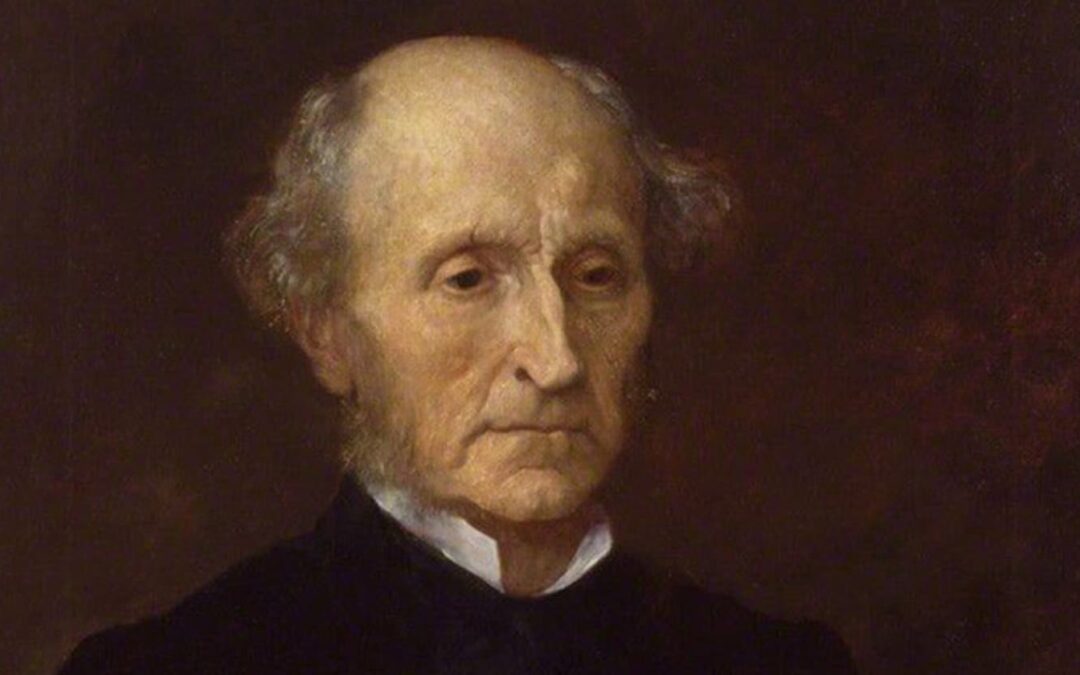
Unheeded happiness is, indeed, fatal. The more you desire, the weaker you become. The more you consume, the more diluted your life gets. The Scottish philosopher, John Stuart Mill (1806-1873), described his despair of “becoming a utilitarian machine with a suicidal ghost inside.” All the world’s a differential equation, and men and women are infinitesimal variables – may be less than any finite quantity; yet, never zero.
Know your soul as a continuous function – infinity to infinity – but live within the limits of the time and space imposed by your body. Don’t slight or belittle anyone, or overlook a change, however minute it may appear. And never allow your mind to create its own imaginary world, neglecting the people around you, and running away from difficulties. Live your life embracing both, the good and the bad that it brings. You are an infinite function, so always choose to rise over run.
MORE FROM THE BLOG

The Promise of a Blue Economy

Do we see a spiritual redux in the new millennium?
All the great scientists have been deeply spiritual, and I consider Albert Einstein to be the last of that lot. He imagined time and space sitting in his 1 BHK flat in Bern, Switzerland. After him, science became a big enterprise and was also declared secular…
The Darkness Within
I learned about Joseph Conrad in the context of Nobel Laureate author Sir V.S. Naipaul, who is said to have written in his style. As I loved reading Sir Naipaul’s novels and tried vainly to make him my role model as a writer, I was naturally intrigued by how Conrad would have written…