Origami and the Science of Protein Folding

Origami and the Science of Protein Folding

Origami and the Science of Protein Folding

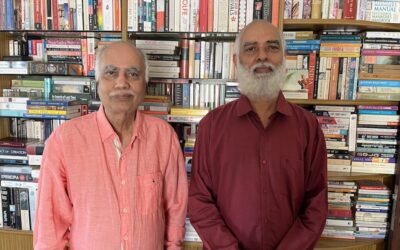
I have been blessed with the friendship of Manher Sameer. We met at GB Pant University in 1974, where I was pursuing my graduation in Mechanical Engineering, and where Sameer joined the Mechanical Engineering program after completing his graduation in Sciences from the adjacent College of Basic Sciences and Humanities. So technically, he was a year junior to me, but senior to me in all other respects – intelligence, skills and, above all, compassion.

I stayed back to teach after my graduation and completed my master’s in the process. Meanwhile, Sameer set up an ice factory in Moradabad as part of his family business and later established his enterprise in corrugated boards, an innovation at the time. Together, we named the new company ‘Paperphants’. It flourished and expanded over time. After I moved to Hyderabad in 1982, we became engrossed in our respective careers and families and lost in our busy schedules.

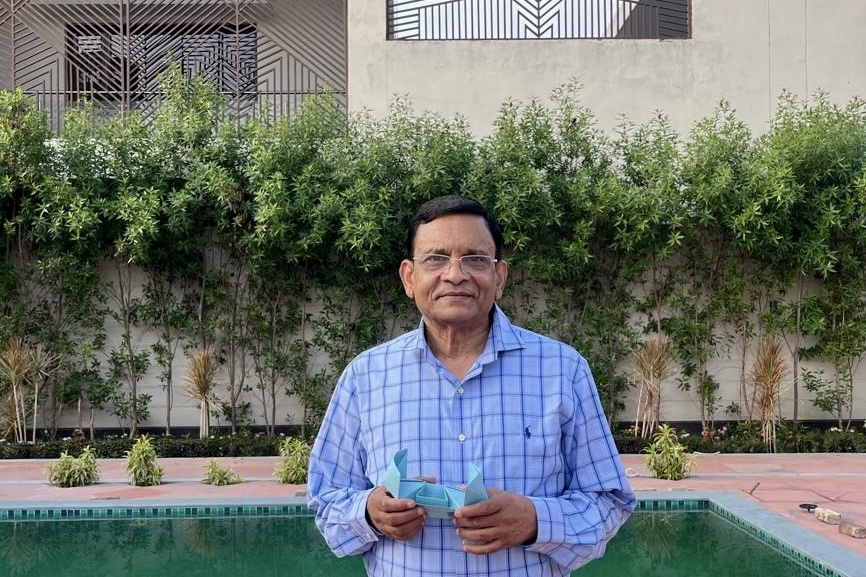
Sameer is gifted with excellent body-mind coordination, which usually manifests in sports. He is ambidextrous, playing with his left hand and writing with his right hand. He played cricket, badminton and table tennis at the University level. I loved watching him play table tennis – the way he would produce topspin, making the ball drop near the opposite side of the net and spin back, leaving his opponent no chance of reaching it. But more than that, I was intrigued by his skill in Origami.

Origami, derived from the Japanese words ‘oru’ (to fold) and ‘kami’ (paper), has evolved over centuries into both a hobby and an intricate art form. While traditional origami focuses on creating animals, flowers and geometric patterns, modern origami incorporates mathematical principles and engineering designs, pushing its boundaries beyond mere aesthetics.

Origami relies on a series of folds and unfolds, governed by simple rules that shape the paper into complex three-dimensional structures. The key lies in the crease patterns – mathematical blueprints that guide the transformation of a flat, usually square sheet of paper into an elegant figure. There is never a cut made and regardless of the complex shape you create, the paper can always be unfolded back to its original form. These folds require precision and adherence to geometric principles, often utilising angles, symmetry and proportion and demanding a very high degree of patience. There was nothing in the origami book that Sameer could not make.

In 2008, I met Dr. Arshad Quadri, MD, an Indian-origin cardiothoracic surgeon working in West Hartford, Connecticut, in the United States. He was married to the sister of my friend, radiologist Dr. Naiyer Imam, and they hosted me at their homes for a few days. I cherished this wonderful time with truly good people. Dr. Quadri took us to his lab and demonstrated his trials of folding a heart valve from bovine tissue using the origami technique.

The issue in paediatric cardiac care is that the valve needs to change as the child grows, which inspired him to come up with a prosthetic that could grow with the child. His origami-inspired heart valve prosthetic, made from live tissue, would address these challenges by expanding from paediatric to adult sizes while maintaining structural integrity and function. I had goosebumps seeing his work. I invited him to India for a collaboration, but he was already so deeply immersed in the US system that it was too late to turn back. The valve was never made.

Then, when my friend, Dr Girish Sahni (1956 – 2024), hosted me at his laboratory, the Institute of Microbial Technology (IMTECH) in Chandigarh, we stood in front of a giant haemoglobin mural at the G.N. Ramachandran Protein Centre. Trying his best to explain medical science to an engineer, Dr Sahni told me that all proteins are like long ribbons, and how they fold gives rise to different molecules. He also described the remarkable work of physicist Dr Ramachandran (1922 – 2001), who paved the way for the field of structural biology with his discovery of the dynamics of protein folding.

Correctly folded proteins perform a myriad of functions, such as catalysing enzymatic reactions, enabling cell signalling and providing structural support. For example, the precise folding of haemoglobin allows it to transport oxygen throughout the body, while the structure of collagen provides strength and elasticity to tissues. Misfolding can lead to various diseases, making protein folding one of the most critical processes in life sciences. Dr. Sahni praised G.N. Ramchandran’s work, stating that had he lived in the West, he would have been awarded a Nobel prize.

Origami and protein folding, though seemingly unrelated, share profound commonalities in their reliance on structure, precision and transformative processes. Origami, the ancient Japanese art of paper folding, embodies beauty through meticulous craftsmanship. In contrast, protein folding, a critical aspect of molecular biology, governs the functionality of life itself through the precise arrangement of amino acids.

Origami has transcended its artistic roots and found applications in science, technology and medicine. Engineers use origami-inspired designs to develop compact and deployable structures such as solar panels for spacecraft. In medicine, researchers have drawn inspiration from origami to create stents and other medical devices that can unfold in the body to minimise surgical invasiveness.

Computational models inspired by origami are helping scientists predict protein folding pathways. These tools use algorithms to simulate the folding process, enhancing our ability to design drugs and understand diseases. Origami-based designs are being integrated into nanotechnology and synthetic biology. Scientists are exploring ways to fold DNA and proteins into programmable structures, paving the way for breakthroughs in drug delivery, tissue engineering and the development of molecular machines.

Sameer, Dr Quadri, Dr Sahni… an engineer, a cardiac surgeon, a biologist… in hindsight, these people look like co-passengers in the journey of my life. Each participated in expanding my consciousness. Transcending mere acquaintance and delving into the realm of shared experiences, mutual respect, and emotional connection gives life its true meaning. A frog in the well may be a cruel metaphor, but if one has no friends beyond their family members and colleagues, they have not lived any better.

As life unfolds, revealing its complexities and joys, the definition of a friend evolves, shaped by both the richness of human interaction and the trials that test the strength of such bonds. A friend is not merely someone with whom we share time or interests; they are a mirror reflecting our aspirations, a confidant in our vulnerabilities and often a beacon guiding us through the labyrinth of existence.

Friendship is a living, breathing entity – one that adapts, evolves and grows as life unfolds. It is defined not by grand gestures but by the quiet moments of understanding, the shared experiences and the steadfast presence of someone who truly cares. As we journey through life, we come to realise that friends are the architects of our joy, companions in our sorrow and co-authors of our most cherished memories.

A friend, ultimately, reflects love–not platonic but functional, not transactional but unconditional; not fleeting but enduring. Thank you, Sameer, for being there for me and ensuring that I did not falter in my formative steps and wither away without blossoming. It was during my university days that I underwent a transformation, which allowed me to develop an open-minded attitude and a creative zeal. The wings I flew with to reach Dr Kalam were grown there – no wonder he could fold my career like a beautiful origami or a wholesome protein. 

MORE FROM THE BLOG

A Book Between Generations

A Book Between Generations

It was a mild noon, neither summer nor winter, when Venkat Kumar Tangirala came to see me. The sun, hidden behind clouds that held back its heat, allowed only a soft light, as if words were holding their breath between two thoughts, unsure whether to be expressed or...
A Small Republic of Trust

A Small Republic of Trust

It was a quiet forenoon when they arrived — father and son, two physicians bound by a lineage of service and an unspoken continuity between action and thought. The air outside was still, save for the occasional chirping of birds on my 14th-floor east-facing balcony....

From Wings to Light

From Wings to Light

My name found its place in the world through Wings of Fire, the autobiography of Dr A.P.J. Abdul Kalam, who invited me to walk beside him as co-author. When it was first published in December 1999 by Universities Press, the book did not immediately take flight. I...

Molecular Separation Man of India

Molecular Separation Man of India

Molecular Separation Man of India

Leaving DRDO in 1997 was a leap of faith for me. I had spent 15 years working with missiles, developing India’s first titanium air bottle and facilitating the industry interface for the indigenous production of astronautical-grade aluminium alloys, as well as AKASH missile airframes. By creating a special stainless steel to make an indigenous coronary (Kalam-Raju) stent, I opted to work on the broader technology ecosystem across organisations.

Dr Kalam was there for me as both my flag and my flagpole. People listened to what I said and helped in the best way they could. Working with Dr. Kalam, I met some of the best minds in scientific laboratories, universities and industries, and developed a great interdisciplinary network across organisations, breathing innovation into societal missions. One such contact was Dr S. Sridhar, whom I met at the CSIR-Indian Institute of Chemical Technology (IICT) during the development of a machine for creating water from atmospheric air in 2018 by Maithri Aquatech, a company founded by my friend M. Ramakrishna.

Hailing from a Tamil lineage in southern India, Sridhar’s father served in the Indian Army and settled in Hyderabad, where Sridhar was born and brought up. He graduated in Chemical Engineering and went on to specialise in molecular separation. Any young scientist faces a fork in life – one road leads to application, while the other leads to specialisation. On one path, you spread out over several areas; in another, you dig deep into one field. Dr Sridhar is unique in that, while he has delved deep into his chosen subject, he has kept the application of his work active by training 500 engineering and science graduates.

Dr Sridhar joined IICT as a Research Assistant in 1995, was promoted to Scientist in 1998, and has been working there ever since. His career exemplifies the progress of membrane technology in molecular separation. Over the years, Sridharhas developed pilot plants based on technologies that were patented as they evolved electrodialysis, nanofiltration, gas permeation, pervaporation, forward osmosis, membrane distillation and reverse osmosis, with capacities ranging from 500 to 5000 litres per hour for solvent recovery, effluent treatment and gas purification, serving the pharmaceutical, steel, textile, aroma and petrochemical industries. He has developed several indigenous membranes for fuel cellapplications.

Dr Sridhar has to his credit more than 70 water purification plants, ensuring safe drinking water for people living in remote areas, affected by waterborne diseases such as fluorosis, gastroenteritis, jaundice and typhoid, across ten states in India. Every purification method is unique and must be tailored to efficiently and reliably filter out the root cause, while also being affordable. Local people must be able to maintain these plants themselves. This is the challenge where most others failed, but Dr Sridhar proved otherwise. Other significant societal contributions with far-reaching impacts include an import-substitute device for producing ultrapure medical-grade water and an affordable, washable, multi-layered facemask to counter COVID-19, which led to the creation of several start-ups.  

 Molecular separation technology stands as a cornerstone in the domains of chemistry, biochemistry and materials science. It involves isolating specific molecules from complex mixtures based on their physical and chemical properties, which is critical for applications spanning pharmaceuticals, environmental science, petrochemicals and biotechnology. In India, Prof Sirshendu De at IIT Kharagpur was the pioneer in this field.

The roots of molecular separation can be traced back to Russia with the development of chromatography. The introduction of solid-phase columns and more efficient detection methods allowed for enhanced resolution and sensitivity in analysing complex mixtures. Innovations in polymer science led to membranes with remarkable selectivity, durability and scalability, enabling their application in water purification and medical devices. Computational models and advanced materials transformed distillation setups, making them more energy-efficient and precise.

 The maturation of molecular separation technology has ushered in cutting-edge methodologies that leverage computational power and nanotechnology. Today, researchers rely on hybrid approaches that combine multiple separation techniques to achieve unprecedented levels of efficiency.

Nanotechnology plays a pivotal role in refining molecular separation. Nanoporous membranes, for instance, exhibit exceptional selectivity, enabling the separation of molecules based on their size, shape and chemical affinity. These membranes are increasingly utilised in desalination, gas separation and selective molecular capture applications.

With the discovery of natural gas, the Indian petroleum industry faced new challenges. Natural gas is a mixture of different molecules that must be purified from CO2 and H2S to enrich methane. The petrochemical industry heavily relies on C2 and C3olefins as feedstock to produce a vast array of chemical intermediates and final products. Separation of propylene from propane is essential for a wide range of chemical products, including plastics and solvents. Separation of CO2 from power plant off-gases or its direct air capture for agricultural purposes could reduce the increasingly alarming effects of global warming. Dr. Sridhar’s mission was to improve membrane permeability and selectivity, leading to higher yields and reduced energy consumption, which ultimately earned him the title of Molecular Separation Man of India, as evidenced by the 75 prestigious awards he has received. His work, his team, and above all, his zeal will not only benefit the Indian petroleum industry but also enhance its global role in the years to come.

The future of molecular separation technology is closely tied to interdisciplinary collaboration and technological convergence. Emerging fields such as quantum computing and synthetic biology are likely to redefine the boundaries of molecular separation. Quantum algorithms can simulate molecular interactions with unparalleled precision, paving the way for designing separation systems tailored to specific chemical profiles. Custom-designed biological molecules, such as engineered enzymes, can act as highly selective agents in molecular separation processes, opening new horizons in medicine and materials science.

The maturation of molecular separation technology reflects humanity’s unwavering quest to manipulate matter at its most fundamental level. From early chromatography to cutting-edge nanotechnologies, this field continues to evolve, addressing global challenges and enabling scientific breakthroughs. As researchers and industries forge ahead, the transformative potential of molecular separation will undoubtedly shape the future of science, technology and sustainability.

 It was natural for me to understand the role of Dr. Sridhar’swork in biomedical engineering. I recall meeting a Russian cardiologist in 1999 who used plasmapheresis to separate cholesterol from blood, a process similar to dialysis. A few sessions of plasmapheresis per year can help alleviate the side effects of statins. Russians also remove blood ammonia by this process to help the liver recover. These are all proven methods and established technologies, but their wider application is fraught with commercial forces and the formidable medical-pharmaceutical industry.

As a scientist, Dr Sridhar feels that molecular separation technologies are integral to drug development and diagnostics. Affinity chromatography, for example, is used in the purification of monoclonal antibodies and other biologics. Moreover, microfluidics-based separation systems are gaining traction for their capacity to isolate single cells or molecules in diagnostics and genomics research.

May the tribe of people like Dr. Sridhar increase, and may the culture of working across boundariesspanning science, engineering, computer science, medicine, pharmaceuticals and more remain open to the exchange of new ideas. Molecular separation technology stands at the frontier of scientific innovation, offering unparalleled opportunities to revolutionise industries ranging from healthcare and agriculture to energy and manufacturing. This cutting-edge methodology enables the precise isolation, purification, and manipulation of molecules, driving economic growth while addressing critical environmental and societal challenges.  

Molecular separation technology represents a transformative force in the global economy, offering solutions that enhance efficiency, sustainability, and profitability across industries.The fear that AI will take away jobs is real. However, new jobs will also be created, and people will be employed in making things more efficient and affordable. That it is happening in India augurs well.

MORE FROM THE BLOG

A Book Between Generations
A Book Between Generations

It was a mild noon, neither summer nor winter, when Venkat Kumar Tangirala came to see me. The sun, hidden behind clouds that held back its heat, allowed only a soft light, as if words were holding their breath between two thoughts, unsure whether to be expressed or...

A Small Republic of Trust

A Small Republic of Trust

It was a quiet forenoon when they arrived — father and son, two physicians bound by a lineage of service and an unspoken continuity between action and thought. The air outside was still, save for the occasional chirping of birds on my 14th-floor east-facing balcony....

From Wings to Light

From Wings to Light

My name found its place in the world through Wings of Fire, the autobiography of Dr A.P.J. Abdul Kalam, who invited me to walk beside him as co-author. When it was first published in December 1999 by Universities Press, the book did not immediately take flight. I...


10. Lila: Book Review

10. Lila: Book Review

10. Lila: Book Review

I read Robert Pirsig’s Zen and the Art of Motorcycle Maintenance in the 1990s, and when Lila: An Inquiry into Morals was published in 1991, I bought that too. However, I failed to capture its content at that time. It remained on my bookshelf unread. The news of his death in April 2017 made me pick up this book from the shelf and read it. And once I started reading it, I could not put it down.

This book draws many parallels with Zen and the Art of Motorcycle Maintenance. Here, instead of a motorcycle, Pirsig sails on his yacht. Instead of going westwards from Minnesota to California, he sails along the Hudson in New York State from Troy to Sandy Hook, east of New Jersey. Instead of his son being a pillion rider, he picks up an unknown woman from a nearby boat, purely as a situation. This woman is Lila, single and struggling with insanity. But here the similarity ends. While Zen explored the idea of values, morals are examined here.

In the book, Pirsig attempts to build the concept of Dynamic Quality as an irresistible and indomitable cosmic force that drives humanity to create, improve, and evolve. This force naturally confronts the status quo – personal, social, economic and political – and motivates people to react. Some take up the challenge, but the majority decline. The majority lead comfortable lives within their families and workplaces. The few people triggered by this cosmic impulse for change emerge out of their comfort zones. They struggle. Some succeed, but most fail and live in despair.  Some even end up in insanity. In India, we refer to this invisible force as Brahman, and Practices like Yoga and Meditation help one remain stable in the turbulent winds of adversity. Indian society has its ways of coping with broken hearts through religion and other spiritual practices.

Pirsig expands the idea of the immortal Self dwelling within the mortal body (Atman) into his concept of multiple selves – biological, social and intellectual. When the balance and harmony between these is broken, an individual suffers from various physical ailments as well as mental disorders such as psychosis and neurosis, at times even ending up insane.

“The world comes to us in an endless stream of puzzle pieces that we would like to think all fit together somehow, but that in fact never do.” (Chapter 8, p. 102)

This book builds upon the concepts of Gestalt Therapy, as developed by Fritz Perls, and Self and Others, by R.D. Laing. I developed goosebumps imagining how these different books could have reached me. I found these books at various points in time, and though some, like Lila, had been with me for many years, I read them only when I was ready to absorb them.

I can now appreciate the necessity of incorporating a few minutes of meditation, or Dhyana, into one’s daily routine. Not only does it keep insanity away, but it also takes you forward on the path of evolution. Just as a forest is made up of many adjacent trees, so is human society. Just as trees are interconnected through birds and microorganisms, so also, people are interconnected through everyday transactions – with maids, drivers, vendors, co-workers, one’s supervisors, students, subordinates, and so on. A Lila is living inside all of us – frightened, bewildered and confused. Learn to take care of her fears and anxieties, and calming them down is the only way to remain sane in this insane world.

9. The Glass Palace: Book Review

9. The Glass Palace: Book Review

9. The Glass Palace: Book Review

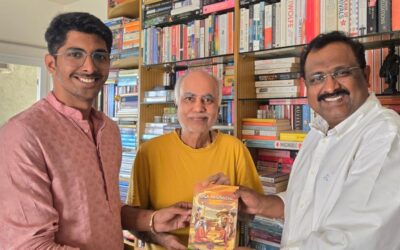
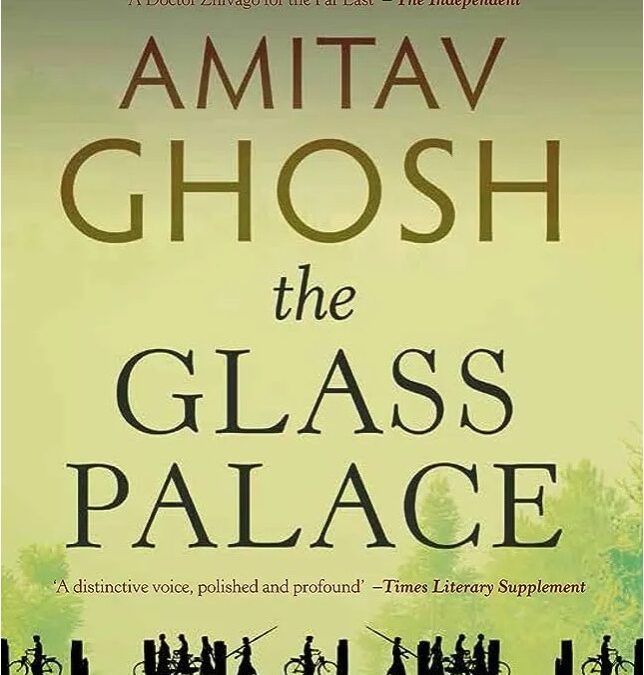
I suffered a cardiac arrest on January 6, 2004, but luckily, as I was in a hospital setting and with Cardiologist Dr. B Soma Raju, I was resuscitated in time. A month later, on February 6, I was operated upon by heart surgeon Dr. M. Gopi Chand. On the eve of the surgery, Mr. Madhu Reddy, the Managing Director of the Universities Press publishing company, which had published Wings of Fire, visited me and gifted me the book The Glass Palace by Amitav Ghosh. I completed reading it while recovering after the surgery, even before I was discharged from the hospital. 

The Glass Palace follows the intertwined stories of Rajkumar, an Indian orphan, and the Burmese royal family, spanning several generations and locations, during the British invasion of Burma. The novel explores the themes of exile, displacement and the impact of colonialism on various societies, highlighting the struggles faced by individuals caught in the crossfire of political and social chaos. The book’s message is that the legacy of colonialism continues to shape societies and individuals, leaving lasting scars of displacement and social change.

Ghosh expertly weaves the personal tales of the people with meticulously documented historical events. The vivid landscapes and many cultural tapestries of Burma, India, and Malaysia come to life in his writing, which catches the spirit of each time and place. A profound sense of the interdependence of human lives across geography and time remains with readers as the novel comes to a close. The Glass Palace is proof that stories may transport audiences to another time and place while simultaneously shedding light on our history.

This novel left a big impression on me. After recovering, I met the Ambassador of Myanmar in New Delhi. I then visited Myanmar with Cardiologist Prof. P Krishnam Raju on a mission to develop an exchange programme introducing interventional cardiology there. During my stay there, I visited the Palace in Mandalay. Standing in the courtyard of Kuthodaw Pagoda on a nearby hill, I saw from a distance the jail where Lokmanya Bal Gangadhar Tilak was confined for six years, during which he used his time in exile to write the Gita Rahasya. I would later write a modern interpretation of this book.

After this trip, I also accompanied President Kalam on a State visit to Myanmar. In the following years, more than 100 doctors and nurses were trained at the Care Hospital, Hyderabad, as part of the exchange programme we have developed, which became a notable accomplishment. When I reflect on such things, I wonder whether things are already predetermined and whether what we think we are doing is happening through us. What if Mr. Madhu Reddy had given me some other book? What if I had not read the book? What if Prof. Krishnam Raju had not been able to spare time to travel to Myanmar?

This book remains very special to me, and I often read its passages to unwind.

“But if it were true that his life had somehow been moulded by acts of power of which he was unaware, then it would follow that he had never acted of his own volition; never had a moment of true self-consciousness. Everything he had ever assumed about himself was a lie, an illusion. And if this were so, how would he find himself now?” (Chapter 36, p. 461)

I consider Mr. Amitav Ghosh the best historical fiction writer of our time. He is our own V. S. Naipaul and Joseph Conrad in this genre of literature.

8. Les Misérables: Book Review

8. Les Misérables: Book Review

8. Les Misérables: Book Review

France was the first foreign country I visited in 1985. It was also the first time I boarded an aircraft. Everything looked like a dream during the daytime. Later, when I visited the United States and other European countries, I realised how the French people are different from other Westerners. Small talk doesn’t work in France. They won’t pick up the phone to talk to a stranger without a thoughtful approach. They are reluctant to answer questions like, “How are you doing?” and even get offended.

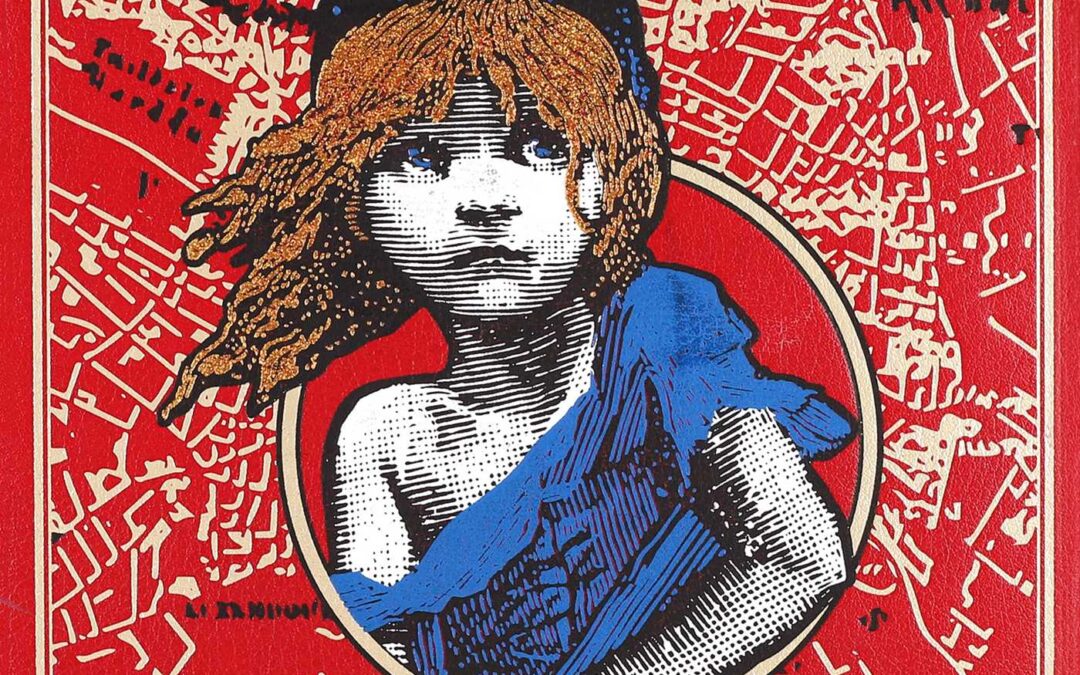
So, when I picked up this voluminous novel (exceeding 650,000 words) during the COVID-19 pandemic, I approached it with a sense of respect. However, after reading it, I can say without a doubt that if there is one timeless masterpiece of a novel I have read, it is Victor Hugo’s Les Misérables. This sweeping tale, set in post-revolutionary France, centres around the life of Jean Valjean. Valjean, a former convict, seeks redemption. He ended up in jail for trying to grab a loaf of bread to pacify his starving nephew and spent nineteen years rotting there.  Despite his attempts to lead an honest life, he is relentlessly pursued by Inspector Javert, whose rigid sense of justice leaves no room for compassion.

Valjean’s journey intersects with many strangers, revealing different facets of human nature and the products of an imperfect society. Fantine, a destitute mother forced into prostitution, leaves her daughter, Cosette, in Valjean’s care. Cosette’s love story with the passionate revolutionary Marius adds a romantic dimension to the narrative. The novel reaches its climax during the June Rebellion of 1832, where the characters’ fates become inextricably entwined amidst the chaos of the Parisian streets. Packed with action, suspense and gripping passages, it’s a book you can’t put down.

‘Les Misérables’ is a profound exploration of justice, mercy and the human spirit. Hugo delves into the injustices of the legal and social systems, portraying the struggles of the underprivileged and the marginalised—the novel advocates for compassion and forgiveness, suggesting that true justice must be tempered with mercy. “Teach the ignorant as much as you can; society is culpable in not providing a free education for all and must answer for the night it produces. If the soul is left in darkness, sins will be committed. The guilty one is not he who sins, but the one who causes the darkness.”

Through Valjean’s transformation, Hugo illustrates the possibility of redemption and the power of love and kindness to overcome past wrongs. The novel also highlights the impact of systemic poverty and the necessity of social change, urging readers to empathise with the plight of the oppressed.

“Love has no middle term; either it destroys, or it saves. All human destiny is this dilemma. No fate proposes more inexorably than love in this dilemma, destruction or salvation. Love is life, if not death—cradle, coffin, too. The same sentiment says yes and no in the human heart. Of all the things God has made, the human heart is the one that sheds most light, and alas! most nights.” (Vol. IV, book 8, p 863)

While reading the novel, I couldn’t stop crying for quite some time when Valjean dies in the end. “If the soul is left in darkness, sins will be committed. The guilty one is not he who sins, but the one who causes the darkness.” Ultimately, Les Misérables is a testament to the resilience of the human spirit and the enduring quest for freedom and equality. Hugo’s masterful storytelling and rich character development create a timeless epic that resonates with readers worldwide.