Life is an enigma. The randomness of events and the unpredictability of human nature make things complicated at times. Not only are people so very different from one another, even individuals change with time and their behavior with different people is tinged with many different shades…
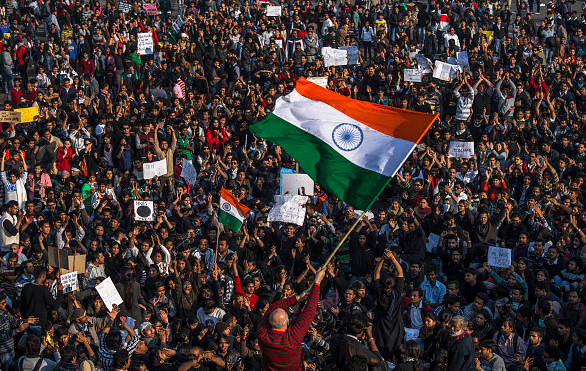
What’s new about New India?
What’s new about New India?
On the surface, V.S. Naipaul’s book India: A Wounded Civilization, seems negative. But when I read it again, in the course of my writing India 3.0, I realized the depth of Naipaul’s writing. “Being an ancient civilization, India should have advanced quickly. But instead, it becomes more and more archaic. The reason lies in the subtle effects of constant invasions for the past thousand years.” Naipaul visited India during the Emergency and wrote, “… in its periods of apparent revival, India hadn’t only been making itself archaic again, intellectually smaller, always vulnerable.”
It took several decades for Indians to come out of this stereotype of a nation of migrants as imagined by Raghupati Sahay ‘Firaq Gorakhpuri’ (1896–1982). The fantasy of the Aryan invasion created by the Germans to cover up their own barbarian nakedness against the Romans and endorsed by our own Pandit Jawaharlal Nehru (1889–1964) in his book Discovery of India took the civilizational glory out of our schoolbooks.
It is pathetic to see that the ideas Indians have of the achievements of their civilization are essentially the ideas given to them by European scholars in the nineteenth century. But not anymore! Three existentially important issues – cultural identity, national security and the economy – are now addressed without any -ism other than nationalism.
The hoopla created around the National Population Register and the continuation of arrangements like Article 370 could not have been possible in any other country of the world. Even Unique Identity – Aadhaar to all the residents of India was fought tooth and nail at every possible forum. But by the 2019 elections, India shrugged off its self-doubts and through the election mandate, exorcized the ghosts that were haunting the Indian nation, paraphrasing Naipaul’s words, “the complex instinctive life of its people that muffles response and buries even the idea of inquiry.” The political parties who degraded themselves in family enterprises based on obsolete ideologies and bogus sociological identities were defeated in a resounding manner.
The term New India gained traction. But what is new in this; ask naysayers? Let me articulate three features of new India, namely: (1) a billion-strong young, aspirational middle class, (2) a clear right-of-centre political position on the three core issues of national identity, national security and a liberal market economy, (3) a backlash against the forces that kept India enslaved for a thousand years not by valour but with cunning and deceit, not sparing those who still live captivated by the phantoms of the past.
No one is now blind to the botched up independence of India and the horrendous human tragedy of the partition that came with it. Democracy is a system of the rule by the majority. You can’t lose an election and keep confronting the elected government at every step. Indians now seek historical dignity, economic security, and national pride. Give it or get lost.
Our neighbouring country will reach its own fate. It still has a last-minute chance to liberate itself from the terrorists who have taken its people hostage. India, as a neighbour, will be affected whatever way things turn out there. New India’s tryst with destiny depends on how deftly it handles the warring United States, Iran and China and keeps Soviet Russia in the equation.
New India, from the position of one amongst the three largest global economies must play its role in the reordering of the global order. A little mistake and history will not forgive people occupying its high offices. The Indian civilization has had enough of its wounds. We talk a lot and that is our problem. No one fears an argumentative nation. We don’t need more nobility; we need more reality.
MORE FROM THE BLOG

Lower Self, Higher Self
Hinterland
When I accompanied Dr APJ Abdul Kalam to Patna in Bihar State in 1999, he was the Principal Scientific Advisor to the Government of India. The Technology Information Forecasting and Assessment Council (TIFAC), which Dr Kalam chaired, had initiated an agriculture project in Paliganj…
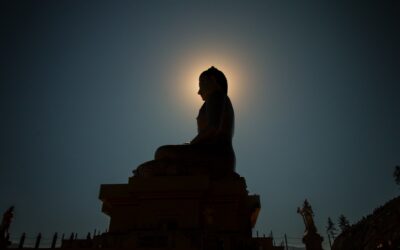
Look within, where all the answers lie
Tanya visited me on Diwali with her husband, Gopi Reddy. Fresh from a Vipassana retreat of ten days, she radiated joy – face lit with a smile and gait poised in serenity. I am familiar with this form of meditation, but I asked her to narrate her experience…