Universal Life-guides

Universal Life-guides

Universal Life-guides

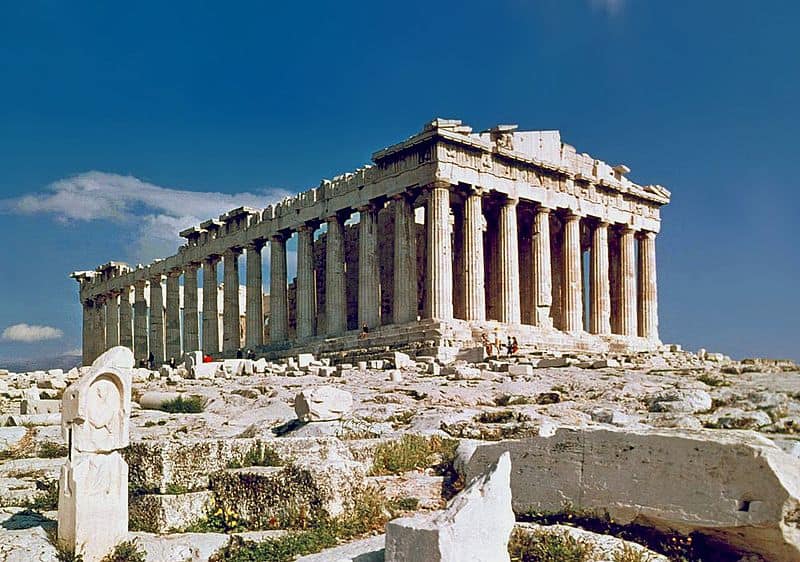
I had gone to Greece in 2006 with my wife and had spent a week there. We traversed from Athens to the Temple of Apollo at Delphi in the hills and sailed in the Saronic Gulf to the Hydra, Poros and Aegina islands in a cruise boat. In Athens, one of the world’s oldest cities, with its recorded history spanning over 3,400 years, I roamed around as if in a trance, while my wife attended her conference. There were ruins with their stories everywhere – the Acropolis with the temples of Parthenon and Athena Nike, the Agora marketplace, and the Panathenaic Stadium, with a capacity for 60,000 spectators, constructed around the year 335 before common era.

I also visited the cave at the Philoppapos hill, where Socrates was tried and sentenced to drink poison for his refusal to give up his philosophical views. It looks so strange in today’s modern world of deal makings. Even a cursory study of world history reveals that in different times, people living in totally disconnected lands had got a consciousness upgrade. The first such, or rather well established, instance is the “Axial Age” some 2500 years ago. Socrates in Greece, Buddha in India, and Confucius in China were talking from a higher level of consciousness. Having accomplished his mission, Socrates left this world satisfied, what if by drinking poison. 

The term for religion used in the Indian civilization is “Sanatana Dharma” – an eternal order of righteousness. It is a constant ascent of consciousness since time immemorial conveyed through individual thinkers for articulation and communicated to the people around them. Lokmanya Balgangadhar Tilak (1856-1920) traced the origin of mankind to the Arctic Circle from where early humans traversed to the Northern parts of Europe and Asia in search of lands for new settlements around 10,000 years ago, possibly due to an ice deluge. This hypothesis is contrary to the Western narrative but is indeed quite credible.

The sky at the North Pole would have been seen by the early men as a heaven revolving around as a potter’s wheel. The stars would not rise and set but move round and round in horizontal planes during the long night of six months. The empty horizons, the whooping winds, the fire emerging out of stones… this stunning drama was recorded in several Vedic and Zoroastrian hymns, which looks weird to the people living away from the poles in the modern world, but that is how it was. Our ancestors knew that human beings are not only very small, but also very ephemeral. 

The order in ever-changing phenomenon was observed and recorded. It was called “Rta” by the Vedic people and seasons were therefore known as “Rtu” in most of the Indian languages. People lived together through consensus and cooperation. The ancient Indian, Greco-Roman and African societies were governed by the elites with widespread participation of the people. Then the game of thrones started. Empires started capturing territories, dividing people into winners and losers – the Mauryan, the Persian, and the Roman empires became the new world order. However, universal ideas keep flourishing beneath ever-changing political formations. 

In this period of empire-making, a businessman, Zeno from Citium, Cyprus, had a shipwreck, losing all his wealth and landed in Athens as a pauper. There, he got introduced to the ideas of Socrates, who had lived there a 100 years earlier. Zeno believed in the divine nature of the universe and the end goal of human life to achieve one’s highest version by living according to Nature. He started a school that attracted many young people. He used to address his students from a painted porch, “Stoa Poikile” in Greek. His teachings acquired the name Stoicism, or the philosophy of “The Porch.” One must live in the world like a person smiling on the “porch” after coming out of his house after a big fight with his spouse.

This disposition resonates with the term “Stithpragya,” introduced in verse 52 of the second chapter in the Shrimad Bhagavad Gita. It indeed refers to the mental disposition of one who is situated in divine consciousness. In the next 18 verses, such a person is elaborately described. For us ordinary people of the world, “Pragya” is wise, intelligent, and learned; whereas “Sthit” means grounded, anchored, stayed, steady, and firm. When combining both words “Stithpragya” means — a person who has disciplined the mind and senses, is firm in judgment, and free from any delusions. In other words, it refers to one who is contended, determined, and steady in life. 

In Stoic literature, we come across concepts like “Eudaimonia,” which means human flourishing, prosperity, and blessedness, perfectly matching a Stithpragya. And Stoics tell you to take responsibility, live expressing your highest self (“Arete” in Greek), and focus on what you can control, leaving the result to the higher power, as if explaining verse 47 of Chapter II in the Shrimad Bhagavad Gita in a different language to a different audience.

कर्मण्येवाधिकारस्ते मा फलेषु कदाचन।

मा कर्मफलहेतुर्भूर्मा ते सङ्गोऽस्त्वकर्मणि।।

Your right is for action alone, never for the results. Do not become the agent of the results of action. May you not have any inclination for inaction. 

An IT professional, Jaisooria, is my son, Amol’s friend. He lost his father, Dr. Kalpetta Balakrishnan, renowned writer and ex-secretary of Kerala Kalamandalam, and a humanist philosopher, in December 2020. Balakrishnanji taught at Sree Kerala Varma College at Thrissur and was a senate member in Cochin and Calicut Universities. When Amol told Jaisooria about my observation of a great parallel between Stoicism and the idea of Stithpragya postulated in the Shrimad Bhagavad Gita, Jaisooria told him that during his last days, his father was contemplating to write on this topic. Taking it as God’s will, I will take up this task now.

Religion and mythology have long been used as vehicles for philosophical teachings but in the Internet driven world, these vehicles seem to have gone out of fashion, if not turned obsolete. Universal philosophical themes – action without attachment, the perils of escapism, oneness with the universe, and the pitfalls of desires – do not need rituals, gurus and cults. They need to be practiced in everyday action. The power of philosophy to blunt the blows of fate is a credible tool at everyone’s disposal. 

I leave you with three cues from Marcus Aurelius: (1) If it is not right, do not do it; if it is not true, do not say it;  (2) Dig within. Within is the wellspring of Good; and it is always ready to bubble up, if you just dig; and (3) Most of what we say and do is not essential. If you can eliminate it, you shall have more time, and more tranquillity. Ask yourself at every moment, “Is this necessary?” If you practice these simple suggestions, you will feel much better, and even more effective in whatever you are doing. 

MORE FROM THE BLOG

Dream yoga

Dream yoga

The utility of sleep is undeniable and of late, there have been excellent books emphasizing it. Matthew Walker, professor of neuroscience and psychology at the University of California, Berkeley, has published in his 2017 book…

How to Jailbreak the Life Operating System?

How to Jailbreak the Life Operating System?

The sense of “I” is the greatest deception that mankind is condemned to. Talk to anyone and you hear the story of obsession with money, power, name, fame, attachments, achievements, love, and dependency. We live a life driven by our likes and dislikes. Every moment we are moving “towards what we like and love” and “away from what we dislike and fear…

Life is a Nine-dot Problem

Life is a Nine-dot Problem

I have immensely enjoyed reading Full Catastrophe Living by Dr. Jon Kabat-Zinn (b. 1944), a very readable and practical book on mindfulness, published in 1990. I have read the 25th anniversary issue, published in 2013. The more than 600-page book presents the details of an 8-week course known as Mindfulness-based Stress Reduction…

The old chronicler of time

The old chronicler of time

The old chronicler of time

I read a delightful book, “Clock Towers of India,” written by Dr. Yatindra Pal (YP) Singh. We share our Alma Mater – GB Pant University. I graduated in Mechanical Engineering and YP in Civil Engineering. Two years junior to me there, YP was studious, energetic and immaculate, unlike the playful, chaotic and scruffy me. YP won the Chancellor’s medal for his all-round excellence and later joined the Indian Railway Service of Engineers. So, when I read his book with some beautiful photographs, including the clock tower of our own university, a cascade of memories was activated.

It started with the rhyme, YP quoted in the book – Ghantaghar ki char ghadi, Charon mein zanzir padi – there are four clocks in the clock tower, all four are chained. It was the theme song of the freedom movement in North India, from where YP and I come. As most of the clock towers were constructed by the British or the local feudal lords supporting them, they became the butt of scorn. But after independence, the clock towers quickly turned into icons. We sang the Ghantaghar ki char ghadi… as our pathshala rhyme. Meerut, where I was born and schooled, had a majestic clock tower built by the prodigals of Hasan Mahmudi Kamboh, who captured the city of Meerut for Mahmud of Ghazni (971-1030). It was called Kamboh Gate, one of the nine gates of old Meerut. 

When I was admitted to Dev Nagari Inter College in 1965, I would walk under the tall three-laned structure. We could hear the clock tower’s bells in the night, when sleeping on the terrace, which was the norm during summer. Then the name Kamboh Gate was changed to Netaji Subhash Chandra Bose Dwar, celebrating the fact that the great hero had visited Meerut in 1930 and addressed the public from here. The doughty manager of Menka Cinema, with his soldier-style moustache, had fought for the Azad Hind Fauz, we were told. He would stand in the lobby of the cinema with a cane, and I would give him a passing glance of deep admiration, carrying my heavy school bag on my back like a mountaineer. 

My father worked in Meerut Municipality, a furlong away from Ghantaghar. Once my father said that there would be a procession from the Municipality passing through the Ghantaghar and we decided to watch the spectacle. Three of my younger siblings, two brothers and a sister, along with our grandmother, climbed to the first level where there was a big watch shop. We spent about an hour there, but no procession came. It was my first chance to look down from a height and I was indeed captivated watching the traffic below. Later, when I looked down from the Eiffel Tower in 1985 and 2014, the Sears Tower in 1999, St. Louis Arch in 2000, Jin Mao Tower in 2003, and Burj Khalifa in 2015, every time, the Ghantaghar came alive reminding me of the indomitable spirit of my grandmother. 

The clock tower at the north end of the Palace of Westminster in London, famous as the “Big Ben,” was completed in 1859. It is perhaps the biggest and the best clock tower in the world. Big Ben’s clock was the largest and the most accurate four-faced striking and chiming clock in the world. In 2016, I spent good time there, looking at the details of its marvellous structure. It is 40 feet, about 12 meters, on each side and 320 feet height, just short of 100 meters. Hearing the 15-ton bell struck by a 450 pounds (about 200 kg.) hammer was surreal! 

YP writes in his book that the British commissioned clock towers at many places in India to show their authority to the commoners and to keep the morale of their troops high. But while a clock tower signifies power, the clock signifies a structured lifestyle. YP purchased his first wristwatch in 1981, after getting a job. I was lucky to have it from my father in 1971, when he was sending me off to Pantnagar. My father died at the young age of 49 in 1979 and I did not wear a wristwatch since then. A few years back, my friend, Jitu Patel, who lives in Nairobi, gifted me a 10,000-dollar Rolex watch, as he was meeting me on my birthday. But I am yet to wear it. 

Nowadays, everyone lives with a mobile and the time is so obvious. But, instead of making people more productive and organized in their lives, this awareness has cultivated a new pattern of Obsessive-Compulsive Disorder (OBC) of checking time every moment. People fix alarms for TV shows, schedule gossip sessions and create cognitive garbage by megabytes every day. They can idle for hours together doing nothing and yet keep their senses and mind busy. I must share here what Charles Darwin, who gave the Theory of Evolution, famously said, “A man who dares to waste one hour of time has not discovered the value of life.” 

So, clock towers definitely played their own important role in creating awareness about time and helping people live life in a structured and purposeful way. As YP pointed out in the book, most of the clock towers in India are now dysfunctional, their clocks obsolete and unrepairable, and buildings depleted and encroached upon. A nation that does not respect its heritage, is often deprived of any glory in the future. Time moves like an arrow. It never returns. You can use it to hit a target, or shoot it into the dark. Eternity is indifferent to what are you doing with your life, like an envelope carrying a letter, not concerned with its content. 

It is time to value your time on this planet and use it properly. No one has lived forever and you would not be an exception. As time passes by you, you will find your body losing its strength, your mind getting dull and your spirit losing its buoyancy and ardor. No regret, no remorse, and no lamentation would be of any help later. Be aware of time, for it is your time. Rather than minding the hours and minutes, be aware your breath and your heartbeats. The inner clock must not run itself out before the outer one.

Of all the content on TV in last few years, a series, “Mr. Robot” on Amazon Prime Video, fascinated me the most. There is a character, “White Rose,” who is the leader of the Dark Army, a Chinese hacker group. She is a transgender woman masquerading as the male Zhi Zhang, the Chinese Minister of State Security. In one scene, she is shown surrounded by hundreds of expansive clocks of all kinds – from antique to the most modern – in her house. She says, “I mind the top one percent of the top one percent by hacking their time.” 

Mind your thoughts and emotions, and see how they are hacking you. Stay grounded in your body, stay connected to your past, your roots and your heritage and utilise their wisdom for creating a better future for yourself and the coming generations to live in. Every life is just an extension of what existed earlier and a genetic chronicle. I thoroughly enjoyed reading YP’s book and would certainly recommend it to everyone.

MORE FROM THE BLOG

Dream yoga

Dream yoga

The utility of sleep is undeniable and of late, there have been excellent books emphasizing it. Matthew Walker, professor of neuroscience and psychology at the University of California, Berkeley, has published in his 2017 book…
How to Jailbreak the Life Operating System?

How to Jailbreak the Life Operating System?

The sense of “I” is the greatest deception that mankind is condemned to. Talk to anyone and you hear the story of obsession with money, power, name, fame, attachments, achievements, love, and dependency. We live a life driven by our likes and dislikes. Every moment we are moving “towards what we like and love” and “away from what we dislike and fear…

Life is a Nine-dot Problem

Life is a Nine-dot Problem

I have immensely enjoyed reading Full Catastrophe Living by Dr. Jon Kabat-Zinn (b. 1944), a very readable and practical book on mindfulness, published in 1990. I have read the 25th anniversary issue, published in 2013. The more than 600-page book presents the details of an 8-week course known as Mindfulness-based Stress Reduction…

Old memories, new insights

Old memories, new insights

Old memories, new insights

A Kaleidoscope is a fascinating little toy. I immensely enjoyed it and even made one in my woodcraft class, guided by my teacher “Tyagi Sir” in Dev Nagari Intermediate College, Meerut, in 1967. We took three mirror strips, tied them together as a triangle, put some broken colored pieces of glass bangles and packed them into a tube together. I used a bamboo piece for the tube. 

Wonderful symmetrical patterns are formed due to repeated reflection, presenting an ever-changing view when the tube is tilted. I strongly recommend that every child, before finishing school, must make one kaleidoscope and examine (scope) the formation of (edios) of beautiful forms (kalos). It would be a great primer to the Maya that this world is for the eternal observer of the soul. 

I have come to believe that we are all human kaleidoscopes, a walking collection of memories, like shattered glass with bits of crazy color churning inside our minds. Mundane little events keep happening as we grow through life. We experience them first as curious children; then, as adolescents bubbling with hormonal surges; then, as energetic, hardworking adults; then, as mature, wise, grown-up people; and finally, as a reflective older lot, a group to which I now belong. In September 2007, I accompanied Dr APJ Abdul Kalam on his first foreign trip after he relinquished the Presidency. He did not go to the United States as President and this visit was indeed long due. 

The “Fifty Years in Space” international conference at the California Institute of Technology provided the best fit. Dr Kalam included me in his speech writing team that included a punch line, “Planet Earth has twin human needs. One is the protection of the earth environment for living and the other is energy independence. The Earth is experiencing both stratosphere cooling (due to the ozone hole) and troposphere warming (due to increased greenhouse gases) …”

My friend, James Lupino, who was born to his Italian immigrant parents and grew up to be a brilliant electrical engineer, flew in from Minneapolis, Minnesota, to meet Dr Kalam.  We had a chance meeting with a famous singer-song writer, William “Smokey” Robinson, in the lobby of Hotel Indigo where Dr Kalam was staying. Robinson was inducted into the Rock and Roll Hall of Fame in 1987. We had a tête-à-tête with the “star.” Robinson was friendly and open and when I asked why he was called Smokey, he said, “As a child, I loved cowboy movies. My uncle not only used to take me to these movies, he also gave me a cowboy name – Smokey Joe. If people asked me what my name was, I didn’t tell them my name was William, I told them my name was Smokey Joe.” And then he laughed with a tinge of tears in his eyes.  

Once free from the official engagements of Dr Kalam, I had a good time with James who drove me through Los Angeles – the iconic Hollywood sign on Mount Lee, Beverly Hills, and the famous shopping street Rodeo Drive nearby. We passed by the stunning billion-dollar Getty Center perched high atop Brentwood Hills. We of course did not enter and see Vincent van Gogh’s “Irises,” Claude Monet’s “Stack of Wheat,” and “The Abduction of Europa” by Rembrandt, famously displayed there. 

In the evening, we leisurely walked in Hollywood Boulevard, where more than 2600 five-pointed stars on the walkway celebrate famous stars. I had my first Corona beer in a Spanish restaurant there with a lemon slice stuck in the opening, giving the beer its wonderful taste. I don’t know if the Corona beer would still retain its immense popularity after the coronavirus pandemic. 

From LA, we flew to Minneapolis, transiting at Sky Harbor Airport in Phoenix, Arizona. Situated in the vast Sonoran Desert that wraps around the northern end of the Gulf of California, Phoenix receives the most sunshine of any major city on Earth. I was fascinated to see the air traffic control tower, made of war-time underground fuel storage tanks welded together. You need audacity of imagination and engineering competence to accomplish such feats. In contrast, I found that in India, we are scared of going out of the box and even while innovating, the mind is gripped with fear. There are so many naysayers everywhere, waiting to see you fail. 

James lives in Minneapolis. He has been working with US Electronics there. I spent a few days in this beautiful city, spread on both banks of the Mississippi River. Minneapolis is home to five Fortune 500 companies, and together with the neighboring St Paul City, they make up the fifth-largest hub of major corporate headquarters in the US. We visited the United Health Group – a healthcare company with a revenue of more than $200 billion. I learned there that improved health outcomes can be achieved in spite of 40% lower treatment costs. I don’t see anyone even minding these matters in India. If you fall sick, it is your problem, and you are at the mercy of the healthcare business about what they do to you and how much you are asked to pay. 

Instead of bothering about your plans, your wishes, goals and ambitions, holding a telescope always, as if looking into future and writing the script for tomorrow, why not examine the kaleidoscope of your memories instead and you will find all that you need to know to become your best. You will feel a spring of energy inside, bathing you with enthusiasm. Dr Kalam, the NASA lecture, Smokey Robinson, the Mississippi River… are all unconnected and different, like broken glass pieces in a kaleidoscope. But they become one in my mind and I am able to communicate to you the beautiful picture they make together.

While writing a comment on my blog, “Hot Fudge, here comes the Judge,” 77-year-old veteran attorney, Bart Fisher, connected to his childhood in St. Louis and his passion for Baseball. My erstwhile colleague at Care Foundation, Arun Arramraj, recounted the American values as he had observed them during his study there in what could be the best description I had ever read. Dr Ramaiah, my student at Hyderabad University, now a professor at the University of Hail in Saudi Arabia, recollected that I had narrated the fudge story to his class in 2008. It is amazing to see how things get connected, creating positive energy! 

Habits of getting into arguments, always complaining, focusing on inadequacies, and lamenting about a half-empty glass are not only bad, but they are also dangerous. They keep you forever trapped in your miseries. So, in the New Year, learn to spend some quiet time with yourself, tilt the kaleidoscope of your memories and watch the beautiful patterns it makes with the strange combinations. You will find your signs, your cues, suggestions, guidance, help, whatever you are looking for, coming out from your inner being.

Here is the truth that I learnt a little late in my life. Not only is each one of us a speck of consciousness, but the whole universe is also consciousness itself. When you start feeling your consciousness, you will also start sensing the consciousness in your surroundings, in the form of vibes and subtle happenstances. You will indeed taste the bliss that God had embedded while creating life!

MORE FROM THE BLOG

Dream yoga

Dream yoga

The utility of sleep is undeniable and of late, there have been excellent books emphasizing it. Matthew Walker, professor of neuroscience and psychology at the University of California, Berkeley, has published in his 2017 book…

How to Jailbreak the Life Operating System?

How to Jailbreak the Life Operating System?

The sense of “I” is the greatest deception that mankind is condemned to. Talk to anyone and you hear the story of obsession with money, power, name, fame, attachments, achievements, love, and dependency. We live a life driven by our likes and dislikes. Every moment we are moving “towards what we like and love” and “away from what we dislike and fear…

Life is a Nine-dot Problem

Life is a Nine-dot Problem

I have immensely enjoyed reading Full Catastrophe Living by Dr. Jon Kabat-Zinn (b. 1944), a very readable and practical book on mindfulness, published in 1990. I have read the 25th anniversary issue, published in 2013. The more than 600-page book presents the details of an 8-week course known as Mindfulness-based Stress Reduction…

Pink ball reality

Pink ball reality

Pink ball reality

Embed from Getty Images

Cricket is a passion for Indians. I grew up listening to cricket commentary on the radio. During test matches, life would come to a lower gear as people unabashedly listened to commentary at work and students carried pocket transistor radios in their school bags. Shopkeepers put up display boards outside their shops writing with chalk the latest score. I had a friend called Pramod Dixit who would take tea, water and lunch as and when the players in test matches did. My father never went to a playground himself but would want to know the score whenever India was playing cricket with whichever country.

Earlier, the Indian team winning a test match used to be a rare event and even individual performances were celebrated. When young Nawab Pataudi scored a double century against England in Delhi in 1964, people in my neighborhood in Meerut distributed sweets. India had its first test victory overseas only in Dunedin, New Zealand, in February 1968. On August 24, 1971, when India had won cricket’s final frontier — beating England in England — I had just joined Engineering at GB Pant University, and that night in the hostel was like a carnival. 

I saw the birth of one-day cricket. It was a 60-overs’ game initially. Television had arrived, and we could see the matches live. In the first World Cup played in 1975, India lost its first match with a huge margin of 202 runs to England. When India was chasing 336, Sunil Gavaskar had crawled to 36 not out, out of 174 balls as if he was playing a 5-day test match. It was generously declared as lack of experience. 

The turning point came when nine years later, the Kapil Dev-led Indian team lifted the World Cup by beating the mighty West Indies at Lord’s Cricket Ground. I had come to Hyderabad by that time to work at DRDL. I remember clearly that on June 25, 1983, it was five minutes to midnight in India, when Mohinder Amarnath got Michael Holding out in the 52nd over and India won by 43 runs with 8 overs to spare.

In the 1987 World Cup, the overs were reduced from 60 to 50 and the matches were called One Day International (ODI) since then. On July 13, 2002, India successfully chased down 326 against England with two wickets and three balls to spare in one of its greatest ODI wins. When Sourav Ganguly took off his India jersey and waved it to the crowd from the balcony of Lord’s in celebration, he indeed declared the rise of New India – confident, capable and above all, courageous.
A further short format of 20 overs with a more athletic and explosive form of cricket came in 2005. It was called Twenty20, or T20. The Indian cricket team played its first T20 match under the captaincy of Virender Sehwag against South Africa at Johannesburg on December 1, 2006. India defeated the hosts by six wickets. India also won the first T20 World Cup in 2007 defeating Pakistan by 5 runs bowling them out with three balls to spare. India once again won the ODI World Cup against Sri Lanka in 2011 with Mahendra Singh Dhoni hitting the iconic six for the title chasing 275, the highest winning target in a World Cup final.

The color of the cricket ball was changed from the traditionally red to white, for better visibility, when one-day matches began to be played at night under floodlights. White balls have been found to behave differently in swing. They also deteriorate more quickly. As a balancing measure, the color was changed to pink as a satisfactory compromise on this issue.

Fast bowlers throw the ball at 160 km/h and skillfully make it deviate from a straight course. This is called a ‘swing’ when done in the air and ‘seam’ when off the ground. Spin bowlers impart lateral revolutions on the ball at the point of delivery, so that when it bounces from the ground it takes a different course. The color and the damage that the ball must endure make things unpredictable and the game, interesting. The pink ball is pushed to make day-night test matches work.

The first pink-ball test was played in November 2015 in Adelaide between Australia and New Zealand. It turned out to be a low-scoring thriller. Australia defeated New Zealand on Day 3 by three wickets. Since then, there have been ten more pink-ball tests. Adelaide now exclusively hosts day-night Tests, with the only exception being the 2018 match against India. The Indian team had declined to play with the pink ball due to being unfamiliar with it. 

India played its first pink-ball, day-night Test match against Bangladesh at Eden Gardens in November 2019. It won by an innings and 46 runs riding on the century of captain Virat Kohli and excellent fast bowling by Ishant Sharma and Umesh Yadav. And finally, India played from December 17 to 21, 2020 at Adelaide, its first pink-ball test against Australia only to score their lowest score in history. On the third day of the match, Indian batsmen suffered annihilation. Every player was edging the pink ball and almost all of it went into the hands of the fielders as catches. Australian bowlers Cummins and Hazlewood were over the Indians like a rash.

What does this story tell us? In June 2003, Kabir Edmund Helminski came to meet President APJ Abdul Kalam. I was there with Dr Kalam so he involved me in the meeting. Mr. Helminski presented to Dr Kalam his book on the thirteenth century Sufi poet, Jelaluddin Rumi, containing the English translation of Rumi’s Persian poems. Later, Dr Kalam gave me the book marking a few poems. One of those read: “Yesterday I was clever, so I wanted to change the world. Today I am wise, so I am changing myself.” 

The need to change was conspicuous when our cricketers played cricket with the pink ball. The new world needs new skills. Let us not die a death by our old habits. Let us change the ways of working, reset our aims, recalibrate our goals, and stop doing what is bound to fail and start something small, that is safe, certain and that keeps the kitchen going. The biggest falsity in the world today is the impression that newer and bigger means better – whether it is cars, houses, brands, etc. Don’t fall for this mirage. Small has always been beautiful and will remain beautiful. Learn to appreciate small pleasures and conveniences and relish simple tastes. 

India must learn to live with an unfriendly China, free its supply chains and produce all its needs, medicines especially, indigenously. Work-from-home will continue. Corporations have tasted the savings of closing their expansive offices and cutting down on travel expenses has become mandatory to maintain bottom lines. Digital payments, online sales and home delivery will flourish and people will mind their health better as availing medical facilities in hospitals has emerged not only risky for infections but also increasingly exploitative.

Year 2020 has left behind a mountain of debt. Governments, companies, businesses and families are all under massive amounts of debt. No one really knows who will be paying. The days of things like Minimum Support Price (MSP) for crops, permanent jobs, life-time pensions, and electoral freebies are indeed over. But hope is adamant. The gaiety of fantasy is die-hard. We can’t blame the ball. What if it has become pink? The game must go on.

MORE FROM THE BLOG

Dream yoga

Dream yoga

The utility of sleep is undeniable and of late, there have been excellent books emphasizing it. Matthew Walker, professor of neuroscience and psychology at the University of California, Berkeley, has published in his 2017 book…

How to Jailbreak the Life Operating System?

How to Jailbreak the Life Operating System?

The sense of “I” is the greatest deception that mankind is condemned to. Talk to anyone and you hear the story of obsession with money, power, name, fame, attachments, achievements, love, and dependency. We live a life driven by our likes and dislikes. Every moment we are moving “towards what we like and love” and “away from what we dislike and fear…

Life is a Nine-dot Problem

Life is a Nine-dot Problem

I have immensely enjoyed reading Full Catastrophe Living by Dr. Jon Kabat-Zinn (b. 1944), a very readable and practical book on mindfulness, published in 1990. I have read the 25th anniversary issue, published in 2013. The more than 600-page book presents the details of an 8-week course known as Mindfulness-based Stress Reduction…

Hot fudge, here comes the judge!

Hot fudge, here comes the judge!

Hot fudge, here comes the judge!

Certain memories, not captured in photographs, not laced with emotions, were buried in the subconscious but they had never vanished. At the most unexpected moment, and at the subtlest cue, they sprung up in full liveliness as if they had occurred the last evening. 

I have been going to the United States since 1999 and have been to different places in connection with some or the other work. One such trip took me toSt. Louis with young Hamish Sahni, now Chairman, Klenzaids Contamination Controls Pvt. Ltd., Mumbai. They have been setting up the Integrated Biologicals Formulations Facility for Bharat Biotech, Hyderabad for which we met. 

The field of how to handle biological contamination was entering into India and Klenzaids was the leading company in India making HEPA (high-efficiency particulate arrestance) filters. So, I landed up in St. Louis for a technical conference I was attending with Hamish, without any idea about the place. The Internet had not yet come to our phones and one couldn’t Google to know whatever crossed one’s mind.

I was amazed to see the iconic Gateway Arch monument that symbolizes the city. It was a very tall arch that could be seen from everywhere. After completing our work, we visited the arch site, went up the 630 ft. (192 meter) arch in a cable car and watched a film in the underground theater about the importance of the monument. Constructed on the Western bank of the Mississippi River, the monument, which forms the state line between Illinois and Missouri, commemorates the westward expansion of the United States. 

Christopher Columbus started his sail from Spain to India for a share in the seemingly limitless riches of the “Golden Bird” and stumbled into Puerto Rico calling it the West Indies (India in the West). The saddest part of the story is that Columbus tried three more times—in 1493, 1498 and 1502—but could reach only up to Panama on his last trip and never put his foot on the North American continent. He returned to Spain disgraced and died in 1506. 

English exploration began almost a century later. They arrived in Virginia in 1585 and called it “The New World.” The first British settlers in the New World stayed close to the Atlantic, their lifeline to supplies needed from England and established their colonies going northward up to Canada. By the 1760s, the thirteen British colonies contained 2.5 million people along the Atlantic Coast east of the Appalachian Mountains. The Colonies defeated the British and established the United States of America on July 4, 1776. The war however continued till 1783. 

During the 1830s and ’40s, the flood of pioneers poured unceasingly westward which required the crossing of the mighty Mississippi River. The French were ruling this territory. In 1803, they sold it to the U.S. for fifteen million dollars, or approximately eighteen dollars per square mile. The United States nominally acquired more than 2 million square kilometers. The biggest joke is that the French were mere squatters there. The original inhabitants, called natives, had no role in this deal. Gateway Arch monument celebrates that crossing of the Mississippi River, as I learnt while watching the film. 

Another memory ofSt. Louis is the relaxed Sunday forenoon I spent at the Grand Hall Market. It was an old railway station converted into a marketplace. The trains now pass through the underground station. There I came across a fudge-maker’s shop. A huge African-American man was singing loudly in his baritone voice and making some sweet dish. I stood there as if hypnotized. I observed that the man was making a sugar candy by mixing sugar, butter and milk, boiling it to the soft-ball stage and then beating the mixture while it cooled so that it would acquire a smooth, creamy consistency. The aroma, his singing and beating sounds were creating the magic. 

A middle-aged lady, with pink skin and blue eyes, arrived. She was carrying two bags, which she kept on the ground and started clapping, singing and even gracefully dancing with the singing fudge-maker, making a perfect chorus. Many others also joined the singing. This went on for some fifteen minutes and concluded with the fudge ready. A few people bought little pieces but most of them were there to enjoy the making and singing. The lady standing by my side did not buy anything; she just lifted her bags and walked away as if nothing had happened. I learnt at that moment that this is the spirit of America. The lady was living in the present moment. There was no status consciousness. Neither was there any indulgence on the part of the fudge-maker – please buy… at least taste a bit…. 

So, what triggered this memory after 20 years? I think it was a juxtaposition of many things. The background was the recent visit of the Prime Minister to the coronavirus vaccine development facilities. Those images brought out the Klenzaids, who made such facilities. The shining steel interiors of vaccine-making plants brought out the memory of the shining Arch. But the singing fudge sprung up when I was microwave-warming the Mysore Pak before taking a bite. I think I overheated it, releasing the aroma of burnt sugar, and then started singing to hide my embarrassment…  

Queen Bitch, eat the rich 
I’m on the second course today. 
I’m not the first and I won’t be the worst 
She’s done most of LA.

We have to live little moments as they come before us. That is what that middle-aged lady demonstrated before me that day. It was a Sunday; her grown-up children must be sleeping at home and instead of breaking her head with them, she came out to this vintage shopping area and sang cheerfully like a little girl, fully immersed in the present moment. And once the moment passed, she detached herself and moved on.

Life is indeed beautiful if you have time to observe its beauty. There are so many little pleasures hidden behind the shouting TV and the clutter of social media. We may have come from a great civilization, but we are miles behind in civility and treating other people with loving kind respect. Advancing materially – becoming rich, buying toys, luxuries and conveniences – has never made any one happy, so why would you be an exception? Everyone needs fudge, it is how God helps us cope. Don’t judge everything and keep pronouncing verdicts. Cheer up!

MORE FROM THE BLOG

Dream yoga

Dream yoga

The utility of sleep is undeniable and of late, there have been excellent books emphasizing it. Matthew Walker, professor of neuroscience and psychology at the University of California, Berkeley, has published in his 2017 book…

How to Jailbreak the Life Operating System?

How to Jailbreak the Life Operating System?

The sense of “I” is the greatest deception that mankind is condemned to. Talk to anyone and you hear the story of obsession with money, power, name, fame, attachments, achievements, love, and dependency. We live a life driven by our likes and dislikes. Every moment we are moving “towards what we like and love” and “away from what we dislike and fear…

Life is a Nine-dot Problem

Life is a Nine-dot Problem

I have immensely enjoyed reading Full Catastrophe Living by Dr. Jon Kabat-Zinn (b. 1944), a very readable and practical book on mindfulness, published in 1990. I have read the 25th anniversary issue, published in 2013. The more than 600-page book presents the details of an 8-week course known as Mindfulness-based Stress Reduction…