I have been a frequent traveler and for many years, especially from 2000 onwards, there was hardly any week without travel. My association with Dr. APJ Abdul Kalam was a powerful facilitator and during his Presidency (2002 – 2007), I had been to every…
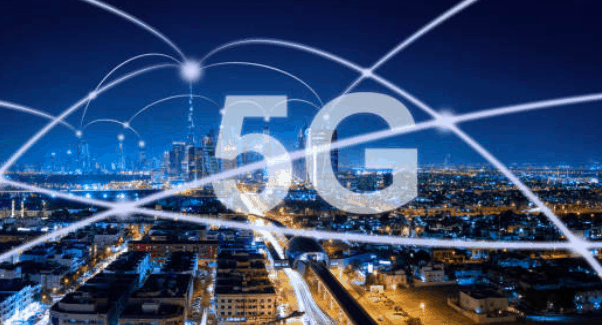
What they don’t tell you about 5G
What they don’t tell you about 5G
In India, we see Telecom as a money machine entangled with scams and schemes. Those who walked into free 4G are now being asked to pay. It is a zoo where one enters free of cost to see the lion, finds it out of the cage, and runs to the exit only to find a fee to get out safely. The Indian government never allowed BSNL to have 4G, thus making it obsolete and fit for closure. So, when the U.S. and China stake billions of dollars of trade over 5G, one in India wonders what the fuss is all about.
It is not commerce for which the U.S. has taken a tough stand against China on 5G – the fifth generation of mobile communication – it is the revolutionizing military potential of this technology – significant enough to make China a world power challenging the United States. Also, there is a lot of heartburn about the way China has stolen the best technology developed in the U.S. and is now offering it in the global market as a competitor. Let there be no doubt about it that for India, a Chinese 5G will amount to a total surrender of sovereignty to China forever.
For the people in general, 5G will be at least 20 times faster than the best 4G network today, enabling faster downloads of movies or smoother streaming. But on 5G driven phones, loaded with Artificial Intelligence, companies would know not only about your today but also about your tomorrow – your plans, your risks and where you are heading to – even before you decide on your next steps, which would be based on your temperament and conditioned patterns already known to your phone.
The situation will become more complex and precarious as 5G will not only eavesdrop on people to people communications but also hook them to the vast network of sensors, robots, and autonomous vehicles through sophisticated artificial intelligence. You will know if the shoe you bought is transmitting your location at every step, or your watch is hearing what you are talking and your emails are being read by a machine that will ‘design’ a future for you, that will be worse than any fate that you may fear.
With the ability to carry much more data, much lower network latency (network response time), energy consumption and much better stability than the previous generation of technologies, 5G is expected to transform digital communication. Using 5G, data can be transmitted at up to 10 gigabytes per second, much faster than using a 4G network, and the latency is reduced to under a millisecond, or 1 percent of that of 4G. Most of the things would be voice-controlled with no need to even look at your mobile phone as, after 4G, one doesn’t type any more; one just touches the screen and eventually, even that will go.
5G will finally bring all human beings online. Artificial intelligence, with the capability to imitate human intelligence, will perform a wide range of tasks starting from thinking to learning, reasoning, problem-solving and much more! It will initially seem fun and exciting, as was free 4G, but eventually, it will not only control you but also manipulate you for sure. Even if American 5G will not be different, it will not destroy Indian businesses by forecasting and flooding cheaper Chinese products in the market, which would be a fait accompli if Chinese 5G is used by India. Concepts like liberty, freedom, and democracy do not exist in China, so how do you expect them to be honored?
When Mark Zuckerberg says, “We’re at a point now where we’ve built AI tools to detect when terrorists are trying to spread content, and 99 percent of the terrorist content that we take down, our systems flag before any human sees them or flags them for us.” What Zuckerberg left unsaid is that everyone – the businesspeople, professionals like doctors and engineers, politicians and their clients; and individuals and families – can be tracked to know their future plans based on their present steps and moves.
AI is the new electricity and 5G is the invisible wire that will carry it. Just like electricity changed everything – manufacturing, trade, agriculture, healthcare, education, transport, and communication – so will AI. It is important to return to the basics. None of us can escape 5G taking over the world, but we can always refuse to be snared into it. Start forming habits of not keeping your mobile phone with you always, not talking to people over the phone but meeting them in person, writing letters by hand and above all, knowing your feelings, before machines take over and decide how you should feel.
MORE FROM THE BLOG
Welcome to the world!

The Writing on the Wall
I have been a frequent traveler and for many years, especially from 2000 onwards, there was hardly any week without travel. My association with Dr. APJ Abdul Kalam was a powerful facilitator and during his Presidency (2002 – 2007), I had been to every…

Is Life a Fixed Match?
Time and again I found books reaching me when I needed them the most. Be it The Fountain Head by Ayn Rand in 1974, which lifted me from an average engineering student to a meritorious one, or Gestalt Therapy by Fritz Perls in 1985 that helped me get rid of my migraine, or Memories, Dreams, Reflections by Carl Jung in 1996 that provided me the model for writing Wings of Fire with Dr. APJ Abdul Kalam…