Spiritual Darning of Personality Holes

Spiritual Darning of Personality Holes

Spiritual Darning of Personality Holes

Darning, known as Rafookari in Hindi, is an umbrella term for a mending technique used to repair holes or worn areas in fabric or knitted materials by weaving a new piece of cloth or thread into the existing material. Often done by hand, this practice was prevalent in the past, and as a child, I recall seeing it used to extend the life of clothing and other items. In modern times, the need for it has reduced drastically. Clothes have become commodities, and the ‘use and throw’ trend is prevalent.

By spiritual darning, I mean addressing our personality defects through self-awareness. German-American psychiatrist Friedrich Salomon ‘Fritz’ Perls (1893-1970), the originator of Gestalt Therapy, and A. H. Almass (b. 1944), who promoted the Diamond Approach, discussed personality holes.

Personality is like clothing that we wear to function in society. Families, communities, professions and talents become part of our presentation and interactions. So, any hole in the personality reveals one’s nakedness—unless it is mended.

These ‘holes’ can manifest as unresolved conflicts, unmet needs, or incomplete development of certain aspects of the personality, leading to feelings of emptiness, dissatisfaction, or psychological distress. Some people are shy and unable to form connections. Some people hide their talents. Some avoid taking responsibility. Irritability, anxiety, lack of empathy, poor impulse control, low self-esteem, difficulty in decision-making, lack of resilience, procrastination, bad habits and addictions represent various holes of different sizes and shapes.

An unborn baby depends entirely on the mother for every aspect of its existence. A foetus gets all it needs—material for physical growth, oxygen, warmth, etc.—from the mother. After birth, the child must be able to breathe independently. The mother begins to wean the child after a few months, and as time passes, the child learns to crawl, walk, bite and chew, and becomes self-supportive, developing its own movements and awareness.

Next come choices. The child starts becoming demanding. Depending on what is available and what is not, and how its demands are met, each child develops their unique strategy and style to achieve their goals. It sorts out what works and writes a life script that guarantees its survival. The way we behave in later life is decided in our childhood.

But life is a two-way road. Demands are made upon the child, too: sit down, eat, speak, sleep, don’t cry, and so on. Some of these demands may be unreasonable, but the child must manage, nonetheless. Some of its potential is then alienated, repressed and projected in this process, manifesting as phoney behaviour—a fake smile, pretentious servitude, etc.—that can lead to cheating and deceit.

Ultimately, this divide between our biological and social existence results in ‘holes’—lacking the ‘eyes’ to see, a ‘heart’ to feel, a ‘spine’ to take a stand, and so on. Next comes compensation for what is lacking. If a person has a ‘hole’ for eyes, they project their gaze onto the environment and live in a state of self-consciousness, permanently haunted by the feeling that they are being watched, judged, or accused.

One can know a person by what is being exaggerated. If someone constantly brags about their wealth, cars, or luxury items, it suggests they may be of a low social status. Exaggerating accomplishments can be a way to cover up the fear of being overlooked. Embellishing personal stories may indicate a desire to appear more interesting or adventurous than one feels. Overstating difficulties could signal a need for empathy, attention, or be an excuse for not meeting expectations. Exaggerating one’s looks, strength, or fitness could indicate desperation to impress others.

The name ‘Diamond’, as used by A. H. Almass, symbolises clarity, purity and the eternal nature of the human soul—diamonds are forever. The soul expresses itself through love, compassion, goodwill, peace, strength, joy and clarity. Almaas views personality holes as leaks in one’s life-force, and his approach aims to help individuals become more self-aware.

The worst and most common hole is not having ‘ears’. Such individuals continue to speak and expect the world to listen to them. They close their ears to what others have to say and can only tell others what they need. Problems arise frequently when two such individuals are placed in a situation. Next is the hole of not seeing. Obvious facts are ignored by such people. They are bound to mess things up, and, naturally, they are rarely given bigger responsibilities and the rewards that come with them.

The human personality is like a dress covering the soul. A new dress will come only in the next life. Darning is inevitable, and you must do that yourself.

A third part of our lives is spent in sleep. Every night, everyone sleeps. Even those who work the night shift must sleep for a certain number of hours during the day. The purpose of sleep is twofold. One is physical rest and the other is mental housekeeping. Dreams are an integral part of the sleep cycle. Dreams reveal our holes—our blank spaces, areas of our life and aspects of our personality that we have disowned or avoided in waking life. All the elements of a dream are fragments of our personalitylike chipped pieces from a broken artefact.

According to Almass’s method, acknowledging ignorance is the starting point of any inquiry. Inquiry can commence the moment you become aware of your lack of knowledge. Assuming you already know something makes any investigation impossible. Take nothing for granted and assume no facts. You are here in this world to know. 

Our feelings of discomfortaches, high blood pressure, non-cooperation by insulin in the blood, shortness of breath, bloated intestines, and so onare all cries of ignorance. Feel these discomforts and address their root causes, rather than relying on pills and balms. We must also understand our emotions and behaviourswhy am I angry, fearful, anxious, frustrated, elated, timid, or outspoken? We must explore this more thoroughly.

Your awareness is the price of direct knowledge. Like a burning flame, keep looking for answers to whatever is happening to you, and the path will appear before you, even if the future is unknown, like a deep and dark cave. The simple answer to the fundamental existential question of ‘Why am I here?’ is ‘I am here to know what I don’t know.’ 

So, whether by capturing through our dreams the emotions we avoid, or by understanding what lies beneath our emotions in our waking state, we must reclaim our awareness, which can serve as a means of healing and mending. Much like darning a piece of fabric to restore it, spiritual darning addresses wounds, gaps, or wear caused by life’s challenges, doubts, or disconnection from one’s inner self or higher purpose. A continuous process of repair and renewal allows us to live more consciously and move forward with greater clarity and resilience.

MORE FROM THE BLOG

Technology-Assisted Happiness

Technology-Assisted Happiness

There is a vast amount of literature that attempts to address the problems of unhappiness, and every sect and cult promises solutions to its adherents. Sufferings, miseries and conflicts, however, refuse to go away. Ask anyone in a mall, park, or sitting in front of a...

The Original Sin – Negative Thoughts

The Original Sin – Negative Thoughts

In recent years, Hyderabad, India, has indeed established itself as a burgeoning hub of innovation, particularly in the fields of technology, biotechnology, and entrepreneurship. I have been living here since 1982, when, barring defence laboratories in its southern...

Engineering—The Art of Progress

Engineering—The Art of Progress

I graduated with a degree in mechanical engineering and pursued a master’s in design at GB Pant University. I then spent 15 years at DRDO working on missile hardware. Afterwards, I explored biomedical materials, with a focus on civilian spinoffs. Nearly half of my...

Brothers in Excellence

Brothers in Excellence

Brothers in Excellence

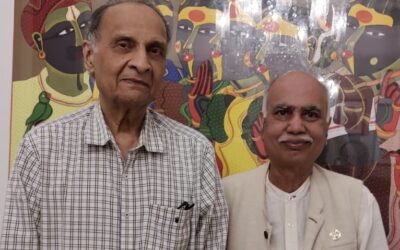
For most people, the pursuit of happiness is the purpose of life. All actions and thoughts are fuelled by the desire to be happy. No one wants to be unhappy, yet unhappiness and dissatisfaction are prevalent. Perhaps serving others can be one’s higher purpose, leading to deep satisfaction rather than fleeting happiness. Two brothers I met are living examples of this.

I met Dr Vishnu Swaroop Reddy, the renowned ENT Surgeon, when he returned from the UK and joined Care Hospital, where I was engaged in interdisciplinary research, working on developing India’s first coronary stent as a defence technology spinoff.

The idea of developing cochlear implants—tiny sensors that enable hearing—has become common ground. Dr APJ Abdul Kalam instantly liked Dr Reddy and invited him to be his guest at the Rashtrapati Bhavan. With his clinical and audiological team, Dr Reddy examined the entire staff and 600 children from the Rashtrapati Bhavan Estate Schools, focusing on their hearing status, and submitted a report, to the great joy of the people.

The Naval Science & Technological Laboratory (NSTL), Visakhapatnam, a centre of excellence in the science of sound waves, called sonars, undertook the development. A team headed by Dr V. Bhujanga Rao eventually achieved success in developing indigenous cochlear implants, which brought down the cost manifold—Rs. 1 lakh (1100 USD) compared to between 7,000 USD to 21,000 USD for imported implants—and helped many profoundly deaf children hear sounds and, as a result, develop speech. Dr Reddy furthered cochlear implantation surgery using cost-effective local anaesthesia, which cost merely a hundred rupees. He has performed the most procedures in India under local anaesthesia, which very few surgeons worldwide can do.

Through Dr Vishnu Reddy, I met his younger brother, Vinod Reddy. They hail from the coastal village of Mypadu, in the Nellore district. Their father, N. Kodanda Rama Reddy (NKR), an M.A. in Political Science (1953-1955) from Presidency College, Madras, was fondly called ‘English Kodandaram Reddy’ for his imposing personality and gracious manners.

The elder brother chose to become a doctor. After his MBBS and MS in ENT from S.V. Medical College, Tirupati, Dr Vishnu Reddy went to England in 1993. He did his FRCS from the Royal College of Surgeons of Edinburgh, Scotland, and DLORCS from England. Dr Vishnu Reddy trained with the best surgeons across the world—at the House Ear Institute in Los Angeles, USA, under Prof. Derald Brackmann; at Marien Hospital, Stuttgart, Germany under Prof. Wolfgang Gubisch; at the University of Hannover, Germany, under Prof. Thomas Lenarz; at University of Paris, under Prof. Jean Abitbol; and at Graz, Austria, under Prof. H Stamberger. The world’s best hospitals were now open to him. He worked as a Consultant ENT and Facial Plastic Surgeon at the Staffordshire General Hospital, Stafford, England, and at the Aberdeen Royal Infirmary University Teaching Hospital, Aberdeen, Scotland. Today, he is considered the top ENT surgeon in this part of the world.

The younger brother became an engineer, graduating with a Computer Science and Engineering degree in 1990 before earning a master’s at the University of North Texas. Vinod Reddy worked in the travel and transportation industry at American Airlines, applying operational research to understand customer needs better. When the Indian economy opened and new technology arrived, Vinod Reddy returned and led the American firm Broad Vision in India. He created an e-commerce platform under the Indian Railways Catering and Tourism Corporation (IRCTC) that made visiting the station and filling out travel detail forms a thing of the past. It was a watershed moment. In 2009-2010, daily online ticket bookings surged from just 30 individuals at launch to 500,000.

Pursuing excellence leads to a deeper, more profound sense of satisfaction than simply achieving a goal or winning an award. Like his brother, who made restoring hearing to the deaf his mission, Vinod Reddy chose customer service. He created his company, CRMIT, headquartered in Bengaluru, to live his dream of developing information technology in customer relationship management. Breaking the one-size-fits-all barrier, his company developed industry-specific solutions unique to business goals. It has become a global company operating in the USA, the UK and Australia.

CRMIT has become a leader in optimised healthcare delivery by partnering with America’s largest healthcare company, UnitedHealth Group. Here, the paths of the two brothers converge, like the confluence of two rivers. When I recently met them at Dr. Vishnu’s home in Hyderabad, we passionately discussed how technology can free Indian healthcare delivery from the inefficient and corrupt referral system.

Digital platforms enable seamless, trackable and standardised referrals between providers, reducing delays, errors and opportunities for corrupt practices like unnecessary referrals or kickbacks. Centralised databases consolidate patient records, referral histories and treatment plans, ensuring transparency and reducing duplication or misuse of resources. Technology-driven scheduling minimises favouritism or manipulation, ensuring fair access and resource allocation.

Analysing referral patterns and health data can help easy identification of anomalies indicative of corruption or inefficiencies, enabling authorities to take corrective action. Blockchain technology can create immutable records of referrals and resource transactions, fostering trust and accountability. Above all, mobile health platforms can empower community health workers and patients with access to referral information, promoting transparency and community engagement.

Why is it not happening? Unfortunately, inertia is a terrible force. Once people become used to bad habits and unfair arrangements, it is difficult to change them. Who does not know that consuming tobacco leads to cancer? Everyone knows the benefits of nutrition and exercise, yet one can see people paying scant attention to their health everywhere. The health insurance industry has become a conduit for funding tertiary care hospitals, destroying primary healthcare in the process. If you have a headache, undergo a CT scan; if you have stomachaches, get an endoscopy done. Do you suffer from back pain? Get an MRI done. Chest pain? Undergo an angiogram, followed by angioplasty.

While upgrading technology in primary healthcare is a vital step towards improving public health, it is generally most effective when combined with other elements such as infrastructure development, workforce training, policy reforms and community engagement. Technology can enhance diagnostics, record-keeping and communication, leading to faster and more accurate care. However, a multifaceted approach that addresses social determinants, education, sanitation and access to care is also essential to achieve comprehensive, improved public healthcare outcomes.

But someone must bell the cat. How about a pilot in one district, where 10,000 patients are screened using an integrated digital system that captures their identity, history, symptoms and possible ailments? Those who need to see a doctor, say 1000 or 2000, are referred ‘directly’ to the specialist. A few hundred who need tertiary care go to tertiary care hospitals. The rich and powerful do not crowd them and block the needy. Who will allow this? I think this is not a valid question anymore. Instead, the question is—who can stop this? This is what I feel after meeting people like the Reddy brothers.

MORE FROM THE BLOG

Technology-Assisted Happiness

Technology-Assisted Happiness

There is a vast amount of literature that attempts to address the problems of unhappiness, and every sect and cult promises solutions to its adherents. Sufferings, miseries and conflicts, however, refuse to go away. Ask anyone in a mall, park, or sitting in front of a...

The Original Sin – Negative Thoughts

The Original Sin – Negative Thoughts

In recent years, Hyderabad, India, has indeed established itself as a burgeoning hub of innovation, particularly in the fields of technology, biotechnology, and entrepreneurship. I have been living here since 1982, when, barring defence laboratories in its southern...

Engineering—The Art of Progress

Engineering—The Art of Progress

I graduated with a degree in mechanical engineering and pursued a master’s in design at GB Pant University. I then spent 15 years at DRDO working on missile hardware. Afterwards, I explored biomedical materials, with a focus on civilian spinoffs. Nearly half of my...

March 27, 2014

March 27, 2014

March 27, 2014

Although I am a mechanical engineer, Dr Kalam’s decision to develop civilian spinoffs of defence technology led me to work with doctors and biomedical scientists. I was involved in developing a special stainless steel used to make coronary stents. This steel must be entirely free of ferrite, and the microchannels created while the wire is drawn to a diameter of less than 100 microns must be welded by a highly sophisticated heat treatment process. All this trouble is taken to avoid corrosion by the highly oxygen-rich blood arriving from the lungs into the heart. This complex metallurgical processing makes stents an expensive product.

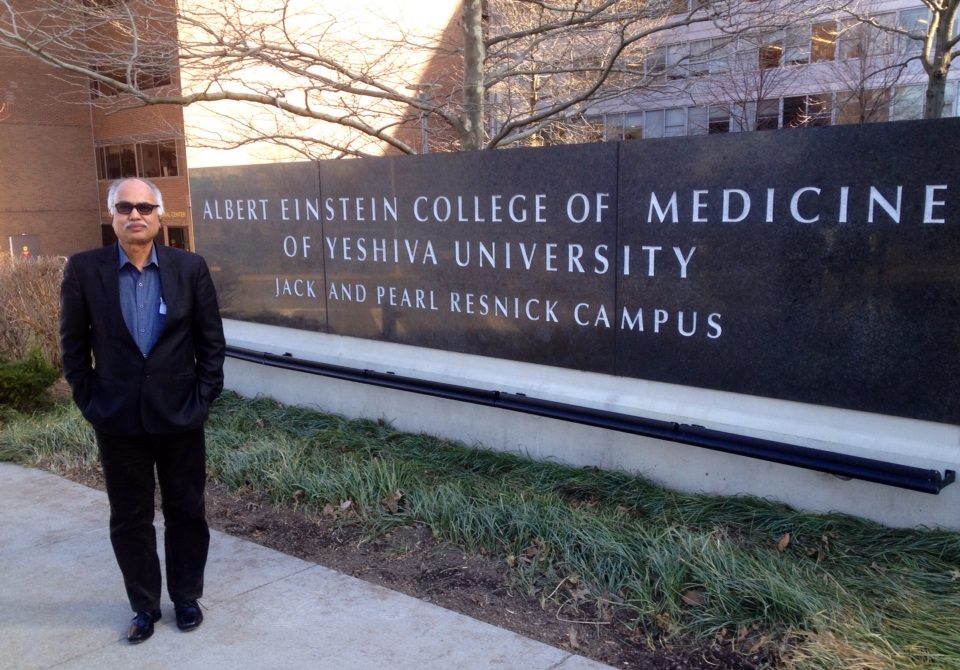
My friend circle expanded in this process and brought me in contact with Bhooshan Sawant, who lived in New Jersey and through him, to a group of highly motivated and talented scientists of Indian origin, most notably Dr Seetharama Acharya, Professor of Oncology and Medicine at Albert Einstein College of Medicine, in The Bronx, New York City. I spent one full day at the Institute and felt like a pilgrim where medical science is truly integrated with science and technology. There are 750 M.D. students, and more than   Ph.D. students are enrolled here. 5,000 Einstein alumni are among the nation’s foremost clinicians, biomedical scientists, and medical educators.

March 9, 2018

March 9, 2018

March 9, 2018

I started my career as a teaching associate at my Alma Mater in an accidental manner. A professor was needed to teach Machine Drawing when I completed my graduation. Prof A.K. Dhol, the Head of the Department of Mechanical Engineering, offered me that position in an out-of-the-box manner. He verified that I secured an ‘A’ grade in that subject and bet on my teaching ability. He also secured a master’s seat for me, and I stayed for 5 years teaching before getting selected to serve the Defence Research & Development Organisation (DRDO).

The teacher in me remained dormant for a long time, but in 2008, I was invited to teach at the MBA class at the School of Management Studies at University of Hyderabad as an Adjunct Professor. By this time, I have established myself as an interdisciplinary man, having developed an indigenous coronary stent and co-founded Cardiac Research & Education (CARE) Foundation. Of course, my association with President Kalam was a great differentiator. I taught Medical Humanities to ten consecutive batches and then retired.

I consider the invitation to deliver the 32nd Institution Lecture by the Indian Institute of Technology (IIT), Banaras Hindu University (BHU), as the ultimate honour of my life. Prof Rajiv Sangal, the Director of IIT, was the first director of IIIIT, Hyderabad and knew me well from there. He suggested that I speak about the life and work of Dr APJ Abdul Kalam, as this was the best inspiration for any engineer in India. The lecture is available on YouTube.

June 19, 2023

June 19, 2023

June 19, 2023

There was no television when I was growing up. The Radio ruled the roost, and life revolved around its bulletins and slots when film songs were played. The newsreaders were celebrities for their voices. I can tell if Ashok Vajpayee or Devaki Nandan Pande was reading the news. Jasdev Singh was synonymous with Cricket Commentary. Ameen Sayani was a legend for Binaca Geetmala, which was aired by Radio Ceylon every Wednesday from 8 – 9 p.m. People used to mimic their voices and style.  So, when I was invited to speak by the All India Radio (AIR), Hyderabad, it was a dream come true.

The AIR, also known as Akashvani (literally‘Voice from the sky’ or ‘Oracle’), is India’s state-owned public radio broadcaster. Founded in 1936, it operates under the Ministry of Information and Broadcasting as Prasar Bharati Corporation. With more than 400 stations programming in 23 languages and 179 dialects, AIR is the largest radio network in the world in terms of the number of languages broadcast, the socioeconomic diversity it serves, and the scale of its broadcasting organisation.

I recorded the Idea of Yoga, a 20-minute Hindi talk, which was broadcast on June 21, 2023, the 9th International Yoga Day. In it, I described yoga as a practice and philosophy that offers a profound understanding of life and the world, leading to a deeper connection with oneself and reality. The attitude of interconnectedness of body, mind, and spirit encourages a way of life that embraces self-acceptance and understanding.