The outward symptom of an inward crisis

The outward symptom of an inward crisis

The outward symptom of an inward crisis

Embed from Getty Images

Until a few years ago, it was called fog, when the cold moisture hung in the air reducing visibility. Flight and train delays in the morning time were the norm. Then as pollution worsened, it was not simple fog anymore, but also suspended solid particles in the air trapped in the moisture of the dense cold air all the time. So, it is nowcalled smog and for the last few years, it has become an annual season of outcry and commotion during the winter months. 

When there is a problem and that too a regular and chronic one, a wise way to deal with it is to go to its roots and remove it. Crop burning, after the harvest, in nearby areas brings smoke to Delhi and the neighboring densely populated cities like Ghaziabad. Diwali celebration with firecrackers also adds its own pollution. Particulate levels go beyond 20 times higher than the maximum recommended by the World Health Organization as safe.

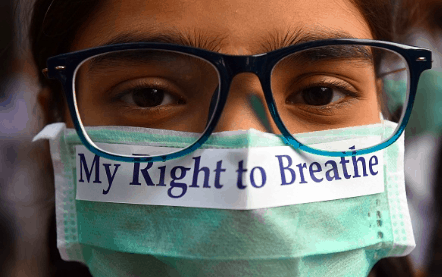
This year, the situation has been worse than earlier. Millions of people have started their day choking through ‘eye-burning’ smog. Restrictions on the number of private vehicles on Delhi roads amid an air pollution crisis led to angry fights. Pollution levels are so high that schools have been shut, and a public emergency declared as experts say the air in New Delhi is similar to smoking up to 50 cigarettes a day!

This is outer pollution. But what about the inner pollution? What about the heedless development of cities, the unmanageable number of vehicles on roads and air conditioners in almost every house throwing out toxic exhausts into public air, and perennial construction activity under the booming real estate sector? What is expected of the farmers in Haryana and Punjab if not burning Parali, the local word for dry plant residual, to prepare the field for the next crop? For how long are our national scientific and industrial research laboratories going to stare at burning of agro waste instead of solving the problem by bio -digesting it and producing useful fuels and products?

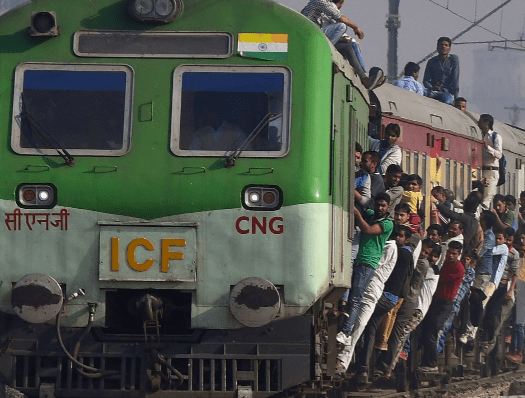
The outer pollution is creating a social crisis. Three most conspicuous indicators of this crisis are: (1) respiratory diseases amongst children and early onset of cancers in adults; (2) crowded cities as increasing number of people are leaving villages as agriculture remains a no-profit enterprise; and (3) rampant hedonism among people who have tasted new wealth, the unmanageable number of cars on roads, air conditioners in every middleclass home and commercial buildings. There is rage on the roads and drug and alcohol abuse in breaking families. 

Long ago, Dr S Radhakrishnan (1888-1975), the Vice Chancellor of BHU for 10 years and later, theVice President and President of India, had observed,“The historic destinies of people cannot be dismissed so lightly. British rule is a much deeper phenomenon, reflecting the serious organic defects of Indian society. It is the outward symptom of an inward crisis, of loss of faith, of the hideous weakening of our moral life, our indiscipline and disunion, our violence and vulgarity.”

It is not that there has been no effort. Numerous legal, regulatory and institutional measures have been initiated, and schemes implemented since early 1980s. However, it is the inner pollution – the arrogance of new wealth, the desperation of migrants, and systemic pollution by industries – that no government couldever control till date and neither is it likely to happen in the future.

Public offices are occupied through a complex process wherein all compromises have already been made. When the city booms, it digests every natural resource – forests, hills, surface water bodies – that can reduce the spatial spread and distribution of pollution. Delhi’s Ghazipur garbage dump is just few meters lower than that of the Qutub Minar and is rising. Mumbai’s Deonar dumping ground is so big that it can accommodate 300 football fields. It rises like a 20-floor building!

It appears improbable for any government to control or regulate the pollution-producing factors in any real sense. There will be speeches, demonstrations, declarations, and assertions, like there have been for the past many years and again, we will be discussing Diwali crackers, Parali and odd-even regulation of cars. When outward problems are continuously tolerated and accepted, they become inward defects of the body and soul.

Why don’t we start by shifting the massive government apparatus out of Delhi to a new location, more efficient and secure, like in the case of Washington DC in the United States? The same logic holds valid for spreading out financial institutions and the film industry in Mumbai and IT companies in Bangalore. Urbanization as it happened so far has created more problems than solutions. Growth has to be both equitable and comprehensive, not only in one direction and not only for some sections of society at the cost of the rest of the people. How can we be ‘New India’ without sorting out our old problems? 

MORE FROM THE BLOG

The Awe of Being Alive

The Awe of Being Alive

I have been unwell for a while and mostly stay at home. It has been three years since I have traveled out of Hyderabad. There was the lockdown period in between when everybody was stationed at home, and the culture of Zoom calls and work-from-home evolved, but gradually, the world has returned to normal and all the birds are flying again..
A Conscious Existence 

A Conscious Existence 

I have always regarded well mavericks, who are described as unorthodox or independent-minded persons. They keep coming in every age, as if to puncture the balloons flying high in their times, and to point out the limited shelf-life of every dogma.

The Truth About One-third of Your Life

The Truth About One-third of Your Life

Normally, the 24 hours of a day are divided into 16 hours of waking time and eight hours of sleep, plus/ minus an hour or two. That means, one-third of one’s life is spent in sleep. Sleep is divided into two types – deep sleep and dream sleep…

The hassle of finding happiness

The hassle of finding happiness

The hassle of finding happiness

Embed from Getty Images

In my mid-sixties now, I can claim to have seen the four generations starting with that of my parents, born before independence. Few would make it to college and living simply and frugally was the order of the day. Saving was seen as a virtue and Jo bachaya so kamaya (whatever is saved is indeed earned) was the wisdom that ruled mindsets. Living within one’s means was appreciated as a sign of efficiency and control. Most people took life as a matter of fate and showed great sense of humor even in the oddest of situations. They also had a high poetic sensitivity to life and nature.

Then came people born after independence and till the start of the Green Revolution, or the end of the famine years, whatever we chose to call it. My siblings and I belong to that generation. Most of my friends from my university days and later, my colleagues belong to this generation. They, I included, carried a streak of idealism. A lot of dreams got added into the reality-rooted mindset of my parents’ generation. Elders perceived the dreams of the young generation as heartache and worried themselves with the fanaticism in the air of those days. My father once told me, “It is important that a man dreams, but it is perhaps more important that he can laugh at his own dreams.” 

Then came our children’s generation – born in the 1990s. They retrieved humor from their grandparents and created their own fantasies out of the dreams of our generation. They used their common sense to dilute all traditions and reduced them into a common problem of the pursuit of a happy human life. They characteristically refused to think too hard or to believe in any single idea or faith or school of philosophy wholeheartedly. The arrival of the Internet further fueled their fantasies and whatever little faith in the old we were trying to pass on to them was shrugged off. My son told me once, “I call no man wise until he has made progress from the wisdom of knowledge to the wisdom of foolishness.”

Finally, the millennials, people born in the 21st century, most of whom are in college, abandoned their villages and are struggling in the cities, trying hands-on neo-professions like delivery of products purchased online. They are biting reality better than their earlier three generations. They are not sandwiched between heaven and earth, idealism and realism, and lofty thoughts and the baser passions. They take life with all that it brings. They have no wish to start families and build homes. They are the New Age nomads. They do not know when to laugh, or what to laugh at. For them, the thirst for knowledge and the thirst for water are same. They eat Chinese food, drink beer and survive on credit cards. 

Since 2014, we are talking about New India. I even wrote a blog recently on what is new about New India, leaving out an important feature – the growing up of millennials. Man is made of flesh and spirit both, and it should be civilization’s business to see that the mind and the body live harmoniously together, that there be a reconciliation between the two. Development is not an online product. Life is not like a shooting duel or a boxing match but a track and field competition. The days of a table d’hôte, called thali meal in India are over. Now is the time of à la carte where not only does one choose what to eat but also worries about the next person ordering something better than one has. 

Our parents gave birth to us and we gave birth to our children. What else have we done? Somehow survived, managed, adjusted our lives, realized some dreams, and passed on the unfinished ones to our children in the hope that they shall achieve what we couldn’t, thus contributing their bit to our happiness, largely as a repayment for all that we have done for them. Great expectation, isn’t it? 

The best that we can hope for in this life is that we shall not have children and grandchildren of whom we need be ashamed of. Only the development of our life to bring it into harmony with our instincts can save us. Happiness is largely a matter of finding one’s life work, the work that one loves, and doing it to the best of one’s ability without the expectation of appreciation or the sorrow of criticism. However, this in itself is the biggest challenge in the quest for the elusive treasure of happiness.

[DISPLAY_ULTIMATE_SOCIAL_ICONS]

MORE FROM THE BLOG

The Awe of Being Alive

The Awe of Being Alive

I have been unwell for a while and mostly stay at home. It has been three years since I have traveled out of Hyderabad. There was the lockdown period in between when everybody was stationed at home, and the culture of Zoom calls and work-from-home evolved, but gradually, the world has returned to normal and all the birds are flying again..

A Conscious Existence 

A Conscious Existence 

I have always regarded well mavericks, who are described as unorthodox or independent-minded persons. They keep coming in every age, as if to puncture the balloons flying high in their times, and to point out the limited shelf-life of every dogma.

The Truth About One-third of Your Life

The Truth About One-third of Your Life

Normally, the 24 hours of a day are divided into 16 hours of waking time and eight hours of sleep, plus/ minus an hour or two. That means, one-third of one’s life is spent in sleep. Sleep is divided into two types – deep sleep and dream sleep…

India 2024: Two roads are diverging, which one do we take?

India 2024: Two roads are diverging, which one do we take?

India 2024: Two roads are diverging, which one do we take?

Embed from Getty Images

Thomas Friedman and Michael Mandelbaum in their 2011 book ‘That Used to be Us’ described five pillars of prosperity that together made the American economy grow. These five pillars are public education, infrastructure, immigration, government support for basic research, and the implementation of necessary regulation on private economic activity. When we look at this in the Indian context, some interesting facts appear.

Public education in India has been systematically destroyed and handed over to business. There are more coaching centers than schools. When I was in school in the 1960s, my town and all others for that matter, used to have the Government Intermediate College (called GIC), as the best school. Good marks in the Board Exam would get you professional seats. Not anymore. 

Infrastructure is pathetic. Before 2014, getting electricity 24 hours in most places was unimaginable. A lot has happened since then. Roads are coming up faster, but every city gets choked within an hour of rain and flood is a perennial problem in the vast Gangetic plane. Even Kerala in the south is devastated by recurring floods. It takes not months but years for bridges to complete and there are no silos and supply chains to handle agriculture produce. 

We received lakhs of illegal immigrants in Eastern India with full collusion of politicians and local industries. Our best minds migrated to the US after receiving almost free education from the IITs. In the 1970s, something of the order of 80 percent IIT graduates went to America and the vast majority of them became permanent residents and citizens. Another point to ponder about is that if the Indian CEOs of famous American companies had not gone to the US from India, what would they be doing here today? 

The Indian government supported science, by going out of the way but except for progress in Space and Atomic Energy, hardly anything emerged out of the immense investment. There is a disconnect between the government-owned scientific laboratories and the industry they are supposed to serve. Their work not bought and used by industries, the scientists changed their metric of success to the number of research papers to their credit and in attending conferences and seminars. 

Private sector after 1991, feasted over the Indian economy. We have this double tragedy of an inefficient public sector and an extractive private sector whose aim is to make profits. The Indian pharmaceutical industry is critically depending on China for basic materials and God forbid, if China stops supplying intermediate molecules, India will have serious scarcity of life-saving drugs.

So why the surprise when in 2019, India has 106 billionaires which puts the country fourth in the world, after the United States, China and Germany? In GDP terms, India is a $3 trillion economy compared to the $21 trillion US economy and $14 trillion Chinese economy. Much smaller nations like Germany and Japan make more than us and France and UK, almost the same as us. It is obvious that a few people own much of India’s wealth.

The condition of Indian farmers is curiously pathetic. From seeds to fair price for their produce, they are systematically shortchanged. English writer Samuel Johnson (1709–1784) famously said, “Agriculture not only gives riches to a nation, but the only riches she can call her own.” The riches of India were earlier held by kings, then looted by the British and now are appropriated by the owners of the private industry.

Prime Minister Narendra Modi set up an audacious target of making India a $5 trillion economy by 2024. Going by his track record, I have no doubt that it will happen. The point is who would own this – another 100 billionaires added in the list or an efficient public sector and the people emerging out of poverty into the middle class?

India is at a historic turning point. One track goes to the revival of public owned enterprise – roads, railways, factories, power, telecom, seeds, fertilizers, and petroleum; the other goes to their natural death and the private sector taking over the economy of more than 1 billion customers. No middle path is going to take us to $5 trillion. Moreover, there will be no return from any of the two courses taken. 

William Shakespeare wrote, “Uneasy lies the head that wears a crown.” Our leaders elected by a massive mandate in 2019 have great responsibilities to take country on the right track. In Kath Upanishad, there are two most important words in the verse 1.2.2 – Shreyas and Preyas – the preferable and the pleasurable approach for man. The intelligent man selects the electable in preference to the delectable

MORE FROM THE BLOG

Living in the Age of Muck

Living in the Age of Muck

Everyone knows the internal drives – emotions, feelings, and, of course, thoughts – that keep buzzing inside one’s head and indeed drive the responses and reactions to the events in one’s life. Everyone also knows the dreams that every night brings a weird world…

You have an embedded Operating System

You have an embedded Operating System

Everyone knows the internal drives – emotions, feelings, and, of course, thoughts – that keep buzzing inside one’s head and indeed drive the responses and reactions to the events in one’s life. Everyone also knows the dreams that every night brings a weird world…

Vanity Fair

Vanity Fair

I started reading English books with mass-market fiction. One such book was The Carpetbaggers written by American novelist Harold Robbins (1916-1997). I was thrilled by the big life of the characters in the novel. “From New York to LA they brawled, lusted, and carved out an empire, blazoned in banner headlines and their enemies’ blood…

What’s new about New India?

What’s new about New India?

What’s new about New India?

Embed from Getty Images

On the surface, V.S. Naipaul’s book India: A Wounded Civilization, seems negative. But when I read it again, in the course of my writing India 3.0, I realized the depth of Naipaul’s writing. “Being an ancient civilization, India should have advanced quickly. But instead, it becomes more and more archaic. The reason lies in the subtle effects of constant invasions for the past thousand years.” Naipaul visited India during the Emergency and wrote, “… in its periods of apparent revival, India hadn’t only been making itself archaic again, intellectually smaller, always vulnerable.” 

It took several decades for Indians to come out of this stereotype of a nation of migrants as imagined by Raghupati Sahay ‘Firaq Gorakhpuri’ (1896–1982). The fantasy of the Aryan invasion created by the Germans to cover up their own barbarian nakedness against the Romans and endorsed by our own Pandit Jawaharlal Nehru (1889–1964) in his book Discovery of India took the civilizational glory out of our schoolbooks. 

It is pathetic to see that the ideas Indians have of the achievements of their civilization are essentially the ideas given to them by European scholars in the nineteenth century. But not anymore! Three existentially important issues – cultural identity, national security and the economy – are now addressed without any -ism other than nationalism. 

The hoopla created around the National Population Register and the continuation of arrangements like Article 370 could not have been possible in any other country of the world. Even Unique Identity – Aadhaar to all the residents of India was fought tooth and nail at every possible forum. But by the 2019 elections, India shrugged off its self-doubts and through the election mandate, exorcized the ghosts that were haunting the Indian nation, paraphrasing Naipaul’s words, “the complex instinctive life of its people that muffles response and buries even the idea of inquiry.” The political parties who degraded themselves in family enterprises based on obsolete ideologies and bogus sociological identities were defeated in a resounding manner.   

The term New India gained traction. But what is new in this; ask naysayers? Let me articulate three features of new India, namely: (1) a billion-strong young, aspirational middle class, (2) a clear right-of-centre political position on the three core issues of national identity, national security and a liberal market economy, (3) a backlash against the forces that kept India enslaved for a thousand years not by valour but with cunning and deceit, not sparing those who still live captivated by the phantoms of the past. 

No one is now blind to the botched up independence of India and the horrendous human tragedy of the partition that came with it. Democracy is a system of the rule by the majority. You can’t lose an election and keep confronting the elected government at every step. Indians now seek historical dignity, economic security, and national pride. Give it or get lost. 

Our neighbouring country will reach its own fate. It still has a last-minute chance to liberate itself from the terrorists who have taken its people hostage. India, as a neighbour, will be affected whatever way things turn out there. New India’s tryst with destiny depends on how deftly it handles the warring United States, Iran and China and keeps Soviet Russia in the equation. 

New India, from the position of one amongst the three largest global economies must play its role in the reordering of the global order. A little mistake and history will not forgive people occupying its high offices. The Indian civilization has had enough of its wounds. We talk a lot and that is our problem. No one fears an argumentative nation. We don’t need more nobility; we need more reality.

MORE FROM THE BLOG

Is the New Year Real and Objective?

Is the New Year Real and Objective?

This is the first blog of the New Year 2022. What is new about the New Year? Nothing, except for the fact that we start counting from the first day of the month of January. The Chinese count their year from the new moon that appears between 21 January and 20 February…

Lower Self, Higher Self

Lower Self, Higher Self

Life is an enigma. The randomness of events and the unpredictability of human nature make things complicated at times. Not only are people so very different from one another, even individuals change with time and their behavior with different people is tinged with many different shades…

Hinterland

Hinterland

When I accompanied Dr APJ Abdul Kalam to Patna in Bihar State in 1999, he was the Principal Scientific Advisor to the Government of India. The Technology Information Forecasting and Assessment Council (TIFAC), which Dr Kalam chaired, had initiated an agriculture project in Paliganj…

The whirlpool of India’s GDP

The whirlpool of India’s GDP

The whirlpool of India’s GDP

Everybody is crying out about an impending slowdown. Headlines like those of the GDP growth plummeting, the stock market nose-diving, nobody buying cars any more, and so many thousands losing their jobs, are appearing everywhere. When an economy registers negative GDP growth for two or more consecutive quarters, it could be termed as a recession. The three sectors crying out the loudest – finance, real estate and automobile – their growth can’t continue forever. The sky can’t be clear all 365 days! 

Whose growth does the GDP indicate? If it is only certain sectors of the economy, crying wolf is no good. The wolf has already been here. It was silently feasting upon smallholder farmers and daily wage earners, when people were buying high-rise flats and cars, using EMIs. The loan default at Infrastructure Leasing & Financial Services Limited (IL&FS) last year was the trailer of the liquidity crunch film that is now hitting screens. 

Most of the GDP rise has come from consumer goods. Consumption growth has been aided and abetted by the rise in personal lending. How much you earn is no more the question people ask. How much you spend is what they are interested in. Money has lost much of its meaning as a means to buy services and products with credit flowing in the veins of the economy. Money itself has become a commodity in the era of financialism. 

Unlike in capitalism where money is used as capital to produce goods and services; in financialism, money is used to grow more money. Credit has penetrated every aspect of human life – from childbirth, schooling, and housing to holidaying, wining-dinning, and getting beauty treatments using credit cards. Living beyond one’s means has become the culture. So what happens when your salary that pays for the EMIs and credit card dues gets hit, or is lost altogether? Reality bites, it is biting now.  

Young people mistakenly thought that their higher pay packages, coming out of a larger GDP and the rising Sensex, were correlated with a higher quality of life and more happiness. High packages brought with them their own lifestyle trappings. A large number of the young people are now finding that this was true only up to a certain income level, after that the large income is indeed a trap of lifetime slavery to the creditors. Beyond a certain income level, additional increases in income do not bring higher quality of life.

Young French President Nicolas Sarkozy (b. 1955) in 2009 commissioned a panel led by Nobel laureate economist Joseph Stiglitz (b. 1943) to examine the issue of recession as he found “a dangerous gulf of incomprehension between experts sure of their knowledge and citizens whose experience of life is completely out of sync with the story told by the data.” India is very different. Our leaders are know-all types and our experts can derive multiple conclusions on the same set of data. 

The inventor of GDP, Nobel laureate economist Simon Kuznets (1901-1985) was uneasy about a measure that treated all production equally. He wanted to subtract, rather than add, things he considered detrimental to human well-being, such as arms, financial speculation and advertising. But GDP as it is now calculated makes no distinction between the tariff of a hotel room or a hospital bed, the price of a bottle of whiskey or milk, and charity or gambling. The more the business, of whatever type, is seen as good.   

Robert Kennedy (1925–1968) famously took pity on GDP politics, saying, “It counts air pollution and cigarette advertising, and ambulances to clear our highways of carnage. It counts special locks for our doors and the jails for the people who break them. It counts napalm and counts nuclear warheads and armored cars for the police to fight the riots in our cities. It counts Whitman’s rifle and Speck’s knife, and the television programs which glorify violence in order to sell toys to our children. Yet the gross national product does not allow for the health of our children, the quality of their education or the joy of their play. It does not include the beauty of our poetry or the strength of our marriages, the intelligence of our public debate or the integrity of our public officials.”

The New India should not get trapped in the GDP game played by a few for the benefit of a few. For long, tax payers’ money was used to create wealth for a few – let some of them be sobered down. Many people abandoned their small towns and parents there to metro cities and opted for unsustainable lifestyles – let those be moderated. If the stock market falls, the nation will not fall with it. Three-fourth of the Indian people are living at a level from where only rise is possible. The crash of some peaks, and the bursting of some bubbles, as GDP declines will not cause an earthquake.

[DISPLAY_ULTIMATE_SOCIAL_ICONS]

MORE FROM THE BLOG

The Awe of Being Alive

The Awe of Being Alive

I have been unwell for a while and mostly stay at home. It has been three years since I have traveled out of Hyderabad. There was the lockdown period in between when everybody was stationed at home, and the culture of Zoom calls and work-from-home evolved, but gradually, the world has returned to normal and all the birds are flying again..

A Conscious Existence 

A Conscious Existence 

I have always regarded well mavericks, who are described as unorthodox or independent-minded persons. They keep coming in every age, as if to puncture the balloons flying high in their times, and to point out the limited shelf-life of every dogma.

The Truth About One-third of Your Life

The Truth About One-third of Your Life

Normally, the 24 hours of a day are divided into 16 hours of waking time and eight hours of sleep, plus/ minus an hour or two. That means, one-third of one’s life is spent in sleep. Sleep is divided into two types – deep sleep and dream sleep…