Pick your Role Model; Ape it till you Make it

Pick your Role Model; Ape it till you Make it

Pick your Role Model; Ape it till you Make it

Human beings learn best by imitating others. Children pick up their language, manners and basic etiquettes by observance. The whole idea of saints living in society is to have the presence of live models of divine virtues amongst the people of the world. Places of worship are meant to be islands of serenity and peace in the hustle-bustle of human transactions. And there is a strong tradition of in Indian society followed by all major religions, where people learn from each other. 

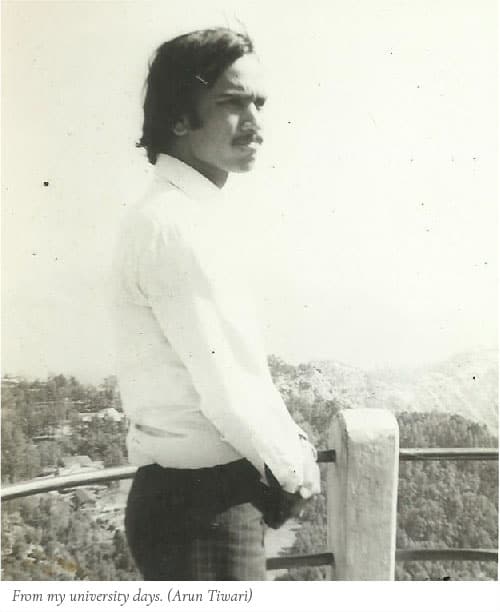
During my student days at the GB Pant University, there used to be a weekly magazine JS (Junior Statesman). They would provide a full-page photograph of a celebrity and I would collect them. I can recall posters of Garry Sobers, Bobby Fischer, Rajesh Khanna, Sunil Gavaskar, Vijay Amritraj adorning ‘my wall’ in the shared hostel room. I would feel that there was something good radiating out of these posters. The idea of meeting these people in flesh and blood never even crossed my mind. They were ‘somewhere up and away,’ from my mundane world.

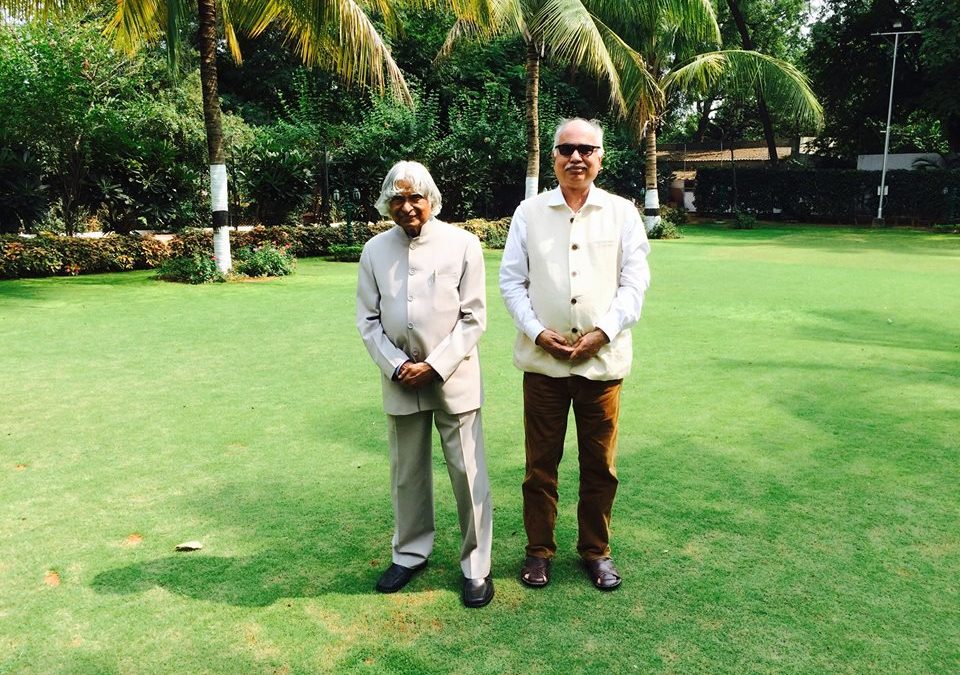
And then, these ‘idols’ started turning into human beings. Arun Shourie and Dr. Raja Ramanna came to the University and I was enthralled by their talks. When Gopal Das ‘Neeraj’ came and recited his poetry and song, it was surreal. In 1982, I relocated to Hyderabad. I was sitting in the small library of the Defence Research & Development Laboratory that was called Technical Information Centre (TIC), when I had a cursory look at Dr APJ Abdul Kalam. “He will be our new Director,” someone said in a hushed tone. I could feel some force pulling me towards him but aware of my low position, I dared not even wish him. 

The Biography page and Journal section of my website speak of the many great people I have met. Some who are not there, for want of a photograph with them, include Prime Minister Atal Bihari Vajpayee, R.K. Laxman, Sir V.S. Naipaul, Amitabh Bachchan, Vinod Khanna, A.R. Rahman and a host of business leaders, whom I am now going to mention. Recently, my elder son, Aseem, asked me, “Dad, tell me about the framework of your success – how do you define it, map it.” He then defined success as money as well as the good done to the world. 

I decided to recall the people I had met in person. Fifteen people with more than 1-billion-dollar worth were listed. Ratan Tata, John Chambers (Cisco, USA), Chung Mong-koo (Hyundai, South Korea), A.C. Barman (Dabur), Azim Premji,N.R. Narayana Murthy, Anil Ambani, Sajjan Jindal, Mahesh Patel, Ramalinga Raju (Satyam Computers), GVK Reddy, Dr K. Anji Reddy, Venugopal Dhoot (Videocon), Noorul Ameen Mohamed Ishack (Qualitas, Malaysia), and Govindbhai Dholakiya (SRK Diamonds).  

Aseem asked me five questions: (1) Who amongst them did I consider an inspiration for people; (2) Who an aspiring MBA must choose as a role model; (3) Who could have done differently (4) Whose student one should become for life; and finally, (5) Who should be his own role model, in my opinion? 

My answers were spontaneous. Ratan Tata is inspirational, John Chambers is the success that every young MBA must look up to, Ramalinga Raju could have done differently, Azim Premji’s life is worth emulating and my son should make Narayan Murthy his role model.  “What about you?” he asked me. “Could you see beyond Dr Kalam in your life?” 

Only your children can dissect you with such neat and deep precision. Dr Kalam was not my role model. I could never imagine doing what he did. For me, following his instructions and accomplishing the tasks he assigned to me was all that mattered. And yes, I found Dr Varghese Kurian beyond Dr Kalam and perhaps my role model. If ‘Amul’ could have been replicated in other areas, India would not have sunk into an economic rut.

What makes someone your role model? The answer is you, yourself. Your role model is basically ‘your own’ definition of what you want to be, where you would like to reach, and what qualities you would like to develop, personally and professionally. Your role model, whoever you pick, is defined by how you embody the qualities of integrity, optimism, hope, determination, and compassion. 

The role model you choose for yourself is a person exemplifying what is important to you, and he/she in turn inspires you to put forth the effort to improve and create things that will make a difference. In your low moments, when you feel lazy, tired, or just plain annoyed, you think of your role model and are motivated to start working again.

So, choose your role model – a living person, whoever you want it to be. Make it public, on your FB page, computer screen, everywhere, and start imitating this person. There is an English saying, “Fake it till you make it.” The idea is that by imitating confidence, competence, and an optimistic mindset, a person can realize these qualities in his/her real life. So, by having a role model, you are not only making a statement about what you want to do with your life but are also elevating your consciousness to a higher level. 

MORE FROM THE BLOG

Get in touch with your Daemon

Get in touch with your Daemon

Last month, I spent time reading His Dark Materials, by the English author, Philip Pullman. It is a three-book novel comprised of Northern Lights, The Subtle Knife, and The Amber Spyglass. Written as a children’s book, in Harry Potter style, at a superficial level…
A Technological tour de force

A Technological tour de force

I live in the Silicon Valley part of Hyderabad and keep getting nuggets of what is going on in the computer field, through neighbours in the condominium where I stay..

Living in the Age of Small-world Networks

Living in the Age of Small-world Networks

I have shared earlier in my blog, my fascination with Calculus that I studied as part of my engineering education and later applied while working in missiles. Mathematics is the language of science and the medium of expression for abstract ideas…

If Life is a Debt, how do I repay it; if it is Gift, how do I be grateful?

If Life is a Debt, how do I repay it; if it is Gift, how do I be grateful?

If Life is a Debt, how do I repay it; if it is Gift, how do I be grateful?

Embed from Getty Images

I lost my father on June 25, 1979. He was 49, I was 24. He gave me my full education and married my sister even before departing rather early. I feel sad for not being able to do anything for him. Later in 2017, I lost my younger brother who was 55. I feel as if he broke the queue in leave-taking. Looking back, I can say without doubt that our existence upon this planet is indeed a fleeting thing.

Everyone who is born must die. We live as water spilt upon the ground, which cannot be gathered up again. What is the use of lamenting that man’s days are soon gone and doing nothing about it? How seriously, then, ought we to view life? How desperately should its moments be treasured? 

In Indian scriptures, life is seen as debt. A human life starts with three debts. These are: (1) debt to creation which sustains life, the five elements: air, water, earth, fire, and space – the things that give us our breath and food (देव ऋण); (2) debt to our parents and thereby our ancestors for the DNA that made this body of ours (पितृ ऋण) and (3) debt to the knowledge due to which our growth takes place, through doctors, teachers, technology, and so on (ऋषि ऋण)

Shatpath Brahman, a commentary on the Yajurveda, added two more debts. The debt towards knowledge workers who advance our standards of living – scientists, philosophers, etc. (ब्राह्मण ऋण) and debt towards the soul to dwell in this body-mind complex (आत्म ऋण). The Manu Smriti mentions debt towards community and society (आनृशंस). This is called ‘Ubuntu’ in African cultures – I am, because we are. Manu Smriti (6. 35) declares ऋणानि त्रीण्यपाकृत्य मनो मोक्षे निवेशयेत् A life without discharging these debts is a waste. It has failed to liberate the embodied soul from physicality.

Living in the awareness of repaying the debts is the most accurate definition of dharma. If prescribed duties at every stage of life are done diligently without wavering, one can liberate oneself from all debts in this very lifetime, that is moksha. If done half-heartedly, or conditionally, one remains entrapped in the web of karma and is reborn again carrying the burden of debt and accruing interest, at times even in lower life-forms. 

In the Western world, life is seen as a gift. The emphasis is to make the most of the senses in creating wealth, enjoyment and other intellectual and artistic pursuits. The idea is to become more, to feed experiences into your spirit. Whatever you think about, focus on, read about, talk about, you are going to attract more of into your life. Contrary to the idea of giving or paying back, it is about taking and accrual. Celebration and laughter are considered two of the richest gifts of life.

No wonder, contemporary youngsters prefer to take life as a gift and not as a debt. They derive meaning in enjoyment, adventure and exploration. But by the time the mid-years of life arrive, there are many break-ups and emotional wreckages created, and diseases meant for old age arrive early and squat into their bodies. 

Like breathing, life is also a two-way process of giving and taking. Breathe in, take what life hands you; hold it, accept it; breathe out, what life demands from you give, let it go. To live, to truly live, one must consider every opportunity as a blessing. Never take anything that is not given or earned, for you will be buying problems with them without any doubt. 

The most sobering aspect of life is its dramatic uncertainty. Our life hangs in doubt before us. There is no news bulletin without stories of accidents and untimely deaths. Millions of migrant laborers were uprooted in merely a few weeks’ time. Whether a debt or a gift, life is not to be taken lightly. 

In 2011, I was invited to translate in Hindi, Bill Clinton’s book ‘Giving: How Each of Us Can Change the World.’ The book shared Clinton’s own experiences and those of other givers, representing a global flood tide of nongovernmental, nonprofit activity. These remarkable stories demonstrate that gifts of time, skills, things, and ideas are as important and effective as contributions of money. Every time you give, your consciousness is expanded. 

I have received blessings from Pramukh Swamiji Maharaj, Mahant Swamiji Maharaj, Swami Tejomayananda Saraswati, and of course, Dr A.P.J. Abdul Kalam, who was a saint in his ‘worldly garb’ of science and technology.  My learning from them is that the real gift of life is not what you give, but who you become in the process of giving. Truly great people give away their lives for the greater causes and good of other people. They live in austerity with integrity to build character in society, by example.

Even if seen as a gift, life cannot be wasted after sensory pleasures and endless play of opposites – liking this and hating that, chasing one person and running away from another, loving this and fearing that. This drama of dualities is created to school you that there is only One Consciousness that is operating in the rabbit and the lion, the cow and the pig, the thief and the policeman, and of course in you and others around you.

Goswami Tulsidas, towards end of Ramcharitmanas (7.121.12), used a striking metaphor of the foolishness of throwing away a parasmani to grab a piece of shining glass for not using human birth for devotion towards God – काँच किरिच बदलें ते लेही। कर ते डारि परस मनि देहीं। So, whether life is a debt or a gift is not the question. The question is how to ensure that it is not wasted. French Enlightenment writer Voltaire summed it up best, “God gave us the gift of life; it is up to us to give ourselves the gift of living well.” 

MORE FROM THE BLOG

Get in touch with your Daemon

Get in touch with your Daemon

Last month, I spent time reading His Dark Materials, by the English author, Philip Pullman. It is a three-book novel comprised of Northern Lights, The Subtle Knife, and The Amber Spyglass. Written as a children’s book, in Harry Potter style, at a superficial level…
A Technological tour de force

A Technological tour de force

I live in the Silicon Valley part of Hyderabad and keep getting nuggets of what is going on in the computer field, through neighbours in the condominium where I stay..

Living in the Age of Small-world Networks

Living in the Age of Small-world Networks

I have shared earlier in my blog, my fascination with Calculus that I studied as part of my engineering education and later applied while working in missiles. Mathematics is the language of science and the medium of expression for abstract ideas…

A stitch in time saves nine

A stitch in time saves nine

A stitch in time saves nine

Embed from Getty Images

Balancing is acclaimed as an art, a virtue and a great state in any changing phenomenon. When an aircraft flies, it keeps itself balanced through the complex machinery of control and guidance. So does a ship. And whoever has ridden a bicycle knows that the moment you stop pedaling, you fall down. Your health depends on the balance of enzymes in your body – a little more of something or a little less, and you have a problem. A good thali has all the six tastes – Sweet, Sour, Salty, Bitter, Pungent, and Astringent – finely balancing your food. 

All problems take birth out of some imbalance. A storm is born when a center of low pressure develops with high pressure surrounding it. The stock market crashes when too many investors dump their holdings of stock. Fever comes in response to an infection and inflammation of the cells. The hypothalamus then resets the body to a higher temperature. Diarrhea occurs when the lining of the intestine is unable to absorb fluid, or it actively secretes fluid, mostly due to infection.  

It is important to look for little disturbances, while they are occurring. These disturbances are indeed signals of catastrophes that are going to come up later. Minor inconveniences like frequent urination is a harbinger of Diabetes. Constipation is almost always a warning of lack of exercise. Lack of sleep is all about unresolved emotional issues. Morning headaches are the first signs of high blood pressure. The wise notice them as they occur, fix them with determination, and live in good health. Unwise people go for removing the symptoms by taking painkillers, laxatives, sleeping pills and landing themselves into chronic and almost untreatable diseases later.

What are the five symptoms we see around us in the present time? I am including one each from individual to immediate surroundings, and to community, national and global levels. They are manifesting as – depression at the individual level, estrangement in families, insensitivity at the community level, abandoned migrants at the national level and a massive trust deficit with China at the global level.

The intensity of these symptoms varies from place to place, but they are there almost everywhere. Let us not sweep them under the carpet, silence them by distractions, or live in the idiotic denial proclaiming that all is well, when actually there is something terribly wrong. 

India has never taken mental health seriously. We, as people, have an astonishingly high capacity to tolerate stupidity, nonsense and socially inappropriate behaviour. This makes the more sensitive, sensible and civic individuals amongst us, defensive and depressed. Persistent sad, anxious, or ‘empty’ feelings are the tell-tale signs of depression. You wake up very early in the morning, face a loss of appetite, and suffer frequent aches, pains, headaches, or cramps that do not go away. Spend some quiet time alone, talk to yourself internally and identify the source of these symptoms. After that, what you can do to get rid of that source is important. This awareness in itself will take away your depression. 

We take families for granted. Women have to do household chores even if they are working at a job. Children are given smartphones right in their cradles so that they do not bother their parents. People drink alcohol, enroll for memberships of prestigious clubs, holiday abroad, and send their children to ‘international schools’, but at home, still discriminate against people based on their castes. Your children know exactly what wrongs you are doing. They will take you to task when their time comes, mostly by ignoring and abandoning you. 

Gated communities have been created to confine the rich and the affluent from the ‘dirt and filth outside’. Cameras, fences, walls and gates in combination with hired guards, have replaced the natural filters earlier offered by the people who worked for you and lived around you – your barber, your shopkeeper, the teacher of your child, and so on. There was a social cohesion within every community. But the hard closure of gated communities, has led to soft closure. You are the ‘client’ and ‘they’ are ‘service providers’. The rich and the affluent are now hated, despised and mistrusted by ordinary people. On a small provocation, or a traffic incidence, you can be mob thrashed and even lynched.  

At the national level, the migration of people took the sheen away from an otherwise valiant effort of fighting a pandemic. Many local governments were seen wanting in intent. Many cities emerged as heartless. Gimmicks and drama ruled the roost. Like our Independence that uprooted an estimated twenty million people from their moorings and converted them into penniless refugees, failed to give us peace even after seven long decades, this massive migration of even more than twenty million people, will have far-reaching consequences. 

At the national level, we face the historic moment of how to position ourselves in the post-pandemic world. As the coronavirus plays out its deadly narrative, one can summarize it thus: China was the originator, the United States was feckless, and the Europeans were reckless. India was clueless but our earthy wisdom saved us. No one country apparently has a solution to this problem and working together is the only way forward. What if India and China sit together and settle their trust deficit? What if China gives our territory back, does not support enemies of India and One Belt One Road becomes Continental Belt and Road? 

The danger of the United States and China turning adversaries can only be averted by a balancing role undertaken by India. The future of the world will not come from the blue; it is being made now, by the people of the world, the way the leaders are crafting the world order. The destiny of India is to make a possible triad with the United States and China for a stable world order in which humanity flourishes. Nothing more than this should we seek and nothing less than this should satisfy us.

MORE FROM THE BLOG

Get in touch with your Daemon

Get in touch with your Daemon

Last month, I spent time reading His Dark Materials, by the English author, Philip Pullman. It is a three-book novel comprised of Northern Lights, The Subtle Knife, and The Amber Spyglass. Written as a children’s book, in Harry Potter style, at a superficial level…
A Technological tour de force

A Technological tour de force

I live in the Silicon Valley part of Hyderabad and keep getting nuggets of what is going on in the computer field, through neighbours in the condominium where I stay..

Living in the Age of Small-world Networks

Living in the Age of Small-world Networks

I have shared earlier in my blog, my fascination with Calculus that I studied as part of my engineering education and later applied while working in missiles. Mathematics is the language of science and the medium of expression for abstract ideas…

Say no to the dream merchants and face reality instead

Say no to the dream merchants and face reality instead

Say no to the dream merchants and face reality instead

Embed from Getty Images

When I look back at my life, I can see a shift in collective consciousness. When I was a teenager, getting educated and earning a salary was the goal given to me like most of the other youngsters of my age. Then I saw competition building up and with it, social acrimony on getting jobs. Our politicians played to the hilt on the sentiments of the educated youth, divided society and ruined the economy in the process. In 1991, the old system crumbled. The new ‘open economy’ brought in prosperity but also scaled up corruption and scams. 

Education was commercialized and professionals started working for money, diluting their standards and forgetting their principles. With everything on sale, including status, privileges and even honours, those who did not have money, walked into the snares of easy loans, propelled by their desires. Credit cards flooded the markets and purchases on EMIs become the order of the day. Television became a 24×7 desire shop breeding a ‘fair and lovely’ culture. People started living beyond their means and consumerism flooded the veins of our society. Addictions turned into fashions. 

With the coronavirus pandemic, the ‘merry-go-round’ came to a screeching halt. For a while, one couldn’t buy anything. Starting with the closing of malls, cinemas and restaurants, even home delivery of food, and online shopping were stopped. There was no alcohol and no cigarettes for a while during the lockdown. After the lockdown, fortunate will be those who shall have their jobs and salaries intact. But these will be only a few. For the majority of the people, default on their loans is staring upon them. The nightmare will not end even after the morning arrives. There is fear everywhere, crawling behind us, wherever we go.

While the government will find ways to help the poor and also help businesses remain afloat, no one is going to come forward to help the millions of people who will not be able to repay their loans. Many businesses will not restart. Money lost in the stock market will not be recovered in the foreseeable future. What will the migrants who returned home after the great ordeal do there now? As a society, how do we face this reality? Ponder upon four suggestions.

First, start saying ‘No’. Don’t cave into whatever happens. Resist, if fighting back is not possible. Let your tormentors figure out what all they can do without you. Trust your version of reality – what you see and feel by yourself – and not what is being told to you. Your resistance will protect you from your anger against this falsehood and will make you resilient. Had not Gandhiji demonstrated the power of civil disobedience (सविनय अवज्ञा) to startling affect? 

Recognize that there will never be accountability from those who are in powerful positions – your leaders, your bosses, your lenders, even your dominating family members and relatives. Some people will never be able to see your point of view or own accountability of their actions. Take the unfairness of this world in your stride. Do not feel like a victim and cry in helplessness. Endure the pain and you will emerge stronger. 

Grow out of your childhood wish habits. Stop getting upset when logic and reason do not prevail. Mostly in the short term, they do not. Stop believing that the other person will change. Your health, peace of mind and safety are the only things that matters. The rest is all nonsense. Anything that is harmful to you is bad, anybody who agitates you is wrong, and whoever puts you at risk is a criminal. Period! 

And finally, and most importantly, develop healthy detachment. Consider yourself as an immortal soul and this world as a sojourn. You are passing through what is going on around you as a traveler. This planet is not your permanent address. Even the people in your family and your colleagues are like co-passengers. They are sitting by your side only till their destination arrives, and not for a moment longer.  

All said and done, the world we live in not fair. The biggest problem of the modern world is income inequality and no individual effort can perhaps change this.  The income of top executives are not ten times, but hundred and thousand times the income of bench level people. When security staff, valet parking assistants, and the staff in malls and hotels see you splurging money, and serve you with fake smiles, they are actually cursing the inequal world. How to survive this and not succumb to is the issue.

The timeless teaching of the Shrimad Bhagavad Gita that the mind is superior to the senses; intelligence is still higher than the mind; and the soul is even higher than the intelligence – इन्द्रियेभ्य: परं मन:, मनसस्तु परा बुद्धिर्यो बुद्धे: परतस्तु स: – can be ignored only to our own destruction. People of fickle minds, who are slaves to their senses, and deaf to their inner voices are doomed to perish at the end of their lives. Spend a few minutes every day to listen to your soul and discipline your mind and senses. You will realize that most of your desires are bogus and your dreams are delusions. Your money can send your child to a great school, but what if he lands up in some BoisLockerRoom?

The personal lives of neo-billionaires, the plight of neglected children growing up in nuclear families, and the loneliness of old people in ‘rich and modern’ societies should not become your reality, or that of your own family members. Your health – a good digestive system and sound sleep, life without loans, and harmony in the family are not small achievements. If you possess them, what more do you need? And if you don’t, of what value is all that you have achieved? 

MORE FROM THE BLOG

Get in touch with your Daemon

Get in touch with your Daemon

Last month, I spent time reading His Dark Materials, by the English author, Philip Pullman. It is a three-book novel comprised of Northern Lights, The Subtle Knife, and The Amber Spyglass. Written as a children’s book, in Harry Potter style, at a superficial level…
A Technological tour de force

A Technological tour de force

I live in the Silicon Valley part of Hyderabad and keep getting nuggets of what is going on in the computer field, through neighbours in the condominium where I stay..

Living in the Age of Small-world Networks

Living in the Age of Small-world Networks

I have shared earlier in my blog, my fascination with Calculus that I studied as part of my engineering education and later applied while working in missiles. Mathematics is the language of science and the medium of expression for abstract ideas…

The five keys found during the lockdown

The five keys found during the lockdown

The five keys found during the lockdown

Embed from Getty Images

The lockdown has been tough and painful. Barring some infection hotspots, it will be lifted soon. But when you return to work, you will find yourself at a different place. There will be salary cuts, loss of jobs, shortages, business closures and even bankruptcies. Loans taken earlier will become difficult burdens. Migrants who have left will not return with a magic wand. The major question is, will you show patience for gradual healing, or will you adopt the path of angry reactions and inflict injuries upon your own self and others around? 

There is an old story. A man was intently searching the ground near a lamppost. When asked by a passerby about the goal of his quest, the man replied that he was looking for his keys. As there were no keys around, and the man was asked again if he was certain that he had dropped the keys near the lamppost. The man said, “No, I lost the keys inside the house.” “Then why are you looking here?” the passerby asked with irritation. “The light is much better here; it is dark in my house,” the man responded with aplomb. 

We had been lost in our ways – rampant consumerism, the habit of living on loans, the worsening of income inequality, uncontrolled pollution, and never-ending political quarrels – when the coronavirus crisis hit us. The lockdown brought every activity to a standstill. So, why not search for the keys that we have lost within our own selves? But for this involuntary halting, we were not even willing to take a pause and see what was wrong with us. Five problems are shared here to see if the unprecedented lockdown experience can give us the keys to fix these problems that had otherwise become fait accompli.

The first is our healthcare system. The culture of corporate hospitals where treatment is offered as ‘packages’ stands exposed, showing them as money-making businesses. The government hospitals, with all their shortcomings, have saved the day for India. It is time to reinforce the public hospital system and stop reimbursing treatment in private hospitals, which are ridden with corruption. Sins like bogus billing and ghost patients must not be allowed to return. 

The second is our self-reliance in pharmaceuticals and medical equipment. As a country of 1.3 billion people, we cannot afford to depend on imports in these areas. Because global medical supply chains are loaded with high commissions, it will be prudent to ban imports. The heavens have not fallen after the MRP of cardiac stents was fixed at Rs. 30,000 (USD 350). Millions of people get cured by generic medicines provided under the Pradhan Mantri Bhartiya Janaushadhi Pariyojana (PMBJP). These medicines are manifold cheaper than branded drugs. A majority of private doctors is yet not prescribing them for their own benefit. They must be made to follow the rules. 

The third is social security for every Indian. In fact, this process has already started. People have Aadhar cards, at least one bank account, and health insurance from the Pradhan Mantri Ayushman Bharat Yojana. Now, it needs to be expanded to pension to every senior citizen and unemployment allowance to every graduate. These two steps will drastically reduce fear and anxiety from the minds of the people, which otherwise ferment discord in the society. 

The fourth is the regulation of internal migration. People are lured to leave their villages by greedy businesspeople who need them to work on their enterprise sites – be it factories, construction projects, farms, or street vending and other service occupations – without formal contracts. When thousands of migrants were crying for help during the lockdown, the very people who brought them into city were nowhere to be seen. Uttar Pradesh is taking steps to employ their labour force that has returned, within the state itself, and this is a good trend. 

The fifth and the most important is the integrity of our social fabric. There are enemies of state at every level in our society, punching holes in it. They willingly do not trust science, do not respect public authorities, and the media, instead of pinpointing and ostracizing them, have made them into demons. It is time to defeat these sinister forces and make our democracy free of irresponsible politicians. Media must learn from the perils of being partisan that has the divided the society of the United States, for example. 

Mahatma Gandhi famously said, “Be the change you want to see in the world.” So, please don’t cut payments of your employees for the lockdown period and advance them some money if possible. Say no to imported goods, especially luxury items. Insist on buying only those global brands which are made in India. And finally, minimize the time you spend in front of your TV, which is basically a commercial platform of making big money by advertising products to you. Why should you pay for watching it, allowing it to disturb your serenity, and making you feel unpleasant by constantly seeing the bad aspects of the world? 

Dr APJ Abdul Kalam used to recite the following hymn during his interactions.  

If there is righteousness in the heart, there will be beauty in the character.
If there is beauty in the character, there will be harmony in the home.
If there is harmony in the home, there will be order in the nation.
If there is order in the nation, there will peace in the world.

Why not take something good out of this unsettling experience? Switchover to the better lifestyle forced upon you during the lockdown. Put an end to cocktails, kitty parties and chill outs and have dinners together as a family with the habit of saying a prayer before and after your meal. From salt to curd, entire nature is present in your meal. If we keep our lives, our families and workplaces in order, and feel grateful for what we have, the problems of the world will also subside. Most of us have only now realized that whatever little we have, that might not have made us happy earlier, is actually more than enough for our survival. Let us continue to live in a feeling of gratitude.

MORE FROM THE BLOG

South-South Solidarity

South-South Solidarity

It was during the phase of expanding the Pan-Africa e-Network platform, created under a project of the Government of India that, in 2011, I landed up in Rwanda, a beautiful country with a cool climate and scenic, hilly terrain. Rwanda, due to its geographic location on the continent, is called Africa’s heart…

The Earthy Crown of Felicity

The Earthy Crown of Felicity

The underlying reason behind an increasing number of people getting angry, cynical, and restless is their disconnect with their religion – something they can’t even acknowledge…

Good Deeds, Bad Deeds

Good Deeds, Bad Deeds

Every childhood is synonymous with instructions raining from parents and other people around. A child is continuously told to do this and not to do that. This continues throughout their childhood where they are influenced by the various people around…