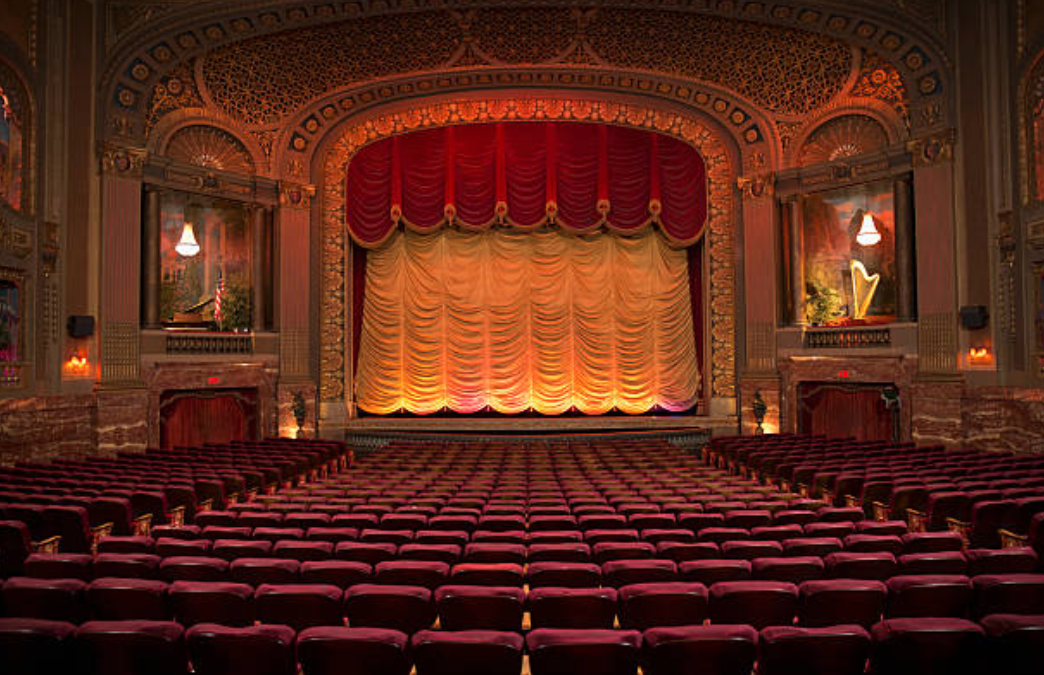
On October 15, 2022, the nation observed the 91st birth anniversary of Dr. APJ Abdul Kalam (1931-2015). I was invited by BharatTech Foundation, primarily a group of overseas engineers of Indian origin, but also with a good base within the country, to give the keynote address…

The Secret of the Sacred
The Secret of the Sacred
Today is October 15, the birthday of Dr APJ Abdul Kalam (1931-2015). Upon being elected the President of India in 2002, he decided to spend this day, away from Delhi, at a sacred place. For the five years of his Presidency, I was with him on every occasion—at the Twang Monastery in Arunanchal Pradesh (2002), with Acharya Mahapragya at the Terapanth Bhavan in Surat (2003), at the Sri Suttur Math near Mysore (2004), with children from Tanzania brought in for their heart surgeries in Hyderabad (2005), and at the Sri Adichunchanagiri Math in Mandya, Karnataka (2006).
There are many ways to define sacred—both as a noun and as an adjective. When used as a noun, sacred refers to a higher power that is bigger than we are. If we use it as an adjective, it can mean something that is spiritual or holy. By deciding to meet Tanzanian children in 2005 in Hyderabad, instead of going to a religious place, Dr Kalam had integrated both these meanings. What I find a common theme in the five different places that I visited successively on this day with Dr Kalam was that he was setting aside time or setting aside a space and sanctifying time for his own experience in touching divinity in order to be mentally clear and emotionally calm.
I studied mechanical engineering at the G.B. Pant University, where I could get deep into the techniques of perspectives about how to see things in imagination and draw them on paper. We had a sprawling lush green campus and vast open skies with hardly any feature on the horizon except for the distant mountains in the north that appeared blue. There were long power cuts and we could see the night sky in its full splendor including the Milky Way band a few times. I used to imagine God beyond them, overseeing everything.
It was at Pantnagar that I discovered the beautiful connection between man, nature, the spiritual world and the Universe. There is a cavity inside your physiological heart, where God resides as consciousness, watching our every breath, whether pure or tainted with passion. Anytime we are feeling adrift, we can connect back to the Infinite Source Energy or Spirit. In fact, the truth is, we are never disconnected.
In almost all ancient cultures, a lot of emphasis is placed on directions. The direction where the sun rises is the east; where it sets is the west. The Pole Star defines the north, and opposite to that is the south. The east is renewal, the giver of energy. If we are looking at the east, we are reconnecting to our visionary selves, our destinies, learning to fly and soar like a bird in the morning. We look at the west to learn the ways of the luminous warrior—the Sun goes down to return without fail. The North is eternal, permanent, that which never changes, never decays, and never dies—the abode of Lord Shiva. The south is for releasing what no longer serves us, and shedding our skins just as a serpent does, all at once. During the last rites, a dead body’s head is turned towards the south.
Again, in all cultures, the earth is the mother, and the sky is the father. To feel gratitude, to find support, we prostrate as if to embrace Mother Earth, the provider of food and abundance, and the great diversity of life—the two-legged, the four-legged, the finned and the furred, the winged ones, and the creepy crawlies. We request the earth to mulch all of the denser, heavier energies that are too great and too intense for us to handle. Looking up to the sky with our arms and hands raised and open, we beg the Supreme Spirit, the Infinite, the waxing and waning moon, stars as the guides, angels, ascended masters, and benevolent luminous beings for help.
While life on the earth is billions of years old, mankind is recent in comparison. Human evolution reached the goal of becoming Adam (in Hindi, the word for human being is Adami), possessed with free will, capable of inculcating divine qualities, able to use the physical forces for his own benefit and that way, the crown and the acme of all creation. But this unique gift of free will, not enjoyed by any other creature, also makes us capable of becoming the opposite of the divine by giving up self-control and succumbing to choose immorality, selfishness and rebellion.
When we access the sacred, inside or outside, we connect with our original ground, the source code, the innate truth, consciousness, bliss (Sat-Chit-Ananda). We connect with the sacred to disconnect from the ever-changing world, our haughtiness, our selfish desires working against the collective good, our feeling of superiority, enmity, lust, greed, enticement, ill thoughts, immoral desires, negative emotions, lewdness, plotting evil, and a thousand other facets of evil.
When we go out and connect with nature—feel the wind, look at the moon and stars, bask in the sunshine, visit a garden or a water body – we indeed connect with the divine. Sometimes, it may be difficult to do so. We can see the sun shining, but the rays don’t seem to touch us. The moon seems to be just a shining disc and the stars, distant dots. The burdens of our lives have obscured our divinity. During these times, accessing the ‘sacred’ helps us to appreciate that life is to be experienced, rather than solved. It is a journey. There are no destinations.
A touch with the sacred connects us to the basic pillars of well-being: wholesome food, quality sleep, living in the present moment, and in harmony with the people around us. We can nourish ourselves and let go of any expectations. We can remind ourselves that what will be, will be, and at the same time, all will be well. The emphasis shifts from my own good to the good of all – ॐ सर्वे भवन्तु सुखिनः, सर्वे सन्तु निरामयाः – May all sentient beings be at peace, may no one suffer from illness. We no more seek comfort; we seek and relish peace.
The timeless sacred is there to teach us—unmoved behind the ever-moving flux— everything that matters, everything that is truly important, the ground on which everything moves. The family, co-workers, neighbours, friends, even the birds, dogs, and all seminal beings for that matter—these are the foundation stones of our happiness. We start seeing everything else—work, money, reputation—like a game. They are fun, but they are not really the issues of life or death. The secret of the sacred is that there is no secret. It is so obvious.
Dr Kalam was a wise man to avoid the flowers and bouquets brought to him on his birthday by the high and mighty of the society and connect with the sacred distant and secluded instead. He would have been 89 today, but again that is this world’s count. He is now immortal, part of the sacred.
MORE FROM THE BLOG
INDIA@100
Let Go and Allow Life to Happen
Confusing the temporary with the permanent, happiness with pleasure, continuing to search for vague things rather than appreciating what has already been given, and trying to change conditions instead of changing oneself, almost always lead to suffering…
The Starry Heavens Above and the Moral Law Within
Worldview and self-view are the two poles between which the mind oscillates. What these poles mean to an individual is of vital importance. The difficulty is that these poles evolve throughout life – they initially develop and then grow, depending on the work…