There is a peculiar magic in the things we eat—an intimacy so daily, so habitual, that it becomes almost invisible. Food enters our bodies the way air enters our lungs: without ceremony, without question. We assume its shapes, its colours, its textures, as though they...
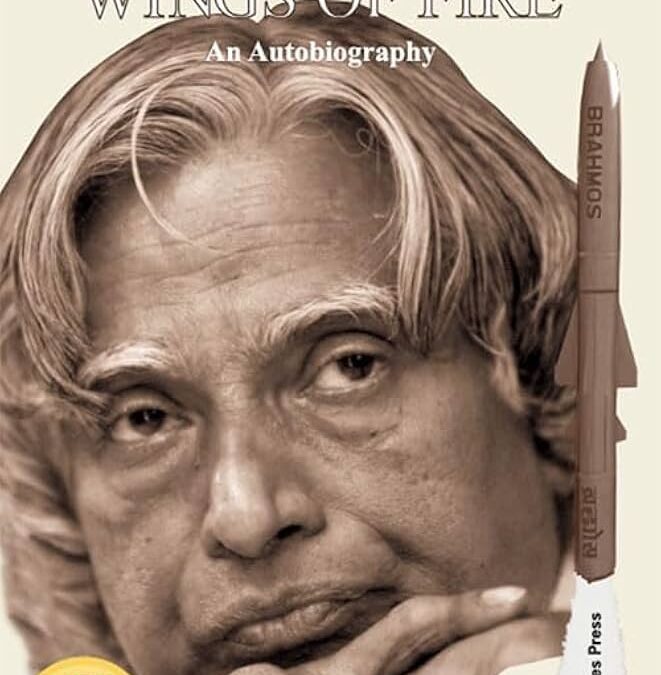
From Wings to Light
From Wings to Light
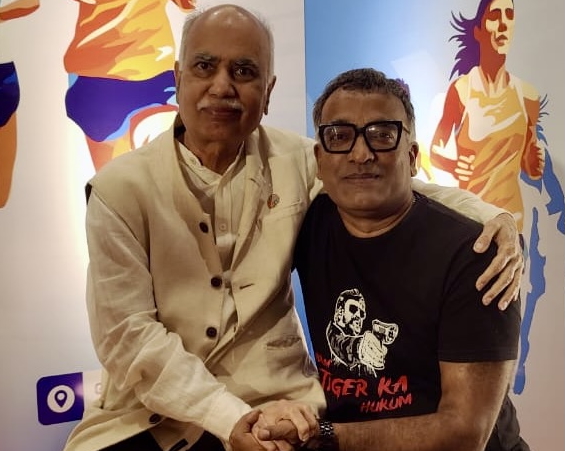
My name found its place in the world through Wings of Fire, the autobiography of Dr A.P.J. Abdul Kalam, who invited me to walk beside him as co-author. When it was first published in December 1999 by Universities Press, the book did not immediately take flight. I still remember those early months—more than a year, in fact—when it lingered quietly before gradually finding its readers. But once it did, the journey was unstoppable. For twenty-five years now, the book has endured, carried by the affection of people who saw in Dr Kalam’s story a reflection of their own hopes.
Not long ago, the publishers asked me to prepare a Silver Jubilee edition. I approached it with reverence. The original sixteen chapters remain exactly as they were; to me, every word and punctuation mark is sacred. To these, I added six new chapters, written in my own voice, reflecting on Dr Kalam’s life as I had witnessed it. These chapters speak of his role in India’s nuclear tests, the day he received the Bharat Ratna, his election as President, and the way he spent his final years speaking to young people about purpose and possibility.
The new edition is now available. My hope is simple—that it touches hearts as profoundly as the first edition did, and that Dr Kalam’s light continues to guide those who read it.
Two questions arise before me as I stand witness to this event, grateful for the opportunity despite my frail health: What is the purpose of a life, and how best can one live it? These are not easy questions, yet unless they are faced, there can be no true peace of mind or serenity of heart. I have seen it in myself—whether lying awake, travelling in search of new horizons, or seeking relief through distractions—no matter how the “chemistry of pleasure” persists, the restlessness remains until these questions are addressed.
I have learnt that no one else can answer them on my behalf. A guru may speak, a scripture may guide, but unless I make the truth my own, it remains hollow, like a counterfeit note that cannot buy anything of value. In my own journey, I have seen how easy it is to borrow beliefs and call them convictions, but life has a way of testing what is genuine.
For me, God—however one names or imagines Him—has never accepted intermediaries. It is always a direct, unmediated encounter, intimate and personal. Methods, yes, they help just as a car or a plane can carry me faster to a destination; prayer, meditation, or discipline can bring me nearer to clarity. But what I find when I arrive—that is mine alone, and no one else can share in it or claim credit for it.
I have also discovered that mythology, states of meditation, and even the trance of devotion are only shifts of consciousness. They may soothe, they may uplift, but they are not the truth itself. The truth is something starker, simpler, and deeply personal. It comes only when one dares to live the questions as one’s own. And in those rare moments when it appears, it feels less like an achievement and more like a homecoming.
We all enter this world without choice, and in our growing years, too, so much unfolds beyond our control. Education, for instance, is often decided not by aptitude or desire, but by the accident of birth—by the financial standing of one’s parents and the geography of one’s home. Those born into low-income families, especially in remote villages far from urban centres, face a clear disadvantage.
This is why Dr Kalam stands out as a beacon for countless reasons, but most profoundly for one: his unyielding determination to rise above educational deprivation. Had he surrendered there, no later success—scientific or social—would have been possible. His life reminds us that the foundation of all achievement lies in refusing to be defined by early limits.
Then comes another test—the enticement of the world around us: the circle of friends, the distractions of pastimes, the easy slide into gossip or indulgence in pursuits that drain energy yet yield nothing. Here again, Dr Kalam offers a lesson. His life was marked by an unswerving focus on the task before him—first as a student absorbed in learning, later as an adult committed to his work. A simple, frugal lifestyle reinforced this focus. To many, it may sound like a small detail, but in truth, it is pivotal.
How many students today can genuinely say they are giving their studies the attention they deserve? How many employees can claim genuine loyalty to their livelihoods? And frugality—once a virtue—seems to have been cast aside. Instead, we see people living for the moment, beyond their means, buying on credit, acquiring that which is neither necessary nor nourishing. Dr Kalam’s example is a quiet counterpoint to this—a reminder that simplicity sharpens focus, which in turn, paves the way to greatness.
It has been ten years since Dr Kalam walked out of this world, and yet he remains with me—every single day, not as nostalgia or sentiment, but as my witness. In his unseen presence, I ask myself the same questions he asked himself: Am I living with purpose? What does a purposeful life mean when one has retired, when the body has grown frail? The answers are no longer uncertain.
I have come to see that the meaning of a human life is to let one’s narrow consciousness—the embodied soul—expand into the vastness of universal consciousness. It is not hidden; it does not require elaborate rites or intermediaries. The truth is in plain sight. Look up at the sky on a starry night, and you will sense it. Watch a plant turn sunlight into matter, breathe in carbon from the air, and quietly fulfil its purpose—you will know it. Education, too, is like this. Knowing how to swim is one thing; swimming across a river is another. Knowledge that serves only livelihood is incomplete. The real test is whether you shared it, whether you offered it beyond yourself.
This was Dr Kalam’s gift to us. After Rashtrapati Bhavan, he became a pilgrim to classrooms. From campus to campus, he carried the flame, speaking to students—of dreams, of courage, of purpose. And it was before them, in the midst of that message, that he laid down his body and gave his final lesson—that a life lived in service ends in service.
And so, I write. I write blogs, I write books—sometimes about myself, often about the quiet, good work of others. Each dawn I take as an extension, another chance to do what little I can. Every night I close with the satisfaction of having read a noble voice, borrowed a spark, and try to kindle it into words that might steady or inspire a fellow traveller.
The Silver Jubilee edition of Wings of Fire carries this torch onward. And now, it rests with you. The next time someone says, “This cannot be done,” remember Dr Kalam, and this truth: life itself is the miracle of what has never happened before. We are here to add to that miracle. That was his gift, his legacy. I have tried to carry it faithfully. And now, dear reader, it is yours to keep alive.
MORE FROM THE BLOG

The Lost Wisdom of Our Kitchens
The Extra Mile
Shakespeare once reminded us that life is but a stage; listen closely, and beneath those familiar words, you can hear the soft hum of entrances and exits. Each of us arrives in medias res, as the Latins say—dropped into the middle of a vast, unfolding drama whose...
The Theatre Within
I have been fascinated by Shakespeare, as most of those fancy English phrases and words that enchanted me were created by this one man who lived in England during 1564–1616. I was always intrigued by how one individual could produce such a great body of work that...