
From AI to Autonomous Care
The second edition of the International Conference on AI in Healthcare was held at Yashoda Hospital in Hyderabad on 13-14 June 2026. Robotic cancer surgeon Dr. Sunkavalli Chinnababu led the event, which attracted 2,000 delegates, 375+ speakers, policymakers, innovators, healthcare leaders and media partners across six parallel halls. Covering precision medicine, AI in radiology and pathology, innovation, discovery, policy, and startup challenges, the conference showcased the culture of a technologically enthusiastic society.
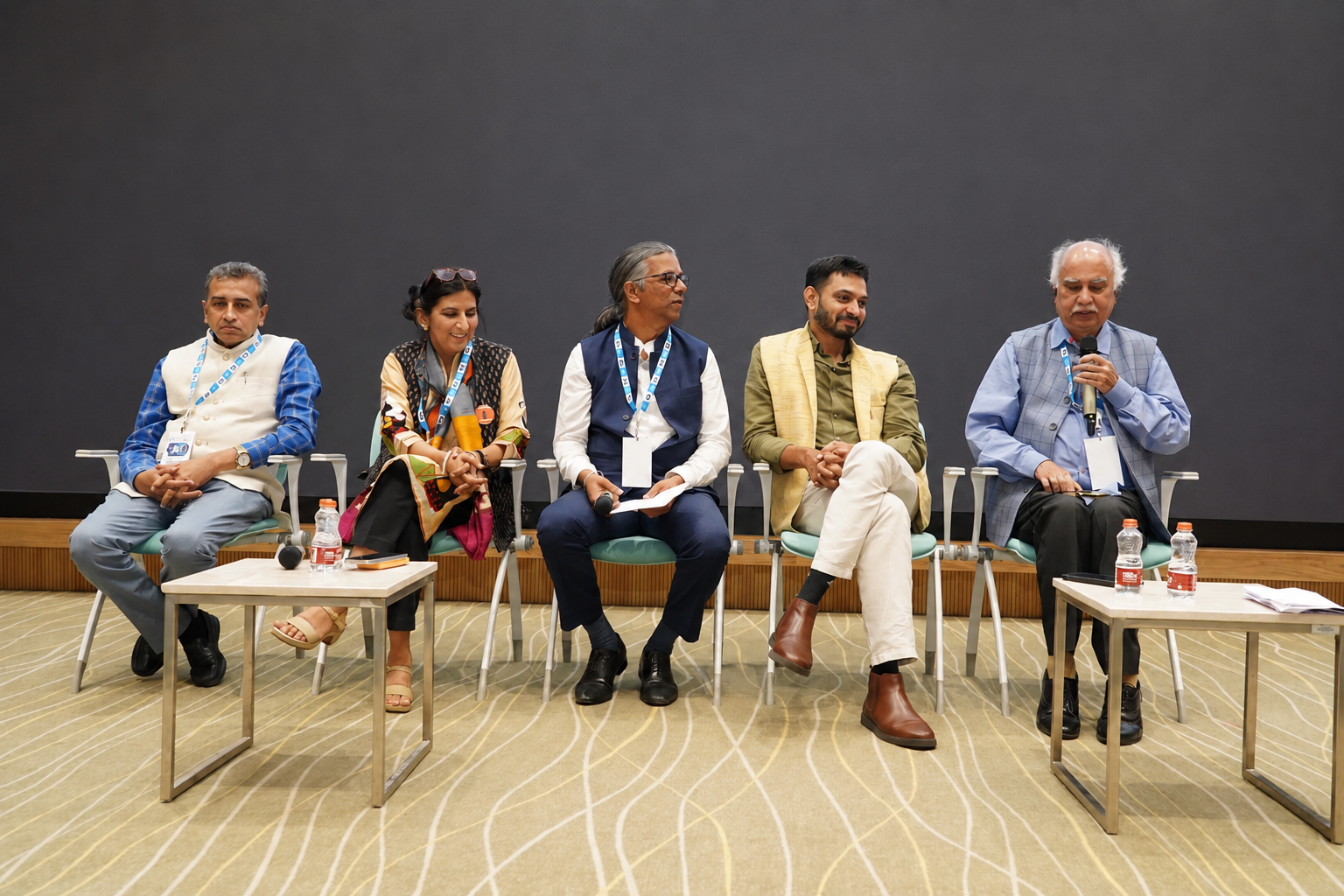
The 45-minute panel discussion, Peering Into the Future: The Autonomous Hospital AI Era, as the final session, proved to be the conference’s crowning event. The panel brought together a distinguished group of experts: Dr. Mona Duggal, Director, Indian Council of Medical Research (ICMR), New Delhi; Dr. Amrut Kadam, Professor and Head of Radiation Oncology, Victoria Hospital, Bengaluru; Dr. H. Narendra, Professor and Head of Surgical Oncology, Sri Venkateswara Institute of Medical Sciences (SVIMS), Tirupati; and Dr. Bhaskar Rajakumar, CEO of Charaka MedTech. I was invited to moderate and lead the discussion.
In my opening remarks, I invoked what I called the Empire Analogy. Throughout history, empires have swept over kingdoms and societies. The defeated often adopted the language, institutions and knowledge systems of the new order. India under British rule is one example. Over time, Indians mastered the English language, absorbed Western education, and participated in the institutions of the Empire so fully that a person of Indian origin, Rishi Sunak, eventually became Prime Minister of the United Kingdom, serving for nearly twenty months before his party’s electoral defeat in 2024.
The analogy was intended neither as praise nor as criticism, but as a reminder that transformative systems cannot be ignored. Artificial Intelligence is emerging as a new global force—an empire of knowledge, computation and data. Nations that merely resist it may be left behind; nations that understand it, internalise it, and adapt it to their own strengths can use it as a powerful instrument of growth and leadership. India must, therefore, learn to engage with AI not as a passive consumer, but as an active participant and creator.
The metaphor lightened the atmosphere and encouraged the panellists, all highly accomplished professionals, to speak with candour. The discussion soon converged on the Ayushman Bharat Health Account (ABHA), which many regarded as the first serious step towards creating a digital health infrastructure for India. ABHA provides individuals with a unique digital health identifier, enabling them to link and manage their medical records across participating hospitals, laboratories, pharmacies and other healthcare providers. Just as UPI created a common digital infrastructure for financial transactions, ABHA has the potential to become a foundational layer for the secure exchange of healthcare data, treatment histories, insurance-related information, and continuity of care.
The second major concern was the quality of healthcare data itself. The panel noted that India suffers not from a scarcity of data but from an abundance of fragmented, inconsistent and poorly curated data. Information collected in screening camps without recording the type of equipment used, calibration standards, operator competency, or measurement protocols often has limited scientific value. Worse, such data can produce misleading conclusions, such as proclaiming a city to be a ‘diabetes capital’ based on non-standardised surveys, estimating hypertension prevalence using inconsistent measurement techniques, or assessing oral and cervical cancers through purely visual examination without rigorous diagnostic confirmation. Artificial intelligence can only be as reliable as the data on which it is trained. Poor data creates poor intelligence.
The discussion then turned to the idea of the autonomous hospital itself—a hospital where AI manages and optimises many clinical, operational and administrative processes in real time, augmenting rather than replacing human professionals. Here, the panel was both optimistic and cautious. Three lessons and a cautionary point emerged.
The first lesson is about architecture. In mission-critical aerospace and defence systems, autonomy is never treated as magic. It is painstakingly built on redundancy, graceful degradation, fail-safe modes, continuous telemetry, rigorous verification protocols, and clear chains of accountability. Autonomous hospitals must be designed in the same spirit. Every AI recommendation must be explainable and traceable: what data entered the system, what inference was drawn, what action was suggested, what degree of uncertainty existed, and at what point human intervention became mandatory. Trust cannot be demanded; it must be engineered.
The second lesson is real-time situational awareness. In aerospace systems, sensor fusion is fundamental because no single sensor is trusted blindly. Multiple streams of information are continuously integrated to produce an accurate understanding of reality. Healthcare requires a similar approach. AI must synthesise vital signs, laboratory results, imaging studies, medication histories, nursing observations, bedside device data and clinical context. A single abnormal reading should not trigger blind action; the system must recognise patterns, trends, trajectories and risk profiles.
Nursing observation is an equally important sensor in this ecosystem. Experienced nurses often detect subtle deterioration in a patient’s condition before it becomes visible in laboratory reports or monitoring systems. Their judgment is built upon continuous observation, intuition developed through experience, and familiarity with the patient. Yet the indispensable contribution of nursing vigilance to patient safety remains underappreciated in many discussions on healthcare transformation. Any vision of autonomous hospitals that overlooks nurses is fundamentally incomplete.
The third lesson is independent auditability. In defence systems, telemetry is not ornamental; it is the memory of the mission. Every decision, event, anomaly, and response is recorded for later analysis. Hospitals require a comparable telemetry architecture—not only for clinical safety but also for ethical governance. AI can help create transparent and auditable trails that show why tests were ordered, which medications were prescribed, which consumables were used, whether treatment protocols were followed, and whether billing accurately reflected the care delivered. Such transparency protects patients, doctors, nurses, administrators, insurers and healthcare institutions alike.
However, the panel also issued a point of caution. AI must not become another instrument for accelerating the commercialisation of healthcare. Modern hospitals operate under increasing pressures from investors, expensive technologies, branded consumables, diagnostics-driven revenue models and expectations of financial returns. In such an environment, there is a risk that nurses and paramedics may be viewed merely as cost variables and patients as revenue events. Healthcare is fundamentally different from manufacturing or retail. Its purpose is not production but healing. Patients are not products, prototypes, or transactions; they are human beings whose dignity, trust, vulnerability and well-being must remain at the centre of every clinical decision. AI should strengthen this human-centred mission, not undermine it.
The real question, therefore, is not whether hospitals can become autonomous. The real question is: autonomous for what purpose? If autonomy simply means faster billing, higher throughput, more diagnostic testing, and greater revenue generation, it will erode trust. If autonomy delivers safer care, fewer errors, greater transparency in decision-making, reduced administrative burdens, fairer audits, earlier interventions and better patient outcomes, then AI can become a transformative force in healthcare—one in which treatments are transparent and transactions fair, accountable and traceable.
The panel concluded with a clear consensus that the truly autonomous hospital remains at least five years away, and perhaps considerably longer in many settings. Automation should not be confused with artificial intelligence. Digitising a workflow is not the same as creating an intelligent system. Genuine AI depends on high-quality, real-time data acquired without manual delays, validated through redundancy, analysed systematically, and refined through continuous feedback. Above all, AI must never be allowed to compromise compassion, accountability, professional judgement, or human dignity.
How then do we progress?
The first requirement is education. AI literacy must be integrated into the curricula of nurses, paramedics, administrators and medical students. AI should be taught not merely as a technology but as a clinical and managerial tool.
The second requirement is transparency. Billing systems, procurement practices, diagnostic recommendations and treatment pathways should become auditable through AI-enabled oversight.
The third requirement is the creation of a national health data architecture built around the fully digital ABHA (Ayushman Bharat Health Account) framework and the broader Ayushman Bharat Digital Mission (ABDM). Just as UPI transformed digital payments by creating a common interoperable stack, India requires a healthcare ‘stack’ that enables secure, patient-consented exchange of health information across institutions. Such a platform could eventually support preventive healthcare, personalised medicine, clinical research, public health surveillance, and AI-assisted decision support at a national scale.
Only when these foundations are firmly in place can the autonomous hospital evolve from a technological aspiration into a trusted institution that unites the precision of machines with the compassion and wisdom of human caregivers. Until then, talk of fully autonomous hospitals remains an alluring vision—but visions unsupported by strong foundations are no more than castles built on sand.
MORE FROM THE BLOG
Beyond the Molecule
I recently visited PI Health Sciences Ltd. at Genome Valley, Hyderabad, at the invitation of my long-standing friend, Dr. S. Chandrasekhar, who joined the organisation as Chief Scientific Advisor after his superannuation as Secretary, Department of Science and...

Nataraja: Metallurgy in Motion
Among the great images created by Indian civilisation, few possess the visual authority of the Chola Nataraja. Shiva dances within a circle of flame, one foot planted upon ignorance and the other lifted in liberating grace. His hair flies outward, his arms extend in...

Salt, Spice and Time
Recently, I had the pleasure of attending a family dinner hosted by Vishal Arora, a young CEO and a friend of my son Amol. His wife’s parents were also present. Although they all come from New Delhi, they seemed to carry with them something of the city’s older...
Totally liked that the focus wasn’t on how advanced AI can become, but on ensuring that patients never become secondary to technology. That’s something worth remembering as healthcare evolves.
Respected Sir, A very engaging read. What stood out to me is that the real transformation isn’t just about adopting AI, but about redesigning healthcare systems to make them smarter, safer, and more patient-centric. At the same time, human judgment and empathy must always remain at the heart of healthcare. Looking forward to seeing how these ideas shape the future. Thanks for sharing such a thought-provoking perspective.
For India and much of the Global South, AI is not merely another medical technology; it is a means of overcoming chronic shortages of healthcare professionals. Where doctors are few and patients are many, intelligent systems can extend every physician’s reach by supporting routine screening, risk assessment, documentation, and follow-up. The objective is not to replace clinicians but to multiply their effectiveness.
Autonomous care should be understood as the ability of healthcare systems to observe, interpret, and respond to changes in a patient’s condition with minimal human intervention while remaining under clinical supervision. Continuous monitoring through wearable devices, connected diagnostics, and intelligent software allows diseases to be recognised at their earliest biological stages rather than after symptoms have become severe.
Prof Tiwari,
Thank you for this article, stimulating as it is informative of where we need to be, investiment in education is key, we ca not afford to overlook, like you precisely said ‘AI literacy must be integrated into the curricula of nurses, paramedics, administrators and medical students. AI should be taught not merely as a technology but as a clinical and managerial tool.’ The earlier the better
Respected Sir, Greetings! Your article beautifully captures the real direction in which AI must evolve — not as a replacement for human intelligence, compassion, or professional judgement, but as a responsible force that strengthens transparency, accountability, and better decision-making.
I was especially touched by your point that “AI can only be as reliable as the data on which it is trained” and that trust in AI must be engineered through architecture, auditability, explainability, and human-centred purpose. This thought is extremely relevant not only in healthcare, but across every industry where AI is now entering creative, operational, and decision-support roles.
As we launch RenderGenie, our AI-powered visualisation tool under BALYTIX, your article gives us an important reminder: AI innovation should not be driven only by speed, automation, or commercial value, but by clarity, usefulness, responsibility, and human benefit. RenderGenie aims to help architects, designers, homeowners, and businesses visualise spaces more intelligently, but the larger lesson remains the same — AI must augment human imagination, not replace human wisdom.
Website link: https://www.balytix.com.au/rendergenie
Your writing continues to inspire us to build technology with purpose, ethics, and respect for the human experience. Thank you for sharing such a timely and visionary perspective. Warm Regards,
In my view, AI is to be viewed as force multiplier in our work environment. It is not something to be afraid of. It has been around for years. Its only the rate of transformation which has accelerated. Those who embrace AI fully will progress, others will trail.
Artificial Intelligence is changing the centre of gravity of healthcare. For more than a century, medicine has been organised around hospitals, where patients travel to receive diagnosis and treatment. AI enables a different model in which healthcare increasingly accompanies the individual through continuous monitoring, intelligent decision support, and timely intervention. The shift is from episodic care to continuous care.
Thank you, Sir, for sharing this blog! One of AI’s greatest contributions to healthcare is its ability to reduce the burden of repetitive administrative tasks, allowing healthcare professionals to spend more meaningful time with their patients. Technology should never diminish the human side of medicine. When thoughtfully designed and responsibly implemented, it enables doctors and nurses to listen more carefully, explain more clearly, comfort more compassionately, and ultimately provide better care.
Arunji, A timely and balanced perspective. AI should serve as an enabler of transparency, accountability, and better patient outcomes, not as a tool to further commercialise healthcare. While it can strengthen clinical governance and operational efficiency, the human element of care must always come first.
Patients are not revenue streams but individuals deserving dignity, empathy and trust. Technology should support caregivers, not redefine the purpose of healthcare. Enjoyed reading this.
Autonomous care is especially relevant for chronic diseases such as diabetes, hypertension, cardiovascular disease, chronic respiratory illness, cancer survivorship, and age-related disorders. These conditions require lifelong observation rather than occasional consultations. AI makes such continuous care practical and scalable.
The same technologies that improve patient care also improve hospital performance. AI can optimise patient flow, manage intensive care resources, predict equipment failures, assist clinical documentation, reduce administrative burden, and improve operational efficiency. The autonomous hospital is emerging as an intelligent institution that continuously learns from every clinical encounter.
Data has become a strategic healthcare resource. Nations that generate, protect, and responsibly use their own clinical data will possess greater capacity to develop AI systems suited to their populations. Data sovereignty is becoming an integral component of healthcare sovereignty.
The success of autonomous care will depend as much on ethics as on technology. Healthcare demands transparency, accountability, privacy protection, and human oversight. AI should support clinical judgment, not replace it. Trust in healthcare is built not only on accuracy but also on responsibility.
This is a very poised discussions on AI in healthcare. It is true that quality data is essential for trustworthy systems to have transparency and accountability. And above all, human compassion has to be there. Again a nice blog by PRof Tiwari Ji
I especially liked how the discussion stayed grounded in real challenges….data quality, accountability, and the role of human judgment rather than getting carried away by hype. The point about AI strengthening, not diluting, the human core of healthcare really stands out. A very balanced and insightful read.
Dear Sir, Today’s AI is a buzzword, a fashion, and a mainstay of the future. Each person has an understanding and perception of AI. In my opinion, the use of AI in the medical field must be approached with the utmost caution. At the end of the day, AI is ARTIFICIAL. Having said that, I am not undermining the capability of AI technology. While improving decision-making, solving complex problems, reducing human effort, and simplifying complex and tedious steps are steps toward emulating and matching human intelligence, they are still a ways off.
My daughter, who is a paediatric surgeon, says that protocols in paediatric surgery are evolving and that each institution has its own approach. Even when protocols are established, each surgeon has their own special skills and methods for performing the procedure. A human in the loop is always a complex problem to solve. In my opinion, AI should be treated as a FRIEND, PHILOSOPHER, GUIDE, and EXPERT with a wealth of information, and the final word should come from the DOCTOR treating the patient. Interesting topic and Interesting Panel discussion, and absolutely practical conclusions, sir.
Thank you, sir, for an interesting blog.
AI is undoubtedly one of the most extraordinary tools in human history, possessing an immense potential to revolutionize every field of human endeavor. However, as we reflect on the nature of evolution, we must remember that machines are developed to facilitate human activity and ease life—not to replace the foundational spark of human consciousness. If we become entirely dependent on them, we risk letting the machine use us, rather than us using the machine. True advancement lies in maintaining the sovereignty of our own biological and mental faculties; AI should be an extension of our capabilities, a tool to handle the noise of information, leaving the human mind free to pursue deeper wisdom, creativity, and the never-ending path of conscious evolution.
Dear Prof, Thanks for sharing your insights in AI and autonomous care. AI has brought efficiency, accuracy, and cost-effectiveness to many areas of life. This applies to Healthcare. That being said, humanness, the human touch and empathy shall remain irreplaceable in medicine and healthcare.
Great discussions. A thought-provoking and timely article. The journey from AI-assisted care to autonomous care represents one of the most significant transformations in modern medicine. While autonomous systems promise greater efficiency, scalability, and precision, they must always be grounded in patient safety, clinical validation, transparency, and ethical governance. The future is not about replacing clinicians but empowering them to deliver more personalised, preventive, and equitable care. Exciting times ahead for healthcare innovation. Congratulations on an insightful piece, Arun ji!
Arunji, this seems to have been a very interesting panel discussion. Thanks for sharing.
AI has the potential to democratize healthcare by making quality medical advice, early diagnosis, and continuous monitoring accessible even in the remotest corners of Bharat. More importantly, if it can help shift our healthcare systems from treating disease to preventing it through timely interventions and personalized insights, it could have a transformative impact at the scale and diversity of a country like ours.
As always, your blog reminds us that technology alone is not the answer—it is how thoughtfully we apply it that will determine whether AI truly transforms healthcare for humanity.