
The Unfulfilled Promise of Healthcare
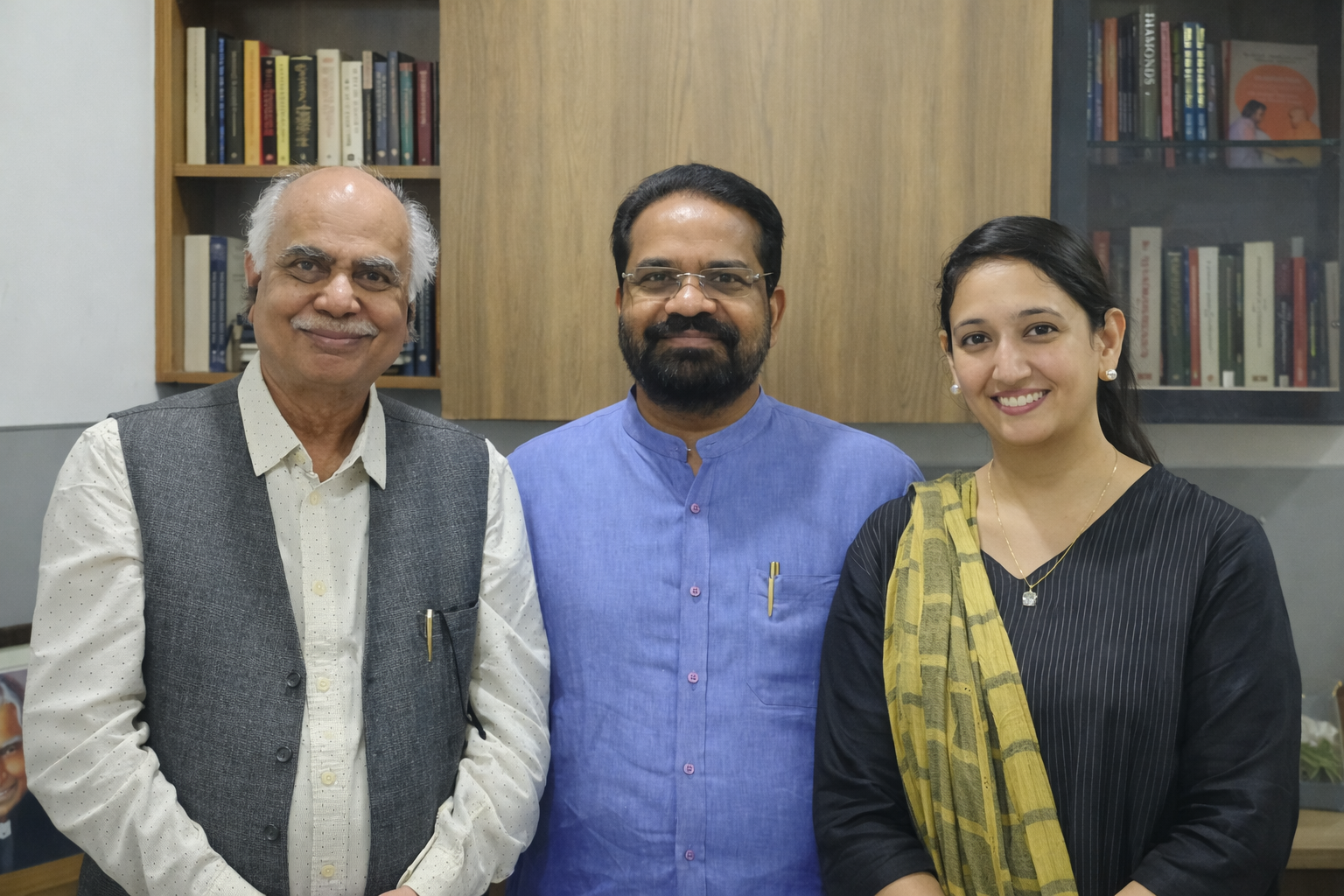
Recently, I had the opportunity to spend nearly three hours in conversation at the Care Foundation, graciously hosted by its CEO, Mr. S. G. Prasad, whose quiet commitment to accessible healthcare has sustained many meaningful initiatives over the years. The meeting brought together Mr. B. V. Satya Sai Prasad, a lawyer-turned-industrialist now deeply engaged in promoting artificial intelligence in healthcare, and his daughter Deepti, a biomedical engineer whose professional journey mirrors the global evolution of modern medicine itself. Deepti had worked at the Care Foundation in 2009 before moving to the United Kingdom, where she spent fifteen years within the National Health Service, contributing to healthcare technology and digital transformation programs. She has now returned to India to assume leadership at Ozone Hospitals in Hyderabad, an institution established by her father. What began as a cordial meeting soon grew into a long and searching conversation about the future of healthcare in India—not merely as an industry, but as a moral and technological system still in transition.
There is little intellectual value today in endlessly debating whether healthcare has become commercialised. That question has already been settled by history. Modern medicine is inherently technology-intensive: linear accelerators that deliver precision radiotherapy, robotic surgical platforms, molecular diagnostics, advanced imaging systems, and intensive-care monitoring infrastructures all require enormous capital investment and continuous maintenance. Hospitals, therefore, operate within economic realities. To lament commercialisation without proposing structural alternatives is to engage in nostalgia rather than reform. The real question is whether anything can be done to prevent healthcare from drifting further away from equity and accessibility.
The healthcare industry, as it has evolved, is marked by a striking paradox. Hospitals accused of profiteering remain perpetually full. Physicians celebrated for compassion often live lives of remarkable prosperity, their appointment calendars filled far into the future, serving those who can pay huge fees. Meanwhile, ordinary patients struggle through fragmented care pathways, delayed diagnoses and financial uncertainty. This contradiction is not merely ethical; it is systemic. Healthcare today suffers less from a lack of knowledge than from flawed design.
Our discussion naturally returned to Dr. A. P. J. Abdul Kalam, whom Mr. Sai Prasad had met in 2001 when Dr. Kalam was serving at Anna University as Professor of Technology & Societal Transformation. Dr. Kalam consistently pondered how advanced technology could become both expansive and affordable for the common citizen. Healthcare was central to that inquiry. I gifted Deepti a copy of my book, Innovate Locally to Win Globally, which recounts the journey of Mr. D. A. Prasanna, the founding CEO of Wipro GE Medical Systems, and the emergence of India’s medical technology industry from near-total import dependence in 1990 to a multibillion-dollar export ecosystem today. The lesson from this transformation is clear: affordability does not arise from rejecting technology but from indigenising and democratising it.
Indian hospitals today are undeniably world-class. Patients arrive from Africa, the Middle East, Europe, and even the United States seeking cardiac surgery, oncology care, transplantation, and advanced diagnostics because outcomes are comparable while costs remain reasonable. Medical tourism quietly affirms India’s clinical excellence. Yet a deeper question remains unresolved: what about the ordinary citizen? How can quality healthcare become routine rather than a premium service? Mr. Sai Prasad reflected on his involvement in shaping the Aarogyasri Scheme introduced by the late Chief Minister Dr. Y. S. Rajasekhara Reddy, a program that enabled government-funded treatment of economically disadvantaged patients in private hospitals. It was an unconventional solution that liberated many patients from infrastructure limitations within parts of the public system. He recalled attempting to advocate a revenue-neutral sustainability model, though political realities constrained structural redesign. Nevertheless, Aarogyasri demonstrated that policy innovation, when aligned with financing mechanisms and institutional participation, can rapidly expand access.
Since that period, India has witnessed three transformative developments that together form the foundation of equitable healthcare delivery: digital identity through Aadhaar, enabling authenticated patient records; expansion of publicly funded health insurance programs; and massive investment in public medical infrastructure through new AIIMS institutions, cancer centres and medical colleges. Equally significant has been the Jan Aushadhi Yojana, which provides quality-assured generic medicines at nearly one-fifth the cost of branded equivalents. I have personally used these medicines for more than a year and have found them clinically reliable, reminding me that the cost of medicines is often shaped more by market forces than by production costs. The architecture for inclusive healthcare already exists; what remains is intelligent integration.
It was at this point that artificial intelligence entered our conversation—not as a matter of technological enthusiasm but as a practical necessity. Three possibilities appeared almost self-evident. It starts with the prescription of medicine. Despite the widespread availability of generics, prescription behaviour remains influenced by the legacy of brands. AI-driven clinical decision support systems integrated into electronic prescribing platforms could automatically recommend bioequivalent generic alternatives aligned with national formularies. Machine-learning models analysing prescription patterns could detect statistical anomalies suggestive of sponsored prescribing practices, allowing transparency rather than enforcement to reshape behaviour. Technology may accomplish what regulation alone rarely achieves—a form of creative destruction where unethical practices gradually lose viability.
The second possibility lies in strengthening primary healthcare, historically the weakest link in India’s medical ecosystem. Many rural and peri-urban centres function without physicians, prompting patients to bypass primary care and overwhelm tertiary hospitals. Imagine instead AI-enabled primary health nodes where nurses, community health workers, or trained volunteers use AI-powered smartphones capable of clinical speech recognition, symptom capture and triage decision support. Through telemedicine connectivity with central physician command centres, prescriptions could be validated remotely while electronic health records are generated at first contact. Vital signs monitoring, probabilistic risk stratification, and structured referral pathways would ensure continuity of care. Except in emergencies, hospital visits would follow digital registration, transforming healthcare from episodic treatment into longitudinal care management. Intelligence would become distributed even when doctors remain scarce.
The third domain concerns trust—particularly billing transparency. Healthcare billing remains opaque to patients who lack the technical ability to question complex invoices generated through Hospital Information Systems and Management Information Systems. AI-based audit engines could analyse billing patterns using anomaly detection algorithms, comparing procedures, consumables and clinical pathways against evidence-based norms. Outliers could be flagged automatically, while blockchain-backed audit trails create immutable records accessible to patients themselves. Technology would not accuse; it would illuminate, restoring balance in a relationship historically weighted against the patient.
No external agency will design this future for India. Just as the nation built Aadhaar, transformed payments through UPI, expanded access to generic medicines, and scaled public health insurance, the next transformation must emerge from Indian entrepreneurs, clinicians, engineers and institutions acting together with clarity of purpose. Artificial Intelligence must not merely assist diagnosis; it must audit systems, democratise access and restore trust. As our meeting concluded and Mr. Sai Prasad and Deepti departed—encouraged by Mr. S. G. Prasad’s quiet optimism and the shared promise of bringing together people of conscience—I felt not merely hopeful, but deeply reassured. India is not only attempting to solve its own healthcare challenges; it is slowly shaping a template for nearly five billion people across the Global South who face similar constraints of affordability, workforce shortages and uneven infrastructure. If guided by conscience as much as computation, AI may yet return technology to its original purpose—improving lives by bettering livelihoods. Perhaps that was always Dr. Kalam’s nascent vision: not a quest for admiration, but a responsibility for action. Technology fulfils its purpose only when it serves the last person in the queue.
MORE FROM THE BLOG
Stay Awake, Stay Connected
There are certain timeless truths that can be ignored only by the most callous among us. One such truth is the Buddhist concept of Triple Refuge: Buddham saranam gacchami—I take refuge in the Buddha (the Enlightened One or Teacher); Dhammam saranam gacchami—I take...
Layers of Becoming
When I sat on the chair on stage to be felicitated on the 13th Foundation Day of the Ozone Hospital, on February 28, 2026, and Telangana Transport Minister Mr. Ponnam Prabhakar, Telugu film star of yesteryears Mr. Suman Talwar, and Chairman Mr. Satya Sai Prasad...

Kafka in the Age of the Gig Economy
In my youth, when I first read Franz Kafka’s Metamorphosis, published in 1915, it seemed to belong to a distant, shadowed landscape of European modernism—strange, unsettling, intellectually luminous, yet safely contained within literature. One reads differently at...

Dear Sir,
Greetings!
A thought‑provoking and deeply grounded reflection, sir. You capture the core paradox of modern healthcare with great clarity—that India can simultaneously deliver world‑class tertiary care and yet struggle to serve the “last person in the queue.” Your framing of AI not as a shiny diagnostic toy but as an instrument to audit prescriptions, strengthen primary care, and restore billing transparency is especially inspiring. It shows how technology, when guided by conscience, can correct systemic design flaws rather than merely optimise profits. As a student, I feel both challenged and encouraged to think of AI solutions that are indigenised, ethically anchored, and truly aligned with Dr. Kalam’s vision of serving the most vulnerable first.
Warm Regards,
Prof Arun sir – After reading the blog, I felt that The Universe has brought all of you (for a reason) together for 3 hrs to discuss about a topic that needs sustained effort to optimize several parameters that you have mentioned. I wish, one day, either at a State or Federal level, the people as one Unit takes care of each patient irrespective of economic status (“How” can be debated – whether it is through National Health System or Public Insurance system etc). Thank you for sparking the topic again through your blog.
This reads less like an opinion piece and more like a lived reflection, measured, insightful, and anchored in real conversations that actually move the needle forward.
An AI-enabled healthcare intelligence layer can play a transformative role in exposing malpractices by identifying abnormal patterns: irrational prescriptions, unwarranted diagnostics, inflated billing, or referral loops driven by incentives rather than patient need. When such a system is built on interoperable health records, real-time analytics, and ethical guardrails, it does not merely police the system—it restores trust. Importantly, this intelligence must not be punitive alone; it should be corrective, guiding providers toward evidence-based, patient-centric care.
No doubt we have seen exponential growth in the number and quality of corporate hospitals, but as you rightly mentioned, these are all for the rich. The primary health system, which used to be quite robust, is in total disarray. The moment you cross city limits into suburban villages (leave aside remote villages), you would hardly see even an MBBS doctor. There used to be a system of primary level medical practitioners who were called RMP’s…regd medical practitioners….They don’t exist anymore. Maybe the government outlawed them. The state-owned primary healthcare system is a victim of rampant corruption….The government won’t privatise it for obvious reasons. Let us learn from China…Barefooted Doctors.
Thank you Arun ji for sharing the blog on AI in Health care. I met Deepti recently at ACSI. Very promising Health care professional. At IIB, (Insurance Information Bureau) we are also exploring AI for market penetration, effective underwriting, claim management and Fraud prevention and management.
Building a strong primary healthcare backbone is most critical. A strong primary care system—accessible, affordable, and digitally connected—should serve as the first point of contact, resolving the majority of health concerns locally. From there, a rational referral pathway must emerge, where escalation to secondary and tertiary care is need-based, protocol-driven, and time-sensitive. This not only prevents overcrowding at higher centres but also ensures that advanced resources are reserved for those who truly require them.
AI offers a practical and humane pathway to strengthen staff-starved primary healthcare centres by acting as a “force multiplier” rather than a replacement for human care. In settings where a single doctor or nurse must manage large populations, AI-enabled tools can support triage, guide diagnosis, standardise treatment protocols, and flag high-risk patients early—especially for conditions like hypertension, diabetes, tuberculosis, and maternal health. Decision-support systems can help frontline workers make evidence-based choices, while AI-driven telemedicine connects them seamlessly to specialists at secondary and tertiary levels, creating an intelligent referral backbone.
Equally important, AI can take over routine administrative burdens—record-keeping, follow-up reminders, inventory management—freeing scarce human resources to focus on patient interaction and compassionate care. When combined with low-cost diagnostics, wearable data, and mobile platforms, it enables continuous, community-level monitoring rather than episodic care.
However, the goal must not be technological substitution, but augmentation with accountability. AI systems must be transparent, locally trained, and ethically governed to avoid bias or misuse. If implemented thoughtfully, AI can transform primary healthcare from a reactive, overburdened system into a proactive, preventive, and person-centred network—bringing quality care closer to the last mile while restoring dignity to both patients and providers.
Sir, this is an apt article in the context of the current healthcare delivery system. I had the opportunity to be part of that discussion, and the insights shared strongly resonate. Augmenting primary healthcare requires reimagining IoT devices not as consumer gadgets, but as critical clinical infrastructure. This shift demands field-validated, India-specific device standards tested in real PHC conditions rather than controlled laboratory settings. It also calls for robust systems of periodic calibration and audit embedded within routine healthcare delivery, ensuring sustained accuracy and trust. Equally important is the adoption of open, interoperable data architectures, enabling seamless communication between devices and integration with AI-driven clinical platforms. In this context, initiatives such as the MED 360 program led by BV Satya Sai Prasad represent an important step forward, demonstrating how integrated, technology-enabled primary care ecosystems can be designed around real-world needs. Above all, sustained progress will depend on strong public–private ecosystems that can design, manufacture, and maintain rugged, affordable, and repairable devices at scale, aligned with the realities of frontline care.
The promise of AI in primary healthcare depends fundamentally on the quality of data it receives. In staff-starved settings, that data must come from IoT devices—BP monitors, glucometers, ECG patches, pulse oximeters, maternal monitoring kits. When these devices are unreliable, poorly calibrated, or inconsistent across vendors, the entire AI layer is compromised. In effect, weak sensing leads to weak intelligence.
Today, the challenge is threefold. First, credibility: many low-cost devices lack clinical validation under real field conditions—heat, humidity, dust, intermittent power. Second, standardisation: absence of interoperable protocols means data cannot flow seamlessly into unified health records or AI systems. Third, continuity: devices are often not rugged enough for sustained use in rural and semi-urban settings, leading to data gaps and loss of trust among frontline workers.
Only when the sensing layer is trustworthy can AI deliver meaningful, actionable insights. Otherwise, we risk building an intelligent system on uncertain ground—precise in appearance, but fragile in reality.
What we are witnessing today is not merely a gap in healthcare delivery, but a distortion of its moral architecture. When care becomes fragmented, opaque, and commercially driven, the most vulnerable are pushed into cycles of misdiagnosis, unnecessary procedures, and financial distress. In such a landscape, the need for an intelligent, transparent, and accountable system is no longer optional—it is foundational.
What I found striking is your refusal to romanticise the past or vilify the present; instead, you seem to ask a harder question…..whether progress, left to its own logic, can remain humane. The idea that technology must move beyond efficiency to restore balance and trust felt particularly compelling. It shifts the conversation from complaint to responsibility, which is perhaps where it truly belongs.
Prof. Tiwari possesses a clear vision, extensive experience, and a strong commitment to enhancing the healthcare system. Team CRMIT is prepared to execute his vision by utilizing AI to address societal challenges.
This is a thoughtful piece that raises an interesting question. How can modern healthcare be both modern and accessible to ordinary people? The article demonstrates that, while technology and artificial intelligence should certainly improve healthcare, they should also make it more transparent and accessible. The idea of using AI to improve primary healthcare and ensure fair practices is particularly relevant to India. It is a message of hope that, if done with a compassionate heart, technology can actually make healthcare more equitable
Thanks, Arunji. What stands out is the shift from viewing technology merely as innovation to seeing it as responsibility. When tools like AI begin to function not only as instruments of efficiency but also as instruments of trust, equity, and accountability, they start resembling public infrastructure rather than private capability.
As you rightly articulated, India’s unique strength has often been its ability to build large systems that balance scale with inclusion. If that same civilisational instinct guides the next phase of healthcare innovation, the impact could indeed extend far beyond national boundaries.
Thank you also for reminding us of Dr. Kalam’s perspective that technology becomes meaningful only when it touches the life of the last person. Perhaps the real test of AI will be the same — not how intelligent it becomes, but how humane it remains.