
From Wings to Light
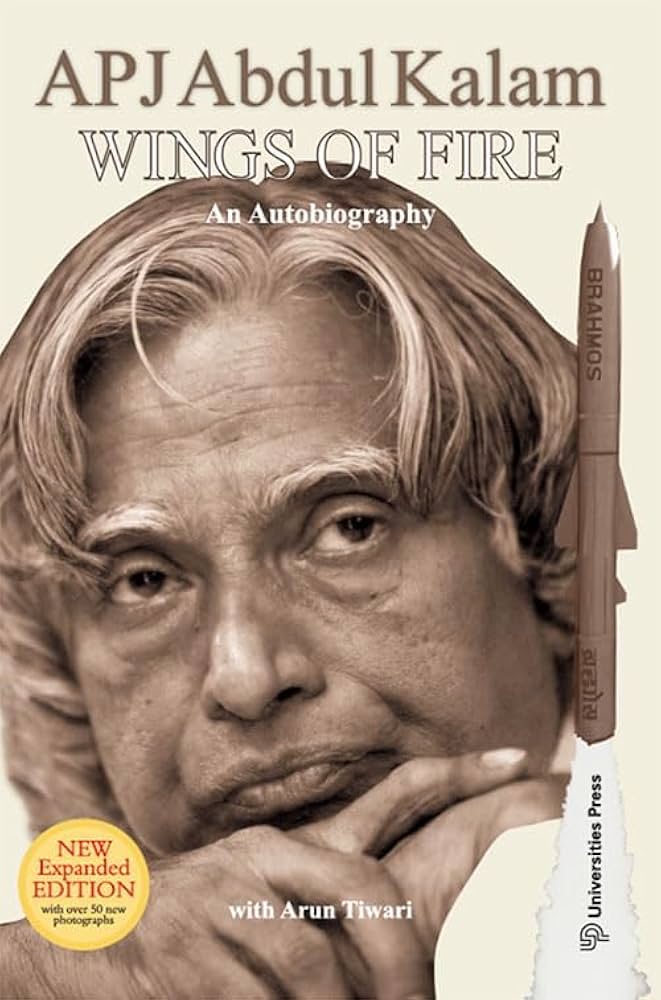
My name found its place in the world through Wings of Fire, the autobiography of Dr A.P.J. Abdul Kalam, who invited me to walk beside him as co-author. When it was first published in December 1999 by Universities Press, the book did not immediately take flight. I still remember those early months—more than a year, in fact—when it lingered quietly before gradually finding its readers. But once it did, the journey was unstoppable. For twenty-five years now, the book has endured, carried by the affection of people who saw in Dr Kalam’s story a reflection of their own hopes.
Not long ago, the publishers asked me to prepare a Silver Jubilee edition. I approached it with reverence. The original sixteen chapters remain exactly as they were; to me, every word and punctuation mark is sacred. To these, I added six new chapters, written in my own voice, reflecting on Dr Kalam’s life as I had witnessed it. These chapters speak of his role in India’s nuclear tests, the day he received the Bharat Ratna, his election as President, and the way he spent his final years speaking to young people about purpose and possibility.
The new edition is now available. My hope is simple—that it touches hearts as profoundly as the first edition did, and that Dr Kalam’s light continues to guide those who read it.
Two questions arise before me as I stand witness to this event, grateful for the opportunity despite my frail health: What is the purpose of a life, and how best can one live it? These are not easy questions, yet unless they are faced, there can be no true peace of mind or serenity of heart. I have seen it in myself—whether lying awake, travelling in search of new horizons, or seeking relief through distractions—no matter how the “chemistry of pleasure” persists, the restlessness remains until these questions are addressed.
I have learnt that no one else can answer them on my behalf. A guru may speak, a scripture may guide, but unless I make the truth my own, it remains hollow, like a counterfeit note that cannot buy anything of value. In my own journey, I have seen how easy it is to borrow beliefs and call them convictions, but life has a way of testing what is genuine.
For me, God—however one names or imagines Him—has never accepted intermediaries. It is always a direct, unmediated encounter, intimate and personal. Methods, yes, they help just as a car or a plane can carry me faster to a destination; prayer, meditation, or discipline can bring me nearer to clarity. But what I find when I arrive—that is mine alone, and no one else can share in it or claim credit for it.
I have also discovered that mythology, states of meditation, and even the trance of devotion are only shifts of consciousness. They may soothe, they may uplift, but they are not the truth itself. The truth is something starker, simpler, and deeply personal. It comes only when one dares to live the questions as one’s own. And in those rare moments when it appears, it feels less like an achievement and more like a homecoming.
We all enter this world without choice, and in our growing years, too, so much unfolds beyond our control. Education, for instance, is often decided not by aptitude or desire, but by the accident of birth—by the financial standing of one’s parents and the geography of one’s home. Those born into low-income families, especially in remote villages far from urban centres, face a clear disadvantage.
This is why Dr Kalam stands out as a beacon for countless reasons, but most profoundly for one: his unyielding determination to rise above educational deprivation. Had he surrendered there, no later success—scientific or social—would have been possible. His life reminds us that the foundation of all achievement lies in refusing to be defined by early limits.
Then comes another test—the enticement of the world around us: the circle of friends, the distractions of pastimes, the easy slide into gossip or indulgence in pursuits that drain energy yet yield nothing. Here again, Dr Kalam offers a lesson. His life was marked by an unswerving focus on the task before him—first as a student absorbed in learning, later as an adult committed to his work. A simple, frugal lifestyle reinforced this focus. To many, it may sound like a small detail, but in truth, it is pivotal.
How many students today can genuinely say they are giving their studies the attention they deserve? How many employees can claim genuine loyalty to their livelihoods? And frugality—once a virtue—seems to have been cast aside. Instead, we see people living for the moment, beyond their means, buying on credit, acquiring that which is neither necessary nor nourishing. Dr Kalam’s example is a quiet counterpoint to this—a reminder that simplicity sharpens focus, which in turn, paves the way to greatness.
It has been ten years since Dr Kalam walked out of this world, and yet he remains with me—every single day, not as nostalgia or sentiment, but as my witness. In his unseen presence, I ask myself the same questions he asked himself: Am I living with purpose? What does a purposeful life mean when one has retired, when the body has grown frail? The answers are no longer uncertain.
I have come to see that the meaning of a human life is to let one’s narrow consciousness—the embodied soul—expand into the vastness of universal consciousness. It is not hidden; it does not require elaborate rites or intermediaries. The truth is in plain sight. Look up at the sky on a starry night, and you will sense it. Watch a plant turn sunlight into matter, breathe in carbon from the air, and quietly fulfil its purpose—you will know it. Education, too, is like this. Knowing how to swim is one thing; swimming across a river is another. Knowledge that serves only livelihood is incomplete. The real test is whether you shared it, whether you offered it beyond yourself.
This was Dr Kalam’s gift to us. After Rashtrapati Bhavan, he became a pilgrim to classrooms. From campus to campus, he carried the flame, speaking to students—of dreams, of courage, of purpose. And it was before them, in the midst of that message, that he laid down his body and gave his final lesson—that a life lived in service ends in service.
And so, I write. I write blogs, I write books—sometimes about myself, often about the quiet, good work of others. Each dawn I take as an extension, another chance to do what little I can. Every night I close with the satisfaction of having read a noble voice, borrowed a spark, and try to kindle it into words that might steady or inspire a fellow traveller.
The Silver Jubilee edition of Wings of Fire carries this torch onward. And now, it rests with you. The next time someone says, “This cannot be done,” remember Dr Kalam, and this truth: life itself is the miracle of what has never happened before. We are here to add to that miracle. That was his gift, his legacy. I have tried to carry it faithfully. And now, dear reader, it is yours to keep alive.
MORE FROM THE BLOG
Stay Awake, Stay Connected
There are certain timeless truths that can be ignored only by the most callous among us. One such truth is the Buddhist concept of Triple Refuge: Buddham saranam gacchami—I take refuge in the Buddha (the Enlightened One or Teacher); Dhammam saranam gacchami—I take...
Layers of Becoming
When I sat on the chair on stage to be felicitated on the 13th Foundation Day of the Ozone Hospital, on February 28, 2026, and Telangana Transport Minister Mr. Ponnam Prabhakar, Telugu film star of yesteryears Mr. Suman Talwar, and Chairman Mr. Satya Sai Prasad...

The Unfulfilled Promise of Healthcare
Recently, I had the opportunity to spend nearly three hours in conversation at the Care Foundation, graciously hosted by its CEO, Mr. S. G. Prasad, whose quiet commitment to accessible healthcare has sustained many meaningful initiatives over the years. The meeting...

I still remember meeting Dr Kalam at Varkala Sivagiri. I reached very close to him and stood alone while all of the audience were sitting, and my father and mother were some feet back from me. He looked into the endless audience in front of him. His face and stature still reside in my memory. The great man of gigantic figure simply stands in front of the audience as so simple. After a decade, I now understand his work and legacy. Thank you,
Thank you Sir, for giving me the opportunity to meet Dr.Kalam Sir when I returned from the USA in 1997 — a decision that many considered rather unconventional at the time. I had the privilege of meeting Dr. Kalam Sir several times during my work at the Care Foundation. After learning that I was brought up in Chennai, he would often speak to me fondly in Tamil, which made our conversations appear more personal and memorable.
Dr. Kalam Sir had a deep and abiding interest in telemedicine. He often said that it was the only way to bring medical expertise to the poor living in remote and underserved regions. He passionately advocated for the adoption of appropriate technology in healthcare — technology that would make medical care accessible, affordable, and sustainable for all.
I still vividly remember connecting the distant town of Kailashahar in Tripura to Hyderabad through telemedicine — a link that enabled the diagnosis and treatment of a 14-year-old boy, coincidentally named Abdul Kalam. It remains one of the most moving examples I have ever witnessed of technology serving humanity in its truest sense.
Looking back today, I feel deeply blessed to have known Dr Kalam Sir and to have worked on projects inspired by his visionary ideas.
For most of us God is a myth. You are lucky Sir that you met God – in person- actually lived with him.
Thanks to the fortunate friendship we have Prof Tiwari, I had the pleasure of meeting Dr. Kalam in 2005 at an inaugural event at ECIL that you helped organize and in 2007 when he was invited to NASA’s 50-year anniversary celebration in Pasadena, CA. “Wings of Fire” is quite the inspirational book and described the wonderful life of Dr. Kalam – a life lived with a great purpose of dedication to humanity and to the country he loved so much. He certainly had an impact on your life as I see similar purpose of life attributes in you with the great achievements you’ve accomplished at DRDO, Care Foundation and in your great writings. I’ll look forward to reading the Expanded Edition of “Wings of Fire”. God Bless.
Thank you Arun ji for sharing. The message ‘knowledge must go beyond self’ resonates well with me. When I left EMRI on 10th Jan 2011, he insisted that I should share my knowledge and experience to develop leaders for the country.
Last 15 years, I gave 700+ lectures, mentored 350 leaders, produced and shared 108 videos on u tube and authored three books. I am eternally grateful to his advice 15 years back. I am satisfied.
I had the privilege of meeting Dr A.P.J. Abdul Kalam when I was a young engineer working on telemedicine projects. His words about using technology for social good transformed the way I saw my work. Reading Wings of Fire soon after that meeting deepened my resolve — it showed how science, when guided by compassion and vision, can truly touch lives. His journey reminded me that innovation is not about machines, but about humanity. That inspiration continues to guide every project I take up. “Wings of Fire” is not just an autobiography — it’s an awakening for every Indian engineer.
“Wings of Fire” is a book that turns inspiration into a lifelong mission. As a young scientist working at NRDC and handling the IPR of spin-offs of defence technology for civilian use, I had the rare privilege of meeting Dr A.P.J. Abdul Kalam. His vision of transforming science into social service — of taking technologies born in the labs of defence into the hands of common people — left an indelible impression on me. When I later read Wings of Fire, it felt like reliving that encounter: his humility, passion, and unwavering belief that technology must serve humanity. That meeting and this book together shaped my journey as a technology manager with purpose beyond projects — to innovate for the nation.
“Wings of Fire” was more than a book for me — it was a spark that lit a lifelong flame. I still remember meeting Dr A.P.J. Abdul Kalam as a student; his warmth, humility, and quiet intensity left a mark deeper than any lecture ever could. When I read Wings of Fire, I saw his life unfold not as a tale of privilege but as a testament to perseverance, purpose, and the power of dreams rooted in service. His journey from Rameswaram to Rashtrapati Bhavan showed me that true greatness lies in simplicity and dedication. That meeting — and that book — inspired me to walk the path of academia, not just to teach, but to ignite minds, just as he did.
Thank you so much Sir.
I fondly cherish the day Dr Kalam visited the Care Foundation. I had only recently joined and was standing quietly, watching the high-energy atmosphere as many eminent people surrounded him. Then, suddenly, he looked in my direction, made eye contact, and smiled. That brief moment was electrifying — I felt as if I were on cloud nine. Dr Kalam’s warmth and genuine affection for young people were extraordinary, and it’s no surprise that he continues to inspire millions across generations.
I can never forget the day Dr Kalam came to our house. I was a little child then, and the memory still shines vividly in my heart. He had come to meet our grandmother in Meerut — a simple visit that turned into a lifelong blessing for us. My sister Sagarika and I stood quietly in a corner, too shy to go near him, awed by his gentle presence. But Dr Kalam noticed us immediately. With his characteristic warmth, he called us closer, smiled, and placed his hands on our heads in blessing. That tender gesture — so full of affection, humility, and grace — left an impression far deeper than we could understand at the time. It was only later in life that I realised how special that moment was: to be touched by a man whose greatness lay not in his position, but in his humanity.
I had the rare privilege of accompanying Arun Tiwari Sir on several visits to Dr Kalam’s residence. Each time, Dr Kalam would greet us with his characteristic warmth, say a few thoughtful words, and take a genuine interest in my well-being. What struck me most was his remarkable ability to connect with everyone he met — whether a young visitor, a scientist, or a dignitary — with the same respect and kindness. His humility was not a gesture; it was his nature. Standing in his presence, I often felt that greatness is not about authority or achievement, but about the grace with which one treats others. Those encounters left an imprint that continues to shape how I relate to people and purpose even today.
Namaste Arunji, so good to read this. Your relationship with Bharat Ratna Dr APJ Kalam has been special. And, the way you have held on to his memories, philosophies, teachings and commitments, it is simply amazing. I have known more about Dr Kalam via stories from you more than anything else. And every time I have ended up with more respect for him and for you.
And yeah, I just got my Kindle version of silver jubilee edition. Hope to read these 6 new chapters very soon.
Arun Bhai, I read your blog.
It is all about the Expression of true sentiments from the core of the Heart.
Dr Kalam Sahab is one personality who continues to inspire millions of people
Best Wishes for the silver jubilee edition of the masterpiece book co-authored by you, “Wings of Fire.”
Superb Article on the Legendary Scientist and Former President of India Dr APJ Abdul Kalam by Dr Arun Tiwari Ji, Coauthor of Wings of Fire. Both are great role models for the young generations. Great work for the nation combined with greater humility is the hallmark of their persona.
Dear Sir, Every act of Dr Kalam was an example for all of us to emulate. He showed the world that nothing is impossible once a person decides and works towards the set goal with a single-minded approach. He also showed the world that one can reach the highest position by unflinching devotion to the work assigned to him.
His story will inspire every youngster. You have the unique privilege of working with him for nearly 4 decades. Nobody else can really bring out his unique contributions and qualities for the younger generations to know, learn and emulate Dr Kalam. I strongly believe that you have paid your Guru Dakshsina by adding those six chapters for the silver Jubilee edition.
Your way of telling the story will serve as a guide for generations to come. Thank you once again for an excellent blog, the immortal personality.
Dear Sir,
Dear Sir, Greetings!
Reading this reflection felt like walking once more beside Dr. Kalam’s light — and yours, Sir. Your words remind us that purpose is not taught, it is lived. The way you describe truth as a “homecoming” touched me deeply; it echoes the very essence of both Wings of Fire and your own journey of service through thought and writing.
The Silver Jubilee edition is not just a milestone in publishing, but a renewal of Kalam Sir’s message for a new generation — to rise above limitations, to stay focused amid distraction, and to live with simplicity and sincerity.
Thank you for continuing to guide us through your strength, humility, and luminous words.
Warm Regards,
Dear Prof. Tiwari, my thoughts were with Shri Kalam, as I had spent many memorable days with him. Your tributes to him are very appropriate, and we don’t meet people like him anymore. He was only one of his type. I learnt many life lessons from him. I pray for his soul. He is one of the very few people I can never forget, and the memories keep coming back. Your write-up rekindled those memories. Thanks for your write-up.
Prof Tiwari, having met him in person, this tribute is like no other, clear memories of our meeting in Delhi that evening in 2013! Thank you for reminding us of his selfless commitment to helping the marginalised understand that circumstances are a bridge in the long journey of life. Indeed, he lived his convictions and was not embarrassed by his decisions or the path he chose. You two agreed to walk the talk because your intellectual ‘feathers’, so to speak, were the same! Keep the flame burning, Sir. H.E. Dr APJ Abdul Kalam still lives in us…
“Knowing how to swim is one thing; swimming across a river is another.
Knowledge that serves only livelihood is incomplete.
The real test is whether you shared it, whether you offered it beyond yourself.”
What a beautiful and soul-stirring reflection. I deeply resonate with the thought that our connection with God or spirituality is something deeply personal a journey that no one else can undertake for us. It’s not found in rituals or borrowed beliefs, but in those quiet, honest moments when we dare to seek our own truth. Dr. Kalam’s life is such a powerful reminder that simplicity, purpose, and faith in one’s path can turn an ordinary life into an extraordinary one.
The conviction is great; the legacy is clear. The humility in great men is exemplified…a good reading packaged in the new edition that people in leadership should read and be inspired to pursue their unique impactful paths.
Dear Prof, Thank you for adding those 6 chapters to the “Wongs of Fire”. Your life and that of President Kalam intertwine to inspire the world.
The silver anniversary of “The Wongs of Fire” immortalises the human beings in the book.
Happy silver anniversary for the book!
Reading this feels like sitting beside you and listening to a voice that carries both wisdom and tenderness. Every line reflects the quiet strength and humility that have always defined you. The way you speak of purpose, faith, and devotion goes far beyond remembrance, it becomes a gentle guide for all who read it. This reflection is not just about Dr Kalam’s journey, but about your own steadfast spirit that continues to illuminate others. The Silver Jubilee edition stands as a testament to a life lived in sincerity, discipline, and deep thought. I feel immense pride and gratitude to witness your words touch hearts, just as they have always touched mine.
Hon’ble Tiwari sir, Many many congratulations on the Silver Jubilee edition of Wings of Fire, the novel biography of Dr APJ Abdul Kalam. In the current blog, you have nicely depicted the way of life, the objective of life, and the inspiration for a better life through the lessons taught by Kalam sir through his actions, activities, and achievements throughout his life, from Childhood to his status as the first citizen as President of India. With best regards.
Arunji, What a profound reflection—your words carry the same quiet strength and purpose that defined Dr Kalam’s life. Thank you for sharing this journey and for keeping his light alive for generations to come.
Thank you, Dr. Arun Tiwariji for this profound reflection on life and education. Your words remind us that true education is not merely the acquisition of knowledge, but a revelation of divine purpose.
Dr. Kalam’s life exemplifies how learning, guided by perseverance and grace, transforms character and inspires service. When knowledge aligns with God’s intent, it becomes more than light for the mind—it ennobles the spirit and empowers one to serve humanity.
On His birthday we remember and carry his legacy !!
Dr APJ Abdul Kalam is one great leader. His deep knowledge of missile technology has propelled India into a great country. Dr Kalam have shown his transformative and inspirational leadership when he was the President of India. I had the opportunity to meet and discuss the importance of science and innovation in the drylands of India and the world. I greatly admire President AP J Kalam!