

From Disease to Wellness: Time for a Paradigm Shift
Modern medicine is magnificent at one thing: it rushes heroically to the battlefield after the war has already been lost. When the coronary artery is blocked, a stent is inserted. When the pancreas fails, insulin is administered. When cancer erupts, it deploys surgery, radiation, and chemotherapy like heavy artillery. These interventions save millions of lives—and for that, we must be grateful. Yet there is a deeper, more unsettling question we rarely ask: why did the war begin in the first place? Why did the artery harden, the pancreas tire, the cell turn malignant? Why do we wait for a disease to declare itself loudly before we listen?
We have built a civilisation around treating disease rather than cultivating wellness. It is an industry measured in trillions of dollars, driven by hospital beds, insurance claims, drug patents, and procedural billing codes. The patient often enters this system only after the body has already crossed the threshold from balance to breakdown. What is missing is not compassion or technology, but curiosity about origins.
This is where an ancient Indian idea offers a radical lens. Knowledge, we say, is what is collectively known; education is the process of transmitting a small, curated part of that knowledge. But what about everything that is still unknown? What about the vast, invisible ocean beneath the few islands of certainty we inhabit? The sages called this Ajneya—that which is unknowable, or not yet known—the dynamic ground from which all phenomena arise. To mistake our fragmentary knowledge for the totality of truth is the deepest error of modernity.
Medicine today is built almost entirely on what is already known and measurable—blood sugar, cholesterol, tumour size, and blood pressure. However, disease begins long before these numbers of cross-pathological thresholds. It begins in subtle disturbances—in hormones, glands, immune modulation, cellular signalling, and the bioelectric and biochemical whispers that precede loud dysfunction. These early shifts live in the realm of the Ajneya, or at least the ‘not-yet-known’. Our failure is not technological; it is philosophical. Have we designed medicine to listen to the subtle voice of disharmony in the body?
This thought was very much alive when Dr. Sujit Vakkalanka visited me the other day. We sat on the balcony, with a gentle winter sun in the clear sky, and a cool breeze stirring the leaves of the plants around us. The son of Dr. Venkata Ratnam of Kakinada—a legendary diabetologist who has, over decades, observed how quietly the body drifts into metabolic chaos before succumbing to disease—Sujit is a practising hospitalist at Advocate Health in Charlotte, North Carolina. Equally versed in Western medicine and Indian spiritual traditions, Sujit had just returned from a pilgrimage to the Dakshinamnaya Sri Sharada Peetham at Sringeri.
As we spoke about diabetes, heart disease, autoimmune disorders, depression, and cancer, a strange convergence emerged. Almost all of them, Sujit pointed out, begin with disturbances in the endocrine and immune systems—such as insulin resistance, cortisol imbalance, thyroid dysregulation, inflammatory cytokines produced by immune cells, and stress hormones released by the endocrine system, under the control of the brain. By the time glucose rises or arteries clog, the real story has already been written in the glands. We are treating the last chapter as if it were the prologue.
Here is where the convergence of nano, bio, and information technologies can transform medicine from merely a repair shop into a wellness science. Nanosensors can already detect tiny molecular changes in blood, saliva, sweat, and even breath. Wearable biosensors can continuously monitor hormones, inflammatory markers, and metabolic signals. Artificial Intelligence can integrate these streams into a dynamic map of an individual’s internal ecology. Imagine a future when your smartwatch not only alerts you that your heart rate is elevated but also indicates that your cortisol levels have been high for a long time, your melatonin is suppressed, your insulin sensitivity is decreasing, and your immune system is shifting into a low-grade inflammatory state—months or years before diabetes, depression, or heart disease develop.
This is no flight of imagination; it is the natural evolution of what we already possess. But it requires a civilisational shift in intent—from curing disease to understanding wellness.
The legend Sujit brought from Sringeri carries a profound metaphor for this shift. When Adi Shankaracharya arrived on the banks of the Tunga River, he witnessed something impossible: a cobra shading a pregnant frog with its hood, protecting it from the harsh sun as it laboured to give birth. In nature, the snake and the frog stand as natural adversaries—one survives by consuming the other. Yet in that sacred moment, they transcended instinct and became guardians of life.
Adi Shankaracharya understood immediately that this was a place where deeper laws were at work—where the underlying harmony of existence revealed itself beyond surface conflict. That is why he established the Sharada Peetham there, as a centre for the pursuit of knowing the Reality.
Modern medicine seems to have got trapped in surface conflicts—killing microbes, destroying tumours, and suppressing symptoms. These are necessary acts, just as the snake must eat a frog to survive. But the deeper law of life is not war; it is balance. True wellness emerges when systems cooperate—hormones with immunity, metabolism with circadian rhythms, and the mind with the body.
The cobra shading the frog is a reminder that the most profound healing happens when we align with the deeper intelligence of life rather than fighting its manifestations.
Chronic disease creates lifelong patients. But wellness creates autonomy. A world where people are monitored, guided, and gently corrected at the level of glandular and hormonal balance would radically reduce the incidence of heart disease, diabetes, cancer, and mental illness. That would be a triumph for humanity.
This is why the idea of ‘to be known’ matters. The future of medicine lies not only in what we know, but in what we are willing to explore beyond our current maps. The Ajneya is not mystical; it is simply the frontier of biology that we have not yet measured. It includes the microbiome, epigenetics, neuroendocrine loops, psychoneuroimmunology, and subtle bioenergetic patterns that shape health long before disease appears.
When Sujit and I spoke that morning, we were not rejecting science; we were calling on it to grow. Western medicine has given us miracles—antibiotics, surgery, vaccines, imaging, and intensive care. But the next leap will not come from sharper scalpels or stronger drugs. It will come from understanding the invisible orchestration that keeps us whole.
The ancient seers understood that reality is layered. What we see is only the surface of a deeper order. To ignore that deeper order is to live in reaction rather than in wisdom. Medicine must now learn the same lesson. The fifth-century poet-philosopher Bhartrhari articulated best the difficulty of dealing with those who possess only superficial knowledge.
अज्ञः सुखमाराध्यः सुखतरमाराध्यते विशेषज्ञः। ज्ञानलवदुर्विदग्धं ब्रह्मापि नरं न रञ्जयति ।।
An ignorant person is easy to please, and a knowledgeable person even more so, but even Lord Brahma cannot satisfy or win over someone conceited by a little knowledge. (Neeti Shatakam, Verse 3)
The age of treating diseases must give way to the age of knowing health and establishing balance. And as nano, bio, and information technologies converge, we have an unprecedented opportunity to make this vision real—not in some distant future, but in our own lifetimes.
The question is no longer whether it can be done. The question is whether we dare to step beyond the small island of what we already know and listen to the vast, silent intelligence of what is waiting to be known.
MORE FROM THE BLOG

Stay Awake, Stay Connected
There are certain timeless truths that can be ignored only by the most callous among us. One such truth is the Buddhist concept of Triple Refuge: Buddham saranam gacchami—I take refuge in the Buddha (the Enlightened One or Teacher); Dhammam saranam gacchami—I take...
Layers of Becoming
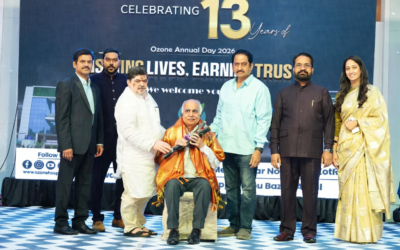
When I sat on the chair on stage to be felicitated on the 13th Foundation Day of the Ozone Hospital, on February 28, 2026, and Telangana Transport Minister Mr. Ponnam Prabhakar, Telugu film star of yesteryears Mr. Suman Talwar, and Chairman Mr. Satya Sai Prasad...

The Unfulfilled Promise of Healthcare
Recently, I had the opportunity to spend nearly three hours in conversation at the Care Foundation, graciously hosted by its CEO, Mr. S. G. Prasad, whose quiet commitment to accessible healthcare has sustained many meaningful initiatives over the years. The meeting...

Wearable biosensors are a key technological advance that enable monitoring of wellness before illness sets in. By continuously tracking signals such as heart rate variability, sleep quality, physical activity, stress markers, and, in some cases, glucose or oxygen saturation, wearable biosensors detect subtle deviations from a person’s baseline. These early changes often appear days or weeks before clinical symptoms, enabling a shift from reactive, disease-focused care to proactive, preventive wellness management—especially when combined with simple AI algorithms that flag risk trends rather than diagnose disease.
The imperative shift from disease to wellness arises from a hard truth: the current healthcare system, designed primarily to diagnose and treat illness, has failed to deliver population health. Despite spectacular advances in drugs, devices, and hospitals, societies are sicker, not healthier—burdened by chronic diseases, mental distress, lifestyle disorders, and widening health inequities.
The disease-centric model is reactive, fragmented, and expensive. It intervenes late, after damage has occurred, focuses on organs rather than people, and rewards procedures over prevention. Population health, however, is shaped long before a patient meets a doctor—by nutrition, environment, education, work, stress, social cohesion, and early-life conditions. Treating disease without addressing these upstream determinants is like mopping the floor while the tap remains open.
A wellness-oriented paradigm reverses this logic. It emphasises prevention, early risk detection, behavioural change, community health, and lifelong wellbeing. It shifts metrics from hospital occupancy and drug consumption to functional ability, resilience, quality of life, and healthy life years. Digital health, AI-enabled monitoring, genomics, nutrition science, and personalised care now make such a shift both feasible and scalable—but only if systems realign incentives toward keeping people well rather than treating them when they are ill.
This transition is not cosmetic; it is a civilizational necessity. Without a move from disease management to wellness creation, healthcare systems will remain financially unsustainable, ethically incomplete, and socially ineffective. Population health will improve not when we build more hospitals, but when we build healthier lives, healthier communities, and healthier choices—by design, not by accident.
Another Masterpiece. Very true. Certain things today are still beyond what science understands. Heart attacks occur in people doing regular exercise, young people at work, and people with no prior symptoms, which testify to your words and wisdom. Something unknown intelligence in Medical, yet to be discovered. Great and very insightful thoughts and analysis. Your thoughts and writings are unique in all manners.
Prof Tiwari, “The question is no longer whether it can be done. The question is whether we dare to step beyond the small island of what we already know and listen to the vast, silent intelligence of what is waiting to be known.” This is the haunting question awaiting to be answered by us all, thank you.
Prof, A brilliant reflection on shifting from ‘sick-care’ to true ‘well-care.’ Your perspective on using modern science to return to a balanced, layered understanding of reality is precisely what the future of medicine should look like. Truly thought-provoking!
Simple AI can be used effectively for wellness monitoring by focusing on a small set of meaningful signals and using basic pattern recognition rather than complex systems. Every day data, such as sleep duration, resting heart rate or pulse, physical activity, mood, stress levels, and screen time, can be captured through smartphones, simple wearables, or brief daily self-reports. AI, in this context, works by learning an individual’s normal baseline and detecting gradual deviations—such as sustained poor sleep, rising stress, or declining activity—well before illness becomes clinically visible. These trends can then trigger gentle, personalised prompts to encourage rest, movement, hydration, social connection, or timely human follow-up. Such low-cost, explainable AI systems are especially suited for workplaces, families, and primary healthcare settings, where the goal is not diagnosis but early warning and course correction. By translating continuous, everyday signals into actionable insights, simple AI shifts wellness monitoring from episodic check-ups to continuous care, helping people stay well rather than seek help only after they fall ill. Thank you for posting Sir.
This article couldn’t be more timely. It captures the reality that a common person having illness faces today which is moving from hospital to hospital, navigating endless diagnostic tests, getting multiple medical opinions, and finally confronting an overwhelming flood of information from Google and now AI. Instead of clarity, this often leaves individuals feeling more anxious and helpless. Stress and life circumstances do influence health, but true wellness demands much more: self-awareness, lifestyle discipline, emotional balance, and an active, informed participation in one’s own health. It requires understanding how daily choices—sleep, nutrition, physical activity, thought patterns, and social connections—quietly but consistently shape long-term well-being. Wellness is not a passive state achieved by external interventions alone; it is a continuous process of listening to the body, responding early to imbalance, and making deliberate adjustments before illness takes hold. Emotional regulation and mental clarity help prevent stress from becoming chronic, while informed engagement empowers individuals to use medical care as a support rather than a dependency. In this sense, health becomes a partnership between medicine and mindful living, where prevention, resilience, and conscious action are as important as treatment itself. This paradigm shift—reframing care from managing illness to enabling sustained well-being—marks the direction in which modern healthcare must now move.
Dear Arun ji, This discussion takes us to “holistic Well Being”. If the well-being of the planet is addressed as carefully and responsibly as one takes care of the physical body, most health problems will be addressed. Most diseases are caused by lifestyle, genetics, or infection. A clean planet with a quality lifestyle with less greed will make healthcare easier to handle.
Dear Prof. Tiwari ji, It powerfully connects emerging science, as we believe, with the deeper goal of sustaining human balance. As you described, the focus on early detection of imbalance is both practical and forward-looking. A compelling vision for shifting from disease management to true wellness.
Dear Prof Arun sir, nicely communicated the message about the need for sustained focus on prevention while being heroic about the treatment. The individual and the system must be continuously reminded through communications like these. It is a time for every one of us to acquire the skill of listening to the body’s signals and able to observe the signs of dis-ease through naked eye to the extent possible. The technological advances can always be of help in addressing the medical emergencies and the effect of several unnoticeable factors on our health (genetic factors, microbes, socioeconomic factors like mal(under)nutrition, various other influences (water/air pollution, sanitation etc)). About wellness and health, our educational system must make it mandatory for everybody to learn and certified as part of baccalaureate degree (irrespective of their program – engineering/literature/arts/economics etc). This article is thought provoking, and I hope that it inspires many towards the goal of prevention and wellness.
Sir, this sheds light on one of the most pervasive silent issues of our time – something that affects everyone, yet rarely provokes real change. What we know today is only the tip of the iceberg. This perspective is radical not because it rejects science, but because it asks science to mature. It challenges us to see disease not as the beginning of inquiry, but as the end state of long-ignored signals. The truth feels both obvious and deeply uncomfortable for a system that is designed around intervention rather than attention.
Chronic disease creates customers; wellness creates citizens-self-aware, self-regulating and capable of autonomy. This is not merely a medical transition, but a civilizational shift in how we understand the human body and our responsibility toward it. The tools exist, the knowledge is emerging, and signals are being sent. The real question, as you say, is no longer whether the body speaks, but whether we are brave enough to listen before it is forced to shout.
Nice Arunji…. You honour modern medicine’s achievements while courageously questioning its blind spots, and the idea of Ajneya as the “not-yet-known” reframes ancient wisdom as a future scientific frontier rather than a retreat into mysticism. The cobra and frog metaphor lands beautifully, capturing the shift from conflict to balance. Overall, it reads like a manifesto for the next evolution of medicine—from reacting to disease to understanding and sustaining wellness.
A compelling reminder that technological progress without conceptual depth is incomplete. This reflection opens space for a medicine that integrates measurement with meaning, and precision with humility. Beautifully written and deeply unsettling in the best way. It challenges us to rethink not just how we treat illness, but how we understand the body’s quiet signals before distress becomes visible.
This Blog criticizes modern medicine for treating diseases too late and urges early prevention by nano, bio, and AI technology to detect hidden imbalances in the body, such as hormonal or immune system problems, which are the “Ajneya” or unknown causes.
Based on the cobra and frog tale of Sringeri and ancient wisdom, it urges balance, not reaction.
The future of medicine should allow simple technology to detect problems early, wisdom to balance, and curiosity to cure diseases before they occur.
Dear Prof
Good insights into wellness and medicine, thanks!
I concur that as much work should be dedicated to wellness as to curative medicine. The old saying stays true, “prevention is better than cure”.
One look at the modern world shows us the need for a “civilizational shift in intent—from curing disease to understanding wellness”. Today, unlike ever before, there are too many choices to “manage and cure” an ailment but not enough interest in the attainment of balance. Hopefully, articles like this will drive greater interest in thinking about the human experience holistically and limit the “body is a sum of its parts” mindset. We are more than the sum of our parts, and that added something is perhaps one way to make sense of ajneya in our lived experience.
I know both Sujit and Venkataratnamgaru personally, and seeing their stories here really drove your point home for me. It’s one thing to read about wellness theory, but watching people I actually know transform their health through the kind of preventive approach you’re describing… that’s what makes this real. The current system would’ve just kept treating their symptoms indefinitely. Your article captures something I’ve been thinking about for a while but couldn’t quite put into words. We really do need this shift.
This is such an important perspective that more people need to hear. The shift from reactive treatment to proactive wellness you describe really resonates with me. I especially appreciate how you emphasise patient empowerment and personal responsibility; too often, we do become passive in our own healthcare journey. Your point about addressing root causes rather than just managing symptoms is crucial, and the holistic view of health as interconnected physical, mental, and emotional wellbeing feels like the direction healthcare truly needs to move. Thank you for articulating this so clearly and inspiring us to think differently about our approach to health.
What a thoughtful and timely piece! Your vision for wellness-centred healthcare is exactly what we need. I was particularly struck by your examples of Sujit and Venkataratnamgaru. Their stories really bring home the power of prevention and lifestyle changes in ways that statistics alone cannot. It’s these real human examples that make the case so compelling for why we need to rethink our entire approach to health. When you see actual people thriving through wellness-focused approaches rather than just managing disease, it becomes clear that this isn’t just theory but a practical, achievable shift. Thank you for sharing their journeys alongside your broader argument. This article should be required reading for anyone involved in healthcare.
Tiwari ji, Excellent description of modern medicine. They say the known is a drop and the unknown is an ocean. The more knowledge we gain, we realise how ignorant we still are..Despite advancements in modern medicine, we lack appropriate skills, equipment, or diagnostic tools sensitive enough to detect disease in the realm of Ajneya. Humanity has a long way to go.
As usual, a wonderful thought provoking, futuristic idea proposed by Professor Arun Tiwari jee for modern medical science. The contribution of modern medicine in health and disease is unparallel. This can’t be denied. Understanding is a continuous process and as we are moving forward, we are coming closer to the understanding of Ayurvedic philosophy of Tridosha and maintaining the balance between Kaph, Pitta and Vata. Most of the time, our approach in modern medicine is based on anti-, however Ayurveda believed in balance what Arun jee is looking for the technological development of the future. We are pretty hopeful, it will move in right direction.
I truly believe with the exposition of Arun. The wellness science plus balance, and with the convergence of old and modern scientific tools can lead to a much more healthy people in the planet. Let’s do and practice it as soon as possible. God bless us all!