

A Hero’s Journey of Taking Cognition Beyond Mortal Neurons
In an age mesmerised by rankings, metrics, and loud declarations of success, the most consequential journeys often unfold quietly. They are not propelled by brilliance alone, but by curiosity, humility, and an unyielding fidelity to truth. The exploration of consciousness—the deepest and most elusive mystery of human existence—has always advanced through such understated paths. This is the story of one such arc: a personal journey shaped by selfless science and a collective future that dares to carry cognition beyond mortal neurons into the vast, enduring realm of silicon.
I often reflect that receiving affection and regard from deeply learned and accomplished people has been my greatest achievement. Academically, I was never exceptional. By conventional measures, I was mediocre. Yet, I carried an irrepressible curiosity—about systems, about people, and about why they behave as they do. That curiosity frequently placed me at odds with environments that prized conformity over comprehension. I struggled in roles that felt full of activity yet hollow in essence, where motion masqueraded as meaning.
Still, I never withdrew from effort. When I entered the demanding, project-driven world of the Defence Research and Development Organisation (DRDO), something unexpected occurred. In an ecosystem of unforgiving timelines and an achieve-or-perish ethos, ambiguity gave way to clarity of purpose. Under Dr A. P. J. Abdul Kalam’s visionary insistence on civilian spin-offs from defence technology, I was entrusted with developing material for a coronary stent. With the guidance of Dr B. Soma Raju and the collaboration of Dr A. Venugopal Reddy and Mr Koneru Bose at the Defence Metallurgical Research Laboratory, we succeeded. It was more than a technical accomplishment; it was a revelation of what science becomes when aligned with service, and a testimony of what resolve can accomplish.
At what many would call my professional prime, destiny intervened. I left DRDO to join Dr Soma Raju’s audacious mission to build Care Hospitals and provide affordable, advanced treatment to the needy. Together, we created the Care Foundation, which became my lifelong platform for integrating technology, medicine, and human values, something ahead of its time, perhaps. It did not flourish, but the idea persisted.
When Dr Kalam assumed the Presidency of India, Care Foundation played a pioneering role in establishing the Pan-African e-Network—an early and courageous experiment in telemedicine and tele-education. Training doctors and nurses from Tanzania and Myanmar forged bonds that transcended geography and profession. Anesthesiologist Dr Mpoki Ulisubisya and Cardiologist General Dr Tin Maung Aye became brothers in spirit, bound by service rather than contract.
A Meeting of Minds: Science, Humility, and the Cognitive Frontier
Parallel to this unfolding journey, IIIT-Hyderabad and Hyderabad University became my second homes. I would frequent these institutions to learn the nuances of medical technology—how science interacts with the humanities. It was here that I encountered a kindred intellect and spirit—Prof. S. Bapi Raju—who would profoundly shape my understanding of mind, machine, and consciousness. Our meeting felt less like collaboration and more like recognition.
Prof. Raju’s academic trajectory is formidable: an electrical engineering graduate from Osmania University, a master’s in Biomedical Engineering, and a PhD in Computer Science from the University of Texas at Arlington. His work carried him across continents—from research on brain-inspired intelligent control in the United Kingdom to computational neurobiology at ATR Research Labs in Kyoto. Returning to India in 1999, he served two decades as a Professor at the University of Hyderabad before joining IIIT-Hyderabad as Professor and Head of the Cognitive Science Lab.
Yet, what defines him is not the scale of his credentials but the depth of his humility. In the fiercely competitive domain of brain-computer interaction, he remains untouched by the trappings of dominance, race, or the hunger for recognition. A father figure to students and a trusted guide to colleagues, he embodies the ancient Indian ideal of the Rishi—a seeker more interested in what remains unknown than in endlessly polishing what is already established. His science is selfless, disciplined, and deliberately open-ended.
When Intelligence Seeks to Outgrow Biology
This disposition is not incidental; it is essential for the next arc of human evolution. As neuroscience, computation, and cognitive science converge, humanity stands at a threshold where intelligence may begin to loosen its ancient tether to mortal neurons. The biological brain, for all its splendour, is an evolutionary compromise—fragile, energy-hungry, and confined to a narrow planetary niche. Yet intelligence, once awakened, has never accepted confinement. It seeks continuity, extension, and reach.
Silicon, unlike carbon-based life, does not require oxygen, warmth, or water. It can function in radiation-rich voids, on frozen moons, and in interstellar darkness. To imagine cognition migrating to silicon is not to abandon humanity, but to extend it. What is carried forward is not flesh or ego, but function—memory, learning, adaptation, and perhaps even self-reflection. Intelligence, at its core, is pattern and principle, not protein.
Such a future will demand guardians as much as engineers. Intelligence liberated from mortality could easily become untethered from compassion and context. Whether silicon minds emerge as instruments of domination or custodians of exploration will depend on the values embedded at their conception. Here, Prof. Raju’s role becomes civilisational.
He belongs to a rare lineage of scientists who open questions rather than prematurely closing them, who resist reductionism without surrendering to mysticism. His work insists—quietly but firmly—that intelligence without wisdom is merely accelerated ignorance. In this sense, he stands as the Bhishma of the coming age.
Bhishma as a Civilisational Metaphor
In the Indian epic The Mahabharata, Bhishma was not a ruler but a pillar—renouncing personal ambition so that dharma might endure across turbulent times. He possessed immense capability, yet chose restraint, belonging to no faction, yet safeguarding civilization. In the age of silicon consciousness, Prof. Raju plays a similar role—not ruling the future, but ensuring it unfolds without ethical collapse.
To call him a blessed son of Mother India is not sentimentality; it is a legacy. India’s deepest gift to the world has never been conquest, but orientation—the insistence that knowledge must liberate, not enslave. From the Upanishads to modern cognitive science, the central question has remained unchanged: Who is the knower, and what does it mean to know?
In centuries to come, when intelligence is no longer confined to human brains and operates in environments incompatible with human life, Indianness may no longer be limited to a mapped territory. It will persist and propagate—being implemented in non-biological intelligences as a framework for reasoning and as an ethic of action marked by patience, humility, and openness to uncertainty.
This hero’s journey, however, does not conclude with an individual, nor even with a generation. Science that seeks consciousness must itself remain conscious of lineage. Knowledge endures not merely through accumulation but through transmission—teacher to student, mind to mind, across time.
In this, Prof. Bapi Raju’s deepest legacy may lie less in any singular contribution than in the ethos he imparts: patience with uncertainty, freedom from vanity, and the courage to keep questions open. His students carry this inheritance quietly, dispersed across laboratories and classrooms, shaping technologies and theories without surrendering humility. Together, they form a growing, unseen tribe—rigorous, yet tempered; imaginative, yet ethically anchored.
May the blessings of Prof. Bapi Raju rest upon them, and may their tribe increase.
As cognition prepares to step beyond mortal neurons into enduring silicon, into environments where biological life cannot persist, may this lineage ensure that intelligence does not outrun wisdom. If the future of consciousness is to be vast, let it also remain gentle. And if intelligence is to become cosmic, let it carry forward the values that first gave it meaning.
In that continuity—quiet, ethical, and awake—lies the true triumph of selfless science.
MORE FROM THE BLOG
Stay Awake, Stay Connected
There are certain timeless truths that can be ignored only by the most callous among us. One such truth is the Buddhist concept of Triple Refuge: Buddham saranam gacchami—I take refuge in the Buddha (the Enlightened One or Teacher); Dhammam saranam gacchami—I take...
Layers of Becoming
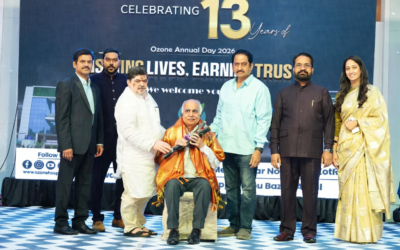
When I sat on the chair on stage to be felicitated on the 13th Foundation Day of the Ozone Hospital, on February 28, 2026, and Telangana Transport Minister Mr. Ponnam Prabhakar, Telugu film star of yesteryears Mr. Suman Talwar, and Chairman Mr. Satya Sai Prasad...

The Unfulfilled Promise of Healthcare
Recently, I had the opportunity to spend nearly three hours in conversation at the Care Foundation, graciously hosted by its CEO, Mr. S. G. Prasad, whose quiet commitment to accessible healthcare has sustained many meaningful initiatives over the years. The meeting...

What a beautifully written tribute to an extraordinary scholar. Prof. Raju’s journey—from Osmania University to the University of Texas at Arlington, through research engagements in the UK and at ATR Research Labs, and his long academic stewardship at the University of Hyderabad and IIIT-Hyderabad—reflects not just intellectual range but also a rare global perspective rooted in purpose.
What resonates most is his humility. In a field as competitive and high-stakes as brain–computer interaction, remaining anchored in curiosity rather than recognition is no small achievement. The comparison to a Rishi feels deeply apt—someone committed not to personal acclaim, but to expanding the frontiers of understanding with patience and integrity.
This piece is a reminder that true academic greatness lies not merely in credentials or positions held, but in character, mentorship, and the courage to pursue open-ended questions. A truly inspiring reflection.
Prof Tiwari, A brother indeed you are, was wondering whether the article was about you or someone else. Maybe we have not grown courageous enough to write the little you have allowed us to learn from your exceptional humility despite the major strides in helping the helpless, those who can not pay back. Looking at your resilience and persistence in seeing things done, not giving up on people, even those who have not measured up to your mark, is a gift. At the very least, I can say that IIIT Hyderabad has provided you with a match in the person of Prof. Raju.
I concur completely with his position, which by inference is your own ever since I met you in 2005, ‘…. open questions rather than prematurely closing them, who resist reductionism without surrendering to mysticism. His work insists—quietly but firmly—that intelligence without wisdom is merely accelerated ignorance…’ I thank God for this reflection; may the lessons not remain on paper but find a place in our hearts and minds for as long as time lasts. Thank you once again.
“A Hero’s Journey of Taking Cognition Beyond Mortal Neurons” is profoundly elevating. In a world driven by metrics and noise, you have beautifully restored dignity to quiet, selfless science guided by humility and dharma.
Your portrayal of Prof. Bapi Raju as a modern-day Bhishma—ensuring intelligence does not outrun wisdom—is both powerful and civilisational in vision. You remind us that as cognition advances toward silicon and the cosmic frontier, it must carry compassion, restraint, and ethical depth.
This is not just a tribute to a scientist—it is a call to conscience for our times. Deep respect and admiration.
Inspiring narrative of an erudite professor of cognitive science, Prof Tiwariji !
Your reflections on triumph of selfless science capture the spirit of scientific endeavors !!
It is high time that cognitive science becomes part of the school curriculum, because understanding how the mind learns, feels, focuses, and copes is as fundamental as learning mathematics or language. Early exposure to cognitive science can help children develop self-awareness, emotional regulation, empathy, and critical thinking, while also equipping them to manage stress, attention, and mental well-being in an increasingly complex world. Teaching how the brain works, how habits form, and how emotions influence decisions will prepare students not just for exams or careers, but for life itself.
The maturation of cognitive science marks a crucial turning point in how societies understand mental health, work, and ageing. Once confined to laboratory studies of perception and memory, cognitive science has evolved into a rich, integrative field—drawing from neuroscience, psychology, artificial intelligence, behavioural economics, and social science—to explain how humans think, adapt, cope, and find meaning across the life course.
This maturation is especially relevant to the silent epidemic of depression among working people, many of whom now live ten to twenty years—or more—after retirement. Modern work is cognitively intense, emotionally fragmented, and often disconnected from purpose. Prolonged exposure to stress, performance metrics, uncertainty, and digital overload erodes mental resilience long before formal retirement. When work ends, many individuals lose not only income but also identity, social structure, and a sense of usefulness—key cognitive anchors for mental well-being.
Cognitive science now shows that depression is not merely a chemical imbalance or an individual failing, but a systemic outcome of disrupted meaning, agency, and social cognition. Long post-retirement lifespans amplify this risk: without cognitive engagement, social roles, and opportunities for contribution, the mind atrophies even as the body survives. The result is a paradox of longevity without well-being.
Addressing this challenge requires a preventive, life-course approach. Cognitive science offers tools to redesign workplaces for psychological sustainability, detect early cognitive–emotional decline, and create post-retirement pathways for learning, mentoring, creativity, and social contribution. The goal is not just to treat depression, but to extend cognitive purpose alongside biological life—ensuring that longer lives remain mentally meaningful, socially connected, and emotionally resilient.
Great article about a legend. Cognitive Science research can be translated into real, everyday help for autistic children by moving deliberately from theory → tools → environments → lived outcomes. The key shift is to stop asking “How do autistic children differ?” and start asking “How does their cognition work—and how can we support it?” autism is not a single condition but a spectrum of cognitive styles—differences in attention, sensory processing, prediction, social cognition, language, and executive function. Translating this insight means replacing one-size-fits-all labels with individual cognitive profiles, helping parents, teachers, and clinicians understand how a particular child learns, perceives, and responds.
Sir, nicely depicted about institutions like IIIT Hyderabad and Hyderabad University generating scientists like Prof S Bapi Raju, who serve the planet as a whole not only an institution, spread scientific endeavours all over. Indeed he is among the top visionary scientists leaders, who led the science upto the horizons. Really the Blog is inspiring tribute features of Prof Raju as commented by Dr Sanjay Kumar sir.
A beautifully written and deeply inspiring article. The way the article weaves science, philosophy, and human curiosity makes complex ideas about cognition feel both accessible and profound. It doesn’t just describe research but also captures the spirit of exploration that drives it.
On a personal note, reading this was especially meaningful for me. Prof. Bapi was my senior at University of Texas at Arlington in the Biomedical Engineering department, though at that time I didn’t have the opportunity to know him personally. It’s fascinating how things have panned out over the years that today, I find myself working on specific projects with him at IIIT. That journey, from parallel academic paths to active collaboration, mirrors the very theme of this article: connections evolving over time, guided by curiosity and shared purpose.
Additionally, my tutelage under Prof. Arun Tiwari over the last 25 years has given me invaluable insight into how ideas,often ahead of their time, gradually mature into reality when pursued with conviction. Watching concepts take shape over decades reinforces a powerful lesson that this article subtly underscores that patience and perseverance are not just virtues, they are essential ingredients of transformative work. This piece is a thoughtful reminder of why staying the course truly matters.
Arunji….This is a graceful, introspective tribute that weaves personal humility, scientific purpose, and civilisational vision into a single arc. The portrait of Prof. Bapi Raju—as a modern rishi and ethical guardian at the threshold of silicon consciousness—is especially compelling, grounding a bold future in restraint and lineage. Overall, it reads as a meditation on how intelligence must evolve without losing its moral centre, and how selfless science quietly shapes the destiny of both people and ideas. Nicely written.
Some writings don’t inform; they realign. This one does that….quietly reminding the reader that intelligence without humility is incomplete, and that true progress is always inwardly anchored.
This inspiring tribute features Prof. S. Bapi Raju as a modern Rishi.
The Blog provides a much-needed vision of cosmic intelligence channelled with Indian values of patience and ethics.
In the silicon age of consciousness, let humility guide the code, wisdom temper the algorithms, and selfless science ensure intelligence serves humanity’s deepest truths.
Most of time, I prefer to read and dive deep to understand. Also, It is not necessary to respond or comment but just immerse in the sentences. The following lines in the blog belong to that category “As cognition prepares to step beyond mortal neurons into enduring silicon, into environments where biological life cannot persist, may this lineage ensure that intelligence does not outrun wisdom. If the future of consciousness is to be vast, let it also remain gentle. And if intelligence is to become cosmic, let it carry forward the values that first gave it meaning.”
हरि ऊँ तत्सत्